
Crosslinked shrink film really shines when you need to drop down to thinner gauges without watching performance fall apart on the line. The irradiation crosslinking—most plants use electron beam these days—ties those polymer chains together in a way that ordinary heat or chemical methods just can't match. Once the chains link up like that, the film gets a noticeable boost in tear strength and heat stability. That extra toughness lets extruders run the line at lower thicknesses and still come out with wraps that hold up to sharp edges, rough palletizing, and the kind of stacking pressure you see in real warehouses.
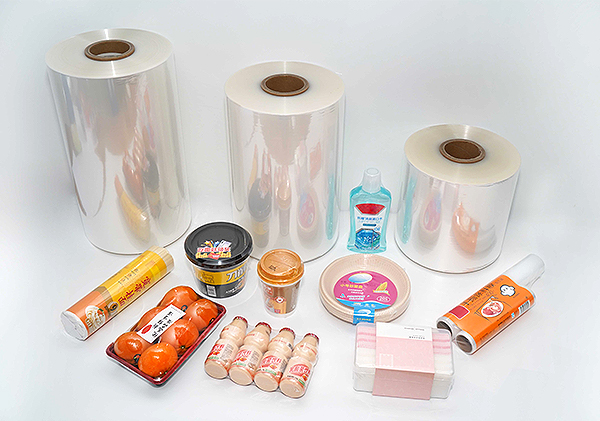
Plenty of packaging folks are dealing with the same headaches right now: resin prices bouncing around, customers asking for lighter packages, and sustainability reports that need real numbers, not just promises. Crosslinked shrink film gives you a workable way forward. It shrinks down snug around bottles, trays, multipacks, or odd-shaped kits without fighting the operator or leaving gaps that turn into complaints later. When the line is humming and the film is doing what it's supposed to do, you end up with fewer rejects, less rework, and rolls that last longer between changes. That's the kind of quiet improvement that adds up over a shift or a month.
It all starts in the resin room. Most producers pull from a handful of go-to polyolefin grades—usually a mix of LLDPE for flexibility, some PP for stiffness, and maybe a touch of metallocene resin if they want cleaner optics or better seal initiation. Those pellets get dried if needed, then fed into the main extruder hopper. Co-extrusion dies are common here, so you end up with three to five layers that each do a slightly different job: outer skins for slip and gloss, core for bulk strength, maybe a tie layer if compatibility is tricky.
After the melt comes out flat or as a bubble, crosslinking is where things change direction. The web runs under (or through) an electron-beam scanner. The dose gets dialed in pretty precisely—too little and you don't get the full benefit, too much and the film can get brittle or start yellowing. Those high-energy electrons knock electrons loose, creating radicals that grab neighboring chains and form crosslinks. It's not dramatic to watch; the film just keeps moving through the shielded zone, but the molecular structure is fundamentally different on the other side.
Next comes the orientation stretch. The film gets reheated just enough to be pliable, then pulled lengthwise between nip rolls and sideways in a tenter frame with hundreds of little clips. Stretch ratios vary depending on the target shrinkage—higher ratios mean more aggressive shrink force, but also more risk of web breaks if tension isn't perfect. Temperature, speed, and cooling air all have to stay in sync.
Once oriented, the edges get trimmed off (those selvedges usually go back into regrind), the web cools on chill rolls, corona treatment might go on for better ink adhesion if it's printed later, and then it winds up under controlled tension. Inline gauges, beta scanners, and optical cameras keep watch the whole way so bad sections don't make it into a customer roll.
The practical upside shows up fast. Because the crosslinked network spreads stress so much better, you can drop gauge by a meaningful amount—sometimes 15-25 % depending on the starting point—and still clear the same drop tests or compression specs that used to demand heavier film.
Punctures are the first thing people notice. A box corner or a metal strap that used to slice right through now just dimples the film or leaves a small tear that doesn't propagate. That alone cuts down on claims from distribution centers.
Seals hold tighter for longer. You get that classic clean, strong impulse seal that doesn't peel back when the package gets bounced around on a truck or squeezed in a pallet stack. Operators who have run both types usually say the difference is obvious the first time they try to pull a bad seal apart.
The look stays sharp. Clarity doesn't haze out after shrinking, and the gloss level gives labels and colors that extra pop under store lights. Customers notice it, even if they don't know why the package looks “nicer.”
Shrink behavior is forgiving. The film doesn't fight irregular shapes the way some stiffer grades do. It pulls in evenly, settles into corners without deep pleats, and rarely leaves those annoying air pockets that force a second pass.
On the equipment side, residue is a lot less of a headache. Sealing bars and knives stay cleaner through a full shift, sometimes two. That means fewer stops to scrape gunk off and less chance of a weak seal caused by built-up char.
Roll length is another win. Drop the gauge a bit and suddenly the same 10-inch core holds hundreds more feet of film. Fewer splices, less threading time, and the wrapper keeps running while the next roll is still being prepped.
| Benefit | What you actually see on the floor | Real impact on the operation |
|---|---|---|
| Better puncture resistance | Fewer holes from corners, clips, or rough handling | Lower scrap and fewer customer complaints |
| Tougher seals | Bonds stay solid under vibration and compression | Less re-wrapping and better load stability |
| Clean optics & gloss | Products look sharp and professional after shrink | Stronger retail presentation |
| Even, predictable shrink | Wraps tight on trays, bottles, multipacks without fights | Cleaner packages, less rework |
| Low residue on bars/knives | Equipment stays usable longer between cleanings | Higher uptime, less operator frustration |
| Longer footage per roll | Same diameter holds more film | Fewer roll changes, smoother long runs |
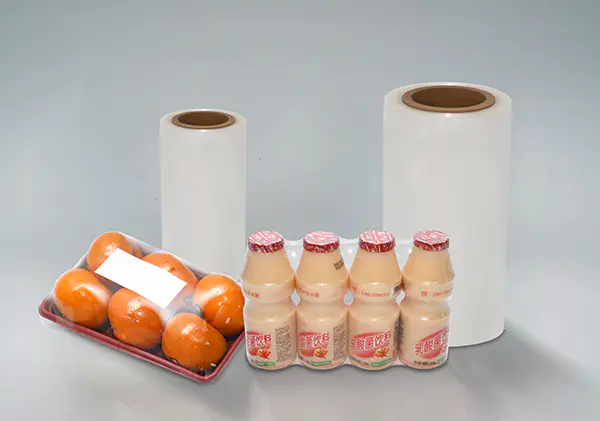
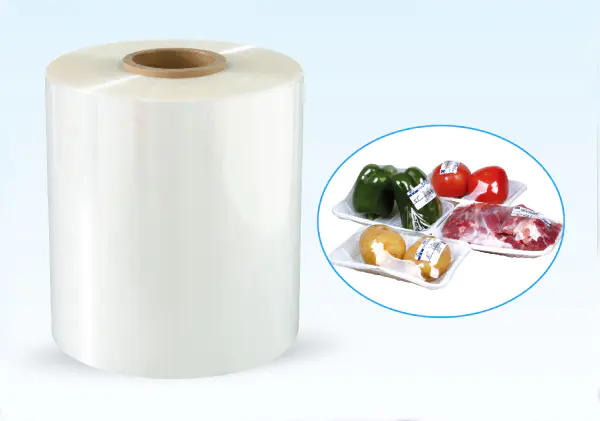
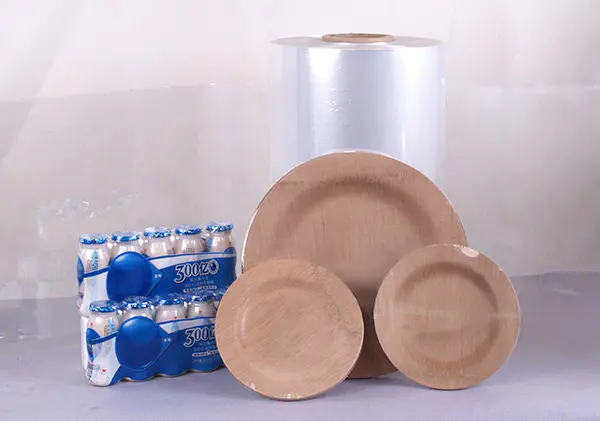
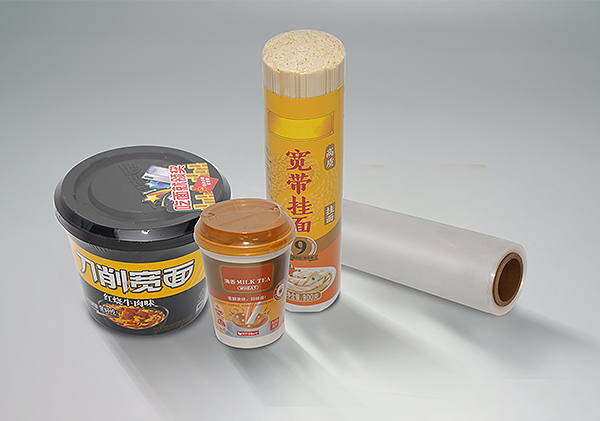
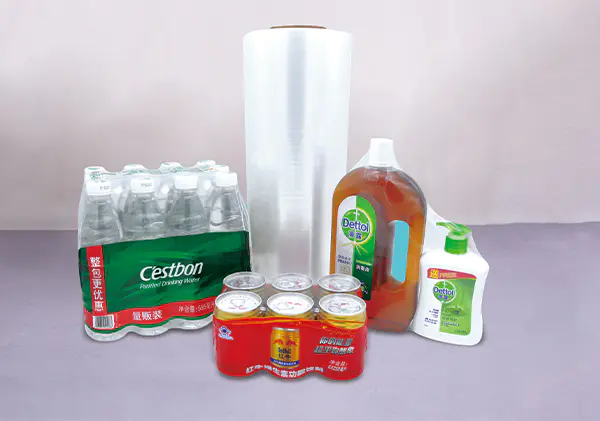
Food side sees a ton of it—cans and bottles in 6-packs or 12-packs, frozen pizza trays, trays of bakery rolls, snack multipacks. The wrap keeps everything together and gives that tamper-evident look without a lot of fuss.
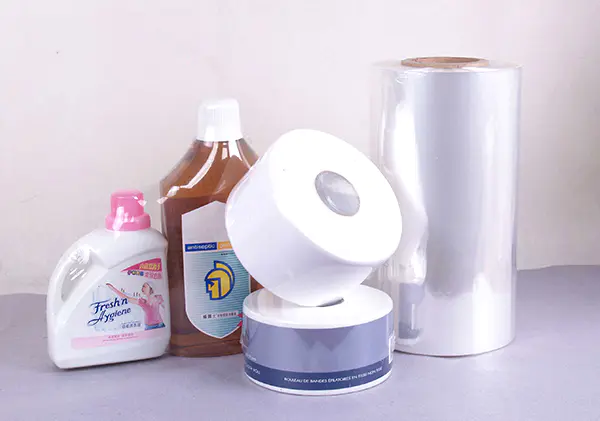
Everyday consumer stuff uses it heavily: toy blister cards bundled into sets, small electronics in clamshells, board games, puzzle boxes, personal-care multipacks. It handles the awkward shapes without looking sloppy.
Retail promotions love the gloss—gift sets, seasonal kits, cosmetic collections, holiday bundles. The film makes the whole package pop on the shelf or in a photo.
Industrial and MRO packaging leans on the extra toughness: tool kits, hardware assortments, plumbing fittings, replacement parts in bins. It stands up to heavier items and longer storage without tearing open.
Pharma and medical-supply lines run it on bottle trays, diagnostic-kit bundles, blister-grouped items. The consistent shrink helps meet cleanliness and stability requirements.
E-commerce fulfillment centers probably use more of it than anyone realizes—clothing multipacks, gadget boxes, book sets, home-goods kits. Quick conformability keeps things from shifting in transit.
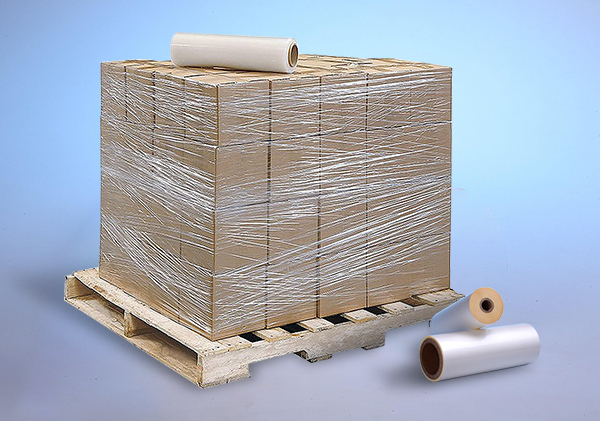
Produce and ag distributors wrap pallet tops or side bundles of crates to cut dust and weather exposure during haul.
It runs on everything from giant continuous-motion wrappers doing 80+ packs a minute down to tabletop L-bar sealers in smaller shops.
Regular polyolefin film still works fine for light, simple jobs, but it shows its age quicker when you push it. Crosslinked versions pull ahead on tear strength right away—starting a tear takes more force, and once it starts it doesn't run as far.
Seals survive rougher treatment. Standard film can develop tiny cracks or peel zones after vibration or compression; crosslinked holds the line longer.
Shrinkage looks and feels more controlled. You get fewer dog-ears, less uneven pull, and better corner definition on rectangular items.
Gauge efficiency is the biggest gap. A crosslinked film at, say, a mid-range thickness often matches or beats a standard film that's 20-30 % heavier.
Optics stay competitive—sometimes the crosslinked grades edge out on gloss because the surface stays smoother after orientation.
Heat window is wider. You can run a hotter tunnel or longer dwell without the film going slack or sticking badly.
| Characteristic | Crosslinked version | Standard polyolefin version |
|---|---|---|
| Tear / puncture strength | Clearly higher—takes more abuse before failing | Okay for gentle handling, quicker damage |
| Seal durability | Stays strong through vibration and stacking | More likely to weaken over time |
| Shrink consistency | Uniform pull, minimal defects | More variation, occasional loose spots |
| Gauge needed for same job | Works thinner without compromise | Usually needs heavier film |
| Clarity & surface shine | High gloss, low haze after shrink | Decent but often a step behind |
| Residue on equipment | Stays cleaner longer | Builds up faster, more frequent cleaning |
Thinner gauges are the simplest sustainability story—less resin per package means lower virgin plastic use and a smaller shipping weight. Every truck that leaves with lighter loads burns a little less fuel.
Polyolefin still has one of the better recycling paths among flexible plastics. Where collection exists, these films can go back into the stream without exotic sorting.
Scrap rates tend to be low because the process is dialed in and the film behaves predictably. Regrind loops capture edge trim and startup waste.
Application energy drops a bit because the film reaches full shrink faster in most tunnels.
Work continues on formulations that bring in post-consumer recycle content while keeping the crosslinking benefits intact.
It's not a silver bullet, but it moves the needle in the right direction without forcing big changes to equipment or speed.
Keep rolls out of direct sun and away from heaters—moderate warehouse temps and normal humidity work best.
Match tunnel temp and belt speed to the data sheet range. Start in the middle and tweak from there rather than guessing high or low.
Even with low residue, give sealing bars a quick wipe every few hours—small buildup still affects seal appearance over time.
Do a handful of test packages whenever you change product shape, tray size, or line speed. Five minutes of trialing saves hours of bad wrap later.
Train new operators on smooth threading and even tension. A cocked web or jerky unwind can still cause tracking issues even with good film.
Little habits like these turn a decent material into one that runs almost trouble-free.
Crosslinking keeps getting refined—better dose control, new beam configurations, and polymer tweaks that let you hit higher performance with the same energy input.
Lines are getting smarter with auto-adjusting tunnels and real-time shrink-force sensors that dial themselves in.
Feedstock work is pushing harder into recycled and bio-attributed resins that still crosslink well and keep the optics clean.
Regulations around recycled content and extended producer responsibility are tightening in more places, so materials that already play nice with recycling stay ahead.
Crosslinked shrink film has room to grow with those changes rather than getting left behind.
When you need film that shows up on time and runs the way the spec sheet says it will, a steady supplier matters. JTPackage keeps crosslinked shrink film as a main focus, turning out rolls that hold tight tolerances on gauge, shrink force, and surface quality.
They watch the process from resin intake to final wind-up, running checks that catch variation before it ships. Standard widths and gauges are always in stock, and they can adjust constructions for specific line needs or product demands.
If your operation is looking for consistent crosslinked shrink film that helps keep the wrapper happy and the scrap bin light, reach out to JTPackage. They've built the process around making material that performs reliably shift after shift.
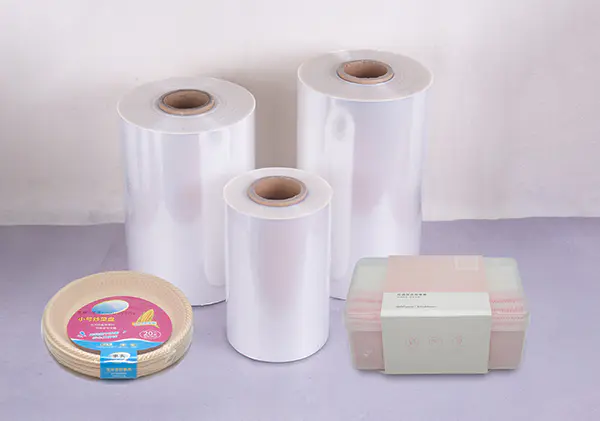
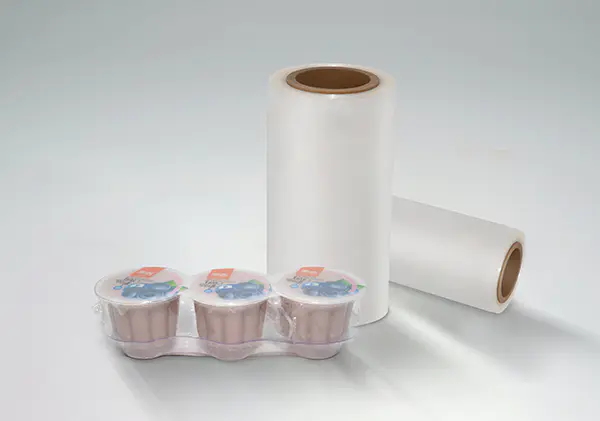
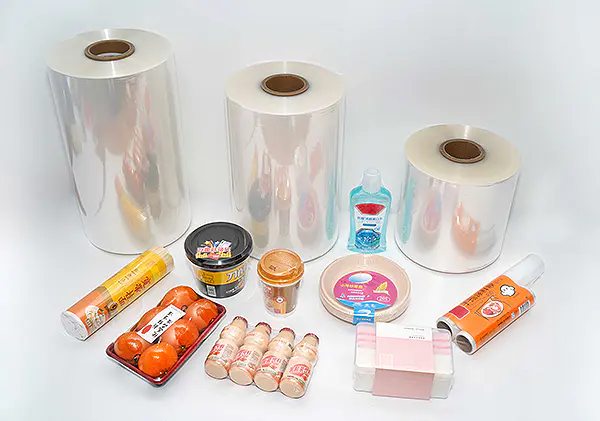
JT05 Antifog Crosslinked Shrink Film is an ideal o...
Copyright © Zhejiang Jiuteng Packaging Co., Ltd.
 简体中文
简体中文
 Home
Home
