
Packaging companies are looking for practical ways to use materials more efficiently. Reducing unnecessary packaging can help control material consumption, simplify handling, and support a more efficient packaging process. However, reducing film does not simply mean making every film thinner.
For Polyolefin Shrink Film, a more useful question is: Can the amount of film be reduced while the package continues to perform the functions required by the application?
In suitable applications, material reduction may be possible, but it should be treated as a packaging design and validation process rather than a simple thickness change. Film structure, product shape, sealing, shrink behavior, machine compatibility, and transportation conditions all need to be considered.
This makes lightweighting a balance between material efficiency and practical packaging requirements.
Material reduction generally means using less film while maintaining the functions required from the finished package.
There are several ways packaging companies may approach this goal.
One approach is to reduce unnecessary film around the product. If a package contains excess space or overlapping material, improving the package layout may reduce film consumption without changing the basic film structure.
Another approach is to evaluate whether a lighter film structure is suitable for the application. This is often discussed in terms of lightweighting or downgauging.
A further option is to review the overall packaging structure. The aim is to use the available material efficiently while maintaining suitable sealing, shrink behavior, handling, and package appearance.
These approaches are related, but they are not the same.
A thinner film does not automatically create a more efficient package. If material reduction results in sealing difficulties, tearing, inconsistent shrinkage, or production interruptions, the expected benefit may not be achieved.
For this reason, material reduction should begin with the actual packaging application.
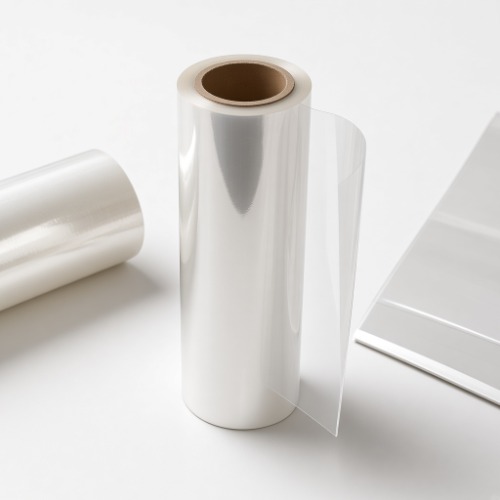
Packaging manufacturers are considering material efficiency from several perspectives.
Raw material consumption is one factor. Transportation, storage, film handling, production efficiency, and finished-package requirements can also influence the overall packaging system.
At the same time, packaging still needs to protect the product and remain suitable for handling, storage, display, and transportation.
This creates a practical question for packaging developers.
The objective is not simply to use less film. It is to use an appropriate amount of film for the application.
Different products place different demands on shrink packaging.
A compact boxed product may require a different film structure from a product with sharp edges or an irregular shape. Likewise, a lightweight product may behave differently during packaging and transportation from a heavier product.
That is why material efficiency should be evaluated together with the actual product and packaging process.
In suitable applications, Polyolefin Shrink Film can be considered as part of a lightweight packaging strategy.
The key point is that film reduction should not be evaluated through thickness alone.
Polyolefin shrink film needs to perform several functions during packaging. It needs to form around the product, respond appropriately to heat, create a suitable seal, and remain intact during normal handling.
When the amount of material is reduced, these functions still need to be reviewed.
Packaging developers may consider several factors together:
| Packaging Factor | Why It Matters |
|---|---|
| Product Shape | Influences how closely the film can fit around the product. |
| Film Structure | Influences shrink response, handling, and package behavior. |
| Package Dimensions | Helps identify areas where unnecessary film may be used. |
| Sealing | Affects the integrity of the finished package. |
| Shrink Behavior | Influences how the film conforms to the product. |
| Packaging Equipment | Affects how consistently the film can be processed. |
| Transportation | Introduces additional handling and movement conditions. |
| Product Surface | Can influence contact, appearance, and package stability. |
Considering these factors together provides a more practical basis for evaluating material reduction.
Not necessarily.
The amount of film is only one part of packaging performance.
Consider a product with sharp corners. Reducing the film thickness may lower material consumption, but if the selected structure is less suitable for contact with those edges, the finished package may require further evaluation.
Sealing also needs attention.
A package may have a suitable appearance after shrinking, while its seals still need to meet the handling requirements of the application. Changes in film structure or thickness can affect processing behavior and may require adjustments to packaging conditions.
This is why lightweighting should be reviewed across the complete packaging process.
A practical development process can ask:
If the proposed film continues to meet the requirements of the application, material reduction may be worth further consideration.
Product shape is an important consideration when discussing lightweight packaging.
Two products with similar weights may require different amounts of shrink film because their dimensions and shapes can differ.
A compact and regular product may be easier to wrap efficiently. An irregular product may require additional film to accommodate its shape and create a suitable seal.
This means packaging efficiency is not only a film-selection issue.
It is also related to package design.
For example, excessive film overlap can contribute to unnecessary material use. Large empty areas around the product can have a similar effect. Adjusting film width, package layout, or sealing positions may provide opportunities to reduce material consumption without changing the entire packaging concept.
The appropriate approach depends on the packaging system and product requirements.
Shrink behavior is an important part of shrink packaging.
The purpose of shrink packaging is not simply to cover the product. The film needs to respond to heat and form around the product in a controlled way.
When the package is designed properly, shrink behavior can help reduce unnecessary loose film around the product.
However, shrink behavior needs to suit the application.
If the film responds too strongly for a particular product, the finished package may not have the desired appearance or stability. If shrink response is insufficient, excess film may remain around the product.
For this reason, material efficiency should be evaluated together with shrink behavior.
Reducing the amount of film without considering how it responds during processing can introduce new packaging challenges.
When buyers consider lightweighting, film thickness is often one of the first factors they review.
However, thickness does not describe the complete behavior of a film.
Film structure can influence how the material behaves during sealing, shrinking, handling, and transportation. Different structures may be developed for different packaging applications.
As a result, films with similar thicknesses may not perform in exactly the same way under the same packaging conditions.
For packaging buyers, this leads to an important consideration:
Material reduction should not be evaluated only by comparing film thickness.
The complete film structure and its compatibility with the packaging process should also be considered.
A lighter film that requires frequent machine adjustments or creates additional package rejects may not provide the intended material efficiency.
A practical lightweighting project therefore considers material consumption together with processing consistency and finished-package requirements.
Film does not operate independently from the packaging equipment.
It passes through sealing equipment, conveyors, shrink tunnels, and other processing stages. Changes in film structure can affect how the material behaves during production.
For this reason, a film that works under one packaging setup may require different processing conditions under another setup.
Packaging companies considering material reduction should evaluate the proposed film using the equipment and process conditions relevant to actual production whenever possible.
Important areas may include:
This is particularly relevant to automated packaging lines, where changes in film behavior can influence production consistency.
One common mistake is treating lightweighting as a simple process of reducing material until the lowest possible film usage is reached.
A packaging film still has specific functions to perform.
If material reduction goes beyond what the application can support, several issues may occur.
The package may become more sensitive to rough handling or contact with product edges.
A different film structure or thickness may behave differently during sealing and require process evaluation.
Changes in shrink behavior can influence wrinkles, loose areas, or the overall appearance of the finished package.
A new film structure may require changes to packaging equipment settings or operating conditions.
If more packages require rework or replacement, the expected material reduction may be partly offset by additional material consumption.
These considerations do not rule out lightweighting. They show why material reduction needs to be evaluated carefully.
Yes. Package design can provide another way to improve material efficiency.
Material reduction does not always require a major change to the film itself.
Instead, companies can review the complete package.
Can the product be positioned more efficiently?
Can unnecessary empty space be reduced?
Can the film width be adjusted to suit the package?
Can excessive overlap be reduced?
Can several products be arranged in a way that uses the available film more efficiently?
These questions can reveal opportunities that may not be visible when the focus remains only on film thickness.
In some applications, improving the relationship between the product, film, and packaging equipment can be an important part of material reduction.
A buyer considering a lighter Polyolefin Shrink Film should begin with the actual application rather than simply requesting the lightest available option.
A practical evaluation may include the following questions:
These questions help distinguish potential material savings from changes that can work consistently in actual production.
A useful testing process should evaluate the finished package rather than the film alone.
The existing packaging format can first be used as a reference.
A proposed film structure can then be evaluated under comparable production conditions.
The comparison may include:
| Test Area | What to Observe |
|---|---|
| Processing | Whether the film runs consistently through the packaging process. |
| Sealing | Whether the seals remain suitable for the application. |
| Shrinking | Whether the film forms around the product as intended. |
| Appearance | Whether the finished package remains visually acceptable. |
| Handling | Whether packages tolerate normal movement and handling. |
| Transportation | Whether the package remains suitable during expected distribution conditions. |
| Material Use | Whether the intended reduction is achieved without creating new packaging issues. |
This approach makes it easier to identify where material reduction may be suitable and where additional development is needed.
Not necessarily.
Packaging quality should be considered in relation to function rather than simply the amount of material used.
A package using more material is not automatically more suitable. Likewise, a package using less material is not automatically more efficient.
The more useful question is whether the material is being used where it provides a necessary function.
If excess film can be removed without affecting the requirements of the packaging application, this may provide an opportunity to improve material efficiency.
If removing film creates problems elsewhere in the packaging system, the proposed reduction may need to be reconsidered.
This is why lightweighting can be understood as right-sizing the package rather than simply making the film thinner.
For film suppliers and manufacturers, lightweighting creates a need for more application-focused development.
Customers may not simply need a thinner film. They may need a film structure that uses material efficiently while remaining suitable for their product, packaging equipment, and distribution requirements.
This requires communication between the supplier and buyer.
Useful information can include:
With this information, film selection can focus on the actual packaging requirement rather than a single film characteristic.
For a manufacturer such as JT Package, this type of application discussion can help connect Polyolefin Shrink Film development with the practical requirements of packaging companies.
The next stage of packaging material reduction is not necessarily about simply making films thinner.
Development can also focus on more efficient material use, package design, suitable film structures, and closer coordination between film and packaging equipment.
That means the discussion is gradually moving beyond a single question.
It is not only:
How much film can be removed?
It is also:
Where is the film actually needed?
This provides a practical way to consider material efficiency.
A well-designed shrink package should use material where it contributes to sealing, protection, stability, or product presentation while avoiding unnecessary coverage and excess packaging.
Can Polyolefin Shrink Film reduce packaging material without losing function?
In suitable applications, it can be part of a material-efficiency strategy, but there is no single film reduction approach that applies to every product.
Film structure, package dimensions, shrink behavior, sealing, equipment, product shape, handling, and transportation conditions all need to be considered together.
The practical approach is therefore not simply to reduce the amount of film.
It is to determine how much material the packaging application actually requires.
When lightweighting is approached as a complete packaging design and validation process, companies can identify opportunities to reduce unnecessary material while maintaining the functions required from the finished package.
JT05 Antifog Crosslinked Shrink Film is an ideal o...
Copyright © Zhejiang Jiuteng Packaging Co., Ltd.
 简体中文
简体中文
 Home
Home
