
A packaging line supervisor once asked us why his POF shrink film packages looked excellent when they left the heat tunnel, then developed dog ears on two corners of nearly every tray. The film came from the same batch he had used for months. The real causes were a four-centimetre mismatch between film width and tray length, and a tunnel temperature about ten degrees below the film's recommended shrink range.
The conclusion to act on: most common POF shrink film packaging problems are not material failures. They are mismatches between film properties, machine settings, and product geometry. This guide covers the defects that show up most often on real lines: dog ears, wrinkles, weak seals, poor shrinkage, tears, burn holes, and film blocking. For each one, we explain the cause, the fix, and the prevention.
POF, or oriented polyolefin, shrink film is a multilayer film that shrinks in a controlled way when heated. That control works only when three things stay in balance: film grade and gauge, heat and dwell time in the tunnel, and the shape and weight of the product being wrapped. When one of them drifts, a defect appears.
Sort any packaging fault into one of two categories. Process-related problems show up suddenly: a new conveyor speed, a colder workshop, a shifted heating element. Material-related problems persist across different settings. If the same defect follows one roll of film from machine to machine, inspect the film.
Appearance, sealing, and shrink performance.
Dog ears, wrinkles, weak seals, poor shrinkage, tears, and blocking.
Process settings and film selection.
Across packaging lines, the same names come up again and again: dog ears, wrinkles, weak seals, and poor shrinkage. The table below summarizes the fastest diagnosis for each common failure.
| Problem | Typical cause | First thing to check |
|---|---|---|
| Dog ears | Film wider than the product; low shrink force | Tunnel temperature and film width |
| Wrinkles | Uneven heating; low shrink energy | Heat distribution and film gauge |
| Weak seals | Wrong jaw temperature or pressure; dirty seal bars | Sealing station condition |
| Poor shrinkage | Tunnel too cool; dwell time too short | Conveyor speed and heat setting |
| Tears or burn holes | Overheating; sharp edges; brittle film | Tunnel temperature and product protection |
| Film blocking | Damp storage; heavy pressure on rolls | Roll storage conditions |
Most POF packaging problems are process problems in disguise. Match the film to your heat, speed, and product geometry, and most defects disappear.
For a step-by-step workflow to keep at the machine, see the POF shrink film packaging troubleshooting guide, which organizes the same defects from the operator's point of view.
Appearance defects do not weaken a package, but they spoil the clean look that shrink film is chosen for in the first place.
Dog ears are the triangular flaps that stand out from package corners after shrinking. They form when the film gathers more material at a corner than the shrink process can pull flat. Common triggers: film wider than the product needs, tunnel heat too low for full shrink force, or a package so flat that the film has nowhere to redistribute.
Fixes that work on most lines:
If your line handles many package sizes, how to prevent dog ears with POF shrink film explains the size-by-size adjustment.
Wrinkles are shallow creases on the film surface. They usually mean uneven shrinking: one side reached shrink temperature while the other cooled too quickly or received less heat. A conveyor too fast for the heat zone, a blocked heating element, or a gauge too thin for a heavy product can all give the same result.
Start with these corrections:
A weak seal opens during handling, or the film tears just beside the seal line. Sealing relies on three variables: temperature, pressure, and dwell time.
Typical causes:
Clean seal bars at the start of every shift, verify the actual jaw temperature against the control reading, and run a pull test every thirty minutes.
Loose film over part of the product, or heavy shrink in one direction and almost none in the other, usually comes from a tunnel cooler than the film's shrink range, a dwell time too short for the product's mass, or film sized without accounting for the largest cross-section.
Standard POF film starts shrinking around 100°C and typically reaches full shrink between 130°C and 180°C in a forced-air tunnel. Start at the film maker's recommended setting, then adjust for conveyor speed and product weight. For heat-sensitive contents, low-temperature shrink film reaches full shrink at reduced heat, protecting the product while producing a tight wrap.
Tears appear as the film draws tight over corners and sharp edges. The usual causes: unprotected sharp edges, a gauge too light for the product weight, and overheating that makes the film brittle at the moment of highest tension.
Pad sharp corners, choose a heavier gauge, and verify the tunnel temperature is stable. For heavy or irregular products, high-performance shrink film provides stronger puncture resistance and a steadier shrink curve.
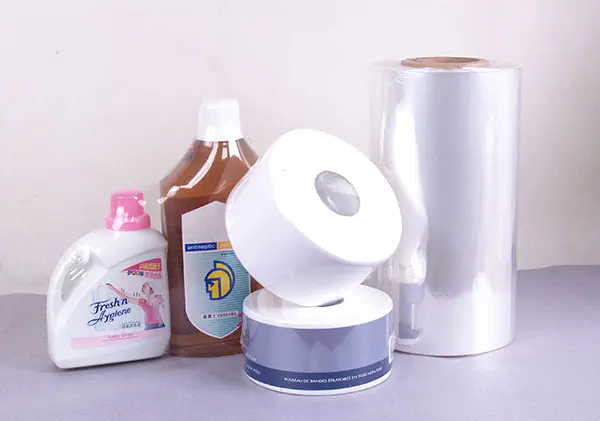 High-Performance Shrink Film JT06 for Tough Shrink ConditionsThis film offers low shrink temperature, quick 1.5-second shrinking, and over 70% shrinkage, making it suitable for heavy or irregular products that risk burn holes in shrink tunnels.View Product →
Burn holes are localized holes from concentrated heat. They occur when one area of film sits too long in front of a heating element, when airflow is aimed at one spot, or when the tunnel temperature is raised far beyond spec to compensate for a short tunnel.
Lower the output temperature and add time instead. Longer dwell at moderate heat shrinks POF more evenly than intense heat applied in a few seconds.
Blocking means the inner layers of a roll stick together and unwind unevenly. It usually follows storage mistakes: heat, humidity, heavy stacking, or film stored past its shelf life.
Keep rolls cool and dry, do not stack heavy loads on them, and rotate stock first-in, first-out. If you cannot recall when a roll was produced, run a short test wrap first.
The most efficient fix for POF issues is to prevent them during setup. Use this checklist whenever a new product or a new film batch goes on the line:
Grade selection removes several problems before they appear, as the table shows.
| Film type | Best suited for |
|---|---|
| Standard polyolefin shrink film | General packaging with normal weight, good clarity, and easy sealing |
| Low-temperature shrink film | Heat-sensitive contents and lines that want to save energy |
| High-performance shrink film | Heavy products, sharp edges, automated high-speed lines |
A consistent supplier reduces troubleshooting more than any single machine adjustment. When every delivered batch has the same shrinkage, gauge, and seal response, your line variables drop. Suppliers with certified quality management, such as ISO or BRC production systems, are usually the most reliable at keeping that consistency. For general-purpose packaging, standard polyolefin shrink film with balanced properties is the most practical starting point.
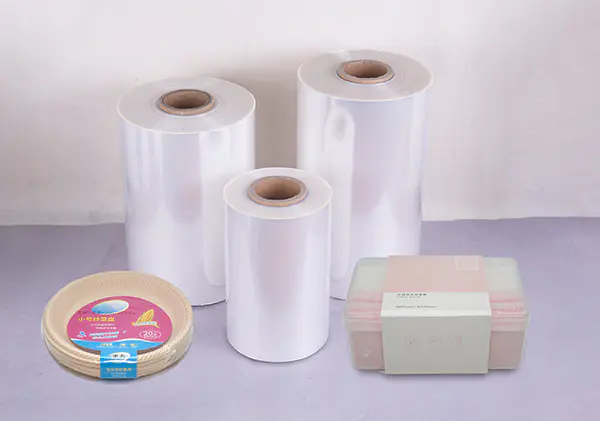 Consistent Polyolefin Shrink Film for General PackagingThis biaxially stretched POF film provides balanced properties and dependable shrink performance, ideal for general-purpose packaging where batch-to-batch consistency from a certified supplier reduces line variability.View Product →
Cold ambient air pulls heat away from the film faster, so the corners never reach shrink temperature. Raise the tunnel temperature slightly or add dwell time, then retest.
Most standard POF films start shrinking around 100°C and reach full shrink between 130°C and 180°C in a forced-air tunnel. Set the tunnel by the film specification, not by habit.
This usually means the jaw temperature is too high, making the film brittle along the melted edge. Reduce the heat, shorten dwell time, or test a film grade with lower sealing energy.
Yes, as long as the warehouse is cool and dry. Avoid heavy loads on top of rolls and rotate stock first-in, first-out.
None of these problems requires an engineer to solve. Each has a clear cause: temperature, time, film geometry, or storage. Document your standard settings, test whenever the product changes, and work with a film supplier whose quality control removes one more variable from your line. Do that, and most of the common POF shrink film packaging problems on this list will never reach your line.
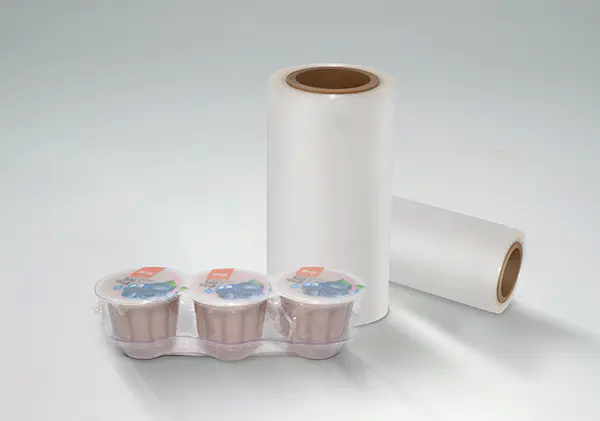
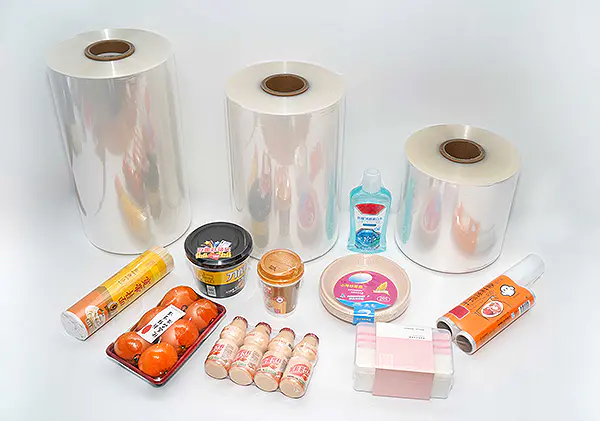
JT05 Antifog Crosslinked Shrink Film is an ideal o...

Copyright © Zhejiang Jiuteng Packaging Co., Ltd.
 简体中文

 Home

