
Packaging material decisions are rarely straightforward. You have a film that works well enough, shipments mostly arrive intact, and the line runs without constant interruptions. So why would anyone consider switching? The answer usually arrives in the form of damaged goods, a high-speed line that keeps jamming, or a logistics partner pushing back on how your products hold up during transit. Cross Linked Polyolefin Shrink Film enters the conversation at exactly that point — not as an abstract upgrade, but as a response to problems that standard film cannot fully solve.
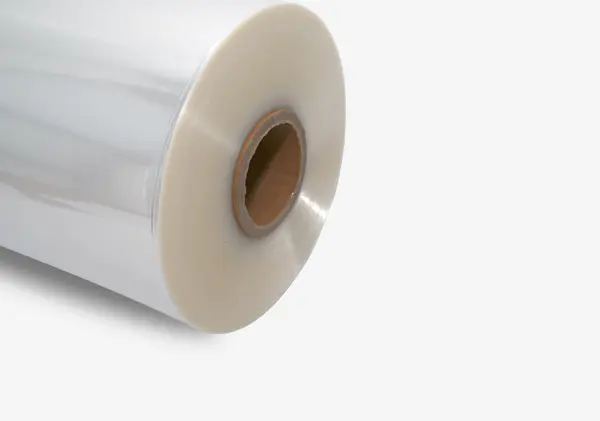
Standard polyolefin shrink film is produced through a conventional extrusion process. It performs reliably across a wide range of packaging tasks — it seals cleanly, shrinks evenly under heat, and handles light-to-medium products without issue. For many operations, it is a practical and cost-effective choice.
Cross Linked Shrink Film goes through an additional manufacturing step: irradiation. During this process, the polymer chains in the film bond to each other in a tighter network, creating a molecular structure that behaves differently under stress. The film does not just stretch under force — it resists and recovers. That distinction matters considerably when the products being wrapped have irregular shapes, sharp corners, or significant weight.
It is tempting to think of cross linking as simply "making the film stronger," but the reality is more layered than that. The bonded polymer network also changes how the film responds to heat. Cross Linked POF Shrink Film tends to shrink more evenly and at a lower trigger temperature, which has real implications for how it performs on automated packaging lines. A film that shrinks unevenly leaves wrinkles, loose edges, and seals that fail under pressure — problems that compound across high-volume runs.
Standard film does not have the same molecular consistency. It performs adequately under controlled conditions but shows its limits when temperature fluctuations, product variation, or line speed changes are introduced.
| Performance Factor | Standard Polyolefin Shrink Film | Cross Linked POF Shrink Film |
|---|---|---|
| Tear resistance | Moderate | Noticeably higher |
| Puncture resistance | Moderate | Higher, especially around edges |
| Shrink consistency | Adequate under stable conditions | Uniform across varying conditions |
| Seal strength | Standard | Stronger, more durable |
| Film gauge flexibility | Standard gauge required | Can be used at reduced gauge |
| High-speed line compatibility | Moderate | Well-suited |
| Heat sensitivity | Requires higher temperature range | Shrinks at lower temperature |
| Logistics durability | Suitable for light duty | Holds up under demanding transit |
Not every packaging application demands the added properties of Cross Linked Film. For lightweight products with smooth, regular surfaces — small consumer goods, simple retail packaging, low-stress bundling tasks — standard polyolefin film handles the work without complication. The seal quality is adequate, the shrink appearance is presentable, and the material cost is lower.
If damage rates are low and your logistics chain is short, the performance gap between the two film types may not justify a material switch. That is a legitimate outcome of a real cost-benefit analysis, not a default assumption.
Standard POF also performs more predictably on manual or semi-automatic packaging lines where speed and temperature consistency are easier to control. In these settings, the operator can compensate for minor inconsistencies — adjusting dwell time, repositioning products, re-running problem seals. Cross Linked Film delivers more value when those manual compensations become impractical.
For smaller operations running at moderate throughput, the economics of standard film often hold. The question is whether those economics will still hold as volume grows or product mix changes.
This is the clearest use case. A product with protruding edges — a boxed tool set, an electronics component with angular housing, a bundled item with irregular geometry — will punch through or tear standard film under transit stress. The repeated friction and pressure during stacking and shipping create failure points that are predictable, not random.
Cross Linked Film resists those failure points because the molecular network absorbs and distributes force differently. The film deforms around an edge rather than splitting at it. For operations that deal consistently with these product types, the switch typically reduces damage rates in a way that offsets the material cost difference.
Speed amplifies every inconsistency. On a high-speed line, a film that shrinks unevenly at one station creates a cascade: misaligned seals, rejected packages, manual re-runs, and downtime. Standard polyolefin film can struggle to maintain shrink consistency when line speeds push into higher ranges or when tunnel temperatures fluctuate.
Cross Linked POF Shrink Film handles those conditions with more stability. Its lower shrink activation temperature also means the film responds more predictably during short dwell times — which is exactly what high-speed lines require. Switching to Cross Linked Film on a demanding automated line is often less about material preference and more about operational necessity.
Packages moving through e-commerce fulfillment or international shipping face a different kind of abuse than retail shelf stock. They get dropped, stacked, compressed, and exposed to humidity and temperature changes across long transit chains. Standard polyolefin film was not designed for that journey.
Cross Linked Shrink Film holds its seal and surface integrity under those conditions more consistently. The molecular network does not degrade as quickly under sustained mechanical stress, which means the package arrives looking closer to how it left the facility. For brands where presentation at the point of delivery matters — and for logistics operations where damage claims are a real cost — that durability has tangible value.
One of the less obvious advantages of Cross Linked Film is that its higher mechanical strength allows it to be used at a reduced gauge — a thinner specification — while still providing equivalent or better protection compared to a thicker standard film. This is sometimes called downgauging.
The practical implication: a roll of Cross Linked Film may cover more packages per unit weight than a standard film roll, partially offsetting the higher per-kilogram material cost. The savings are not automatic — they depend on the specific products, speeds, and shrink tunnel conditions — but downgauging is a real variable that purchasing teams often fail to factor into cost comparisons.
Evaluating material cost purely on price-per-roll without accounting for gauge, coverage, and damage reduction gives an incomplete picture.
A more useful cost framework considers:
When all of those factors enter the calculation, the cost gap between standard and Cross Linked Film often narrows. In some cases, it reverses.
Neither film type is a universal answer. The right choice depends on where your specific operation sits across these variables.
A film that performs well in laboratory conditions does not automatically perform well on your specific line. Cross Linked POF Shrink Film requires a sealing system and shrink tunnel capable of handling its characteristics — including its shrink temperature range and seal behavior. Many L-bar sealers and continuous motion machines are compatible, but older or lower-specification equipment may need adjustment.
Before switching film types, it is worth auditing the line:
Skipping this audit and switching film without equipment review is a common source of disappointing results when upgrading to Cross Linked Film. The film itself may be well-suited to the application, but the line may need calibration to realize the performance difference.
A Cross Linked Film run on a poorly calibrated tunnel may over-shrink, wrinkle, or seal unevenly — producing results that look worse than the standard film it replaced. This leads some operations to conclude that the upgrade was not worthwhile, when the real issue was equipment setup, not film quality.
Getting a proper line trial with qualified technical support before committing to a full material switch is not optional — it is the step that determines whether the switch actually delivers the expected results.
If you are actively evaluating whether to move from standard to Cross Linked Film, a structured approach tends to produce clearer outcomes than informal comparison:
The sequence takes more time than a simple price comparison, but it produces decisions that hold up under operational scrutiny rather than collapsing at an unexpected result.
Packaging film decisions have a way of revealing themselves over time. A film that looks cost-effective on paper may generate hidden costs through damage, downtime, and rework that never get attributed back to the material choice. Cross Linked Shrink Film carries a higher unit cost than standard polyolefin film — that is simply true. But the relevant question is not whether it costs more per roll. The relevant question is whether it costs more per successfully delivered, undamaged package, across the full range of products and logistics conditions your operation handles.
For operations dealing with demanding products, fast lines, or long supply chains, the answer is often that the cost difference is smaller than expected once the full picture is calculated. For lighter, simpler applications, standard film may continue to be the right call. The decision belongs to the specifics of your situation, not to a general preference for one material over another. Zhejiang Jiuteng Packaging Co., Ltd. works with packaging operations across a range of industries and can provide material samples, line trial support, and application guidance to help you reach a conclusion grounded in your actual operating conditions rather than assumptions. If you are at the point of making a material decision and want support working through the evaluation, reaching out directly is a practical next step.
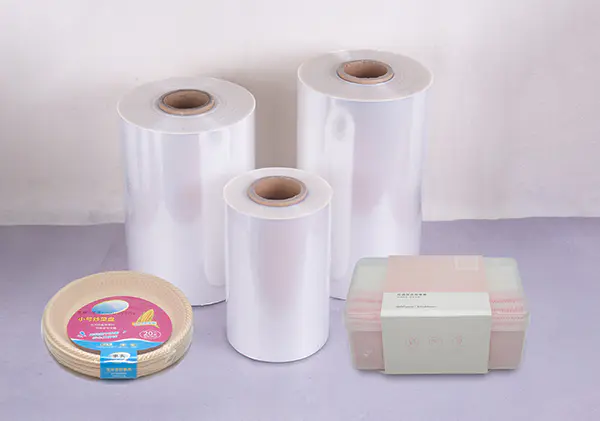
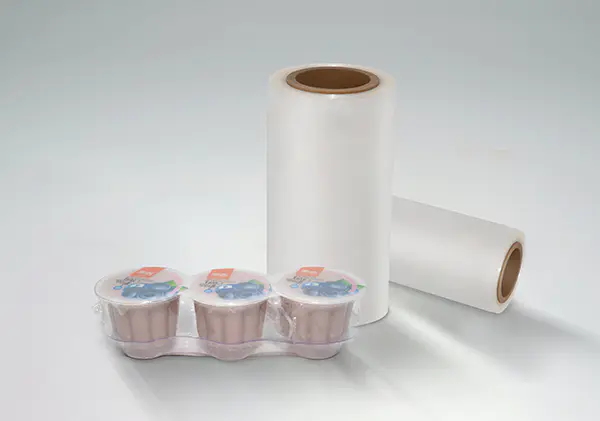
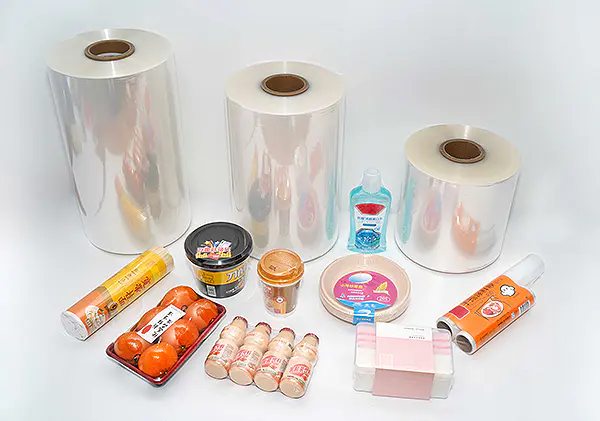
JT05 Antifog Crosslinked Shrink Film is an ideal o...
Copyright © Zhejiang Jiuteng Packaging Co., Ltd.
 简体中文
简体中文
 Home
Home
