
Running cross linked shrink film through a shrink tunnel calibrated for standard polyolefin is one of the more predictable ways to produce defective output at production scale. The film either under-shrinks and leaves loose panels around the package, or the tunnel temperature is pushed higher to compensate and the film burns, whitens, or distorts at the edges. Cross linked POF shrink film behaves differently from its uncross-linked counterpart because its molecular network responds to heat within a narrower processing window — and that window, once understood, is not difficult to work within. The problem is usually not the material. It is the assumption that a tunnel setting that worked for another film grade will transfer without adjustment.
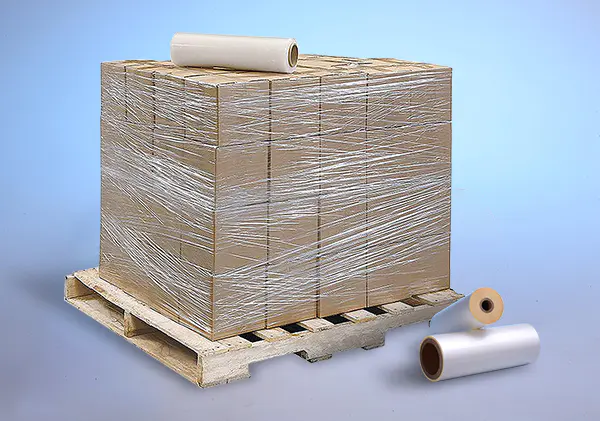
Standard polyolefin shrink film is composed of polymer chains that are largely independent of one another. When heat is applied, those chains gain mobility and the film contracts as the oriented structure relaxes. Cross linking creates covalent bonds between adjacent chains, forming a three-dimensional network that constrains how the chains move under heat. The film still shrinks — the orientation is still present — but the network structure means it does so within a tighter temperature range and with more uniform force distribution across the film surface.
The practical consequence is that a cross linked film at the low end of its shrink temperature range will not begin contracting meaningfully, while a standard POF at the same temperature might already be showing partial shrink. Pushed above its upper threshold, the cross linked material does not simply over-shrink — the network can fracture, producing white stress marks or punctures that cannot be corrected downstream. The processing window is real, and operating outside it in either direction produces visible defects.
Thinner gauges of cross linked film heat through faster than thicker gauges of the same material. A thinner film exposed to a given tunnel temperature for the same conveyor dwell time will reach its processing temperature earlier in the tunnel and will have more time at that temperature before exiting — which increases the risk of over-shrink or burn at settings that work acceptably for a heavier gauge. This relationship means that gauge changes require tunnel parameter review, not just a check that the film fits the sealer.
A standard shrink tunnel moves the wrapped product through a chamber where hot air circulates around the package. tunnels create distinct thermal zones even when a single temperature is set at the controller:
Cross linked polyolefin shrink film requires a temperature setting that is typically somewhat higher than what a standard POF of equivalent gauge requires to begin shrinking, but the window between "adequate shrink" and "over-shrink" is compressed. This is a consequence of the network structure: once sufficient thermal energy has been supplied to mobilize the network, the film responds quickly and completely. There is less graduated response at the upper end of the range than standard POF exhibits.
The starting point for temperature calibration is not a fixed number — it depends on the tunnel design, the product mass, the conveyor speed, and the ambient conditions in the production facility. The calibration process is empirical:
Temperature determines the thermal energy available in the tunnel. Conveyor speed determines how long the package is exposed to that energy. These two variables interact, and adjusting one without considering the other produces results that cannot be resolved by continuing to adjust only the variable that is being changed.
A package moving quickly through a high-temperature tunnel may receive adequate total thermal exposure for shrinking, but the exposure is front-loaded — the package enters hot air, the film begins to shrink rapidly at the face, and the trailing face has less time to complete its shrink before exiting. The result is asymmetric shrink: tight and clear at the edge, loose or gathered at the trailing edge.
The air circulating within the tunnel is not merely a carrier for heat — its velocity and direction determine where on the package surface the thermal energy is concentrated during the active shrink phase. High air velocity increases the rate of heat transfer to the film surface, which is useful for improving throughput but can create localized over-exposure at surfaces that face directly into the airflow.
For cross linked film wrapping products with flat, regular surfaces, higher air velocity is generally manageable because the film geometry changes predictably. For products with protruding edges, irregular shapes, or significant variation in cross-section along the package length, lower air velocity with a longer tunnel dwell time allows the film to shrink more gradually and conform to the product contours without stressing the material at geometric transition points.
shrink tunnels allow independent adjustment of fan speed. When troubleshooting uneven shrink on cross linked film, reducing air velocity while maintaining the same temperature and conveyor speed is worth testing before adjusting temperature, because airflow changes affect heat distribution in ways that temperature adjustment alone cannot replicate.
| Defect | Likely Cause | Adjustment Direction |
| Loose panels after shrink | Temperature too low or dwell time too short | Increase temperature or reduce conveyor speed |
| White stress marks on film | Temperature too high, film network fractured | Reduce temperature, verify film grade compatibility |
| Burn spots at seam or edge | Sealer temperature too high, or hot air concentrated at edges | Check sealer setting, reduce edge airflow or raise air deflectors |
| Uneven shrink side to side | Airflow asymmetry in tunnel | Check fan balance, rotate product entry orientation |
| Gathering at trailing edge | Asymmetric dwell time, fast conveyor | Reduce conveyor speed, check exit temperature |
| Film lifting at corners | Under-shrink at corner geometry | Increase dwell time, verify tunnel temperature uniformity |
| Cloudiness in clear film | Over-shrink or thermal shock at exit | Reduce temperature, allow gradual cooling at tunnel exit |
Thinner gauges of cross linked film heat through faster than heavier gauges of the same material. At identical tunnel settings, a thinner film reaches its processing temperature earlier in the tunnel and spends more of the active shrink zone above that threshold. The consequence is that settings validated for a heavier gauge will produce over-shrink, stress marks, or burn on a thinner gauge if run without adjustment.
When changing to a lighter gauge of cross linked film:
At elevated conveyor speeds, the margin for error in tunnel settings narrows. A temperature that produces acceptable output at a moderate line speed may be slightly low at a higher speed because the reduced dwell time means less total thermal energy reaches the film. Compensating by raising the temperature increases the risk of over-shrink or burn, particularly for thinner gauges.
High-speed lines running cross linked polyolefin shrink film benefit from tunnels with longer effective chambers — more physical length at the same conveyor speed provides more dwell time without requiring temperature increases to compensate. When upgrading to a faster line speed, the tunnel length and airflow capacity should be evaluated alongside conveyor speed, not treated as fixed parameters while only the speed is changed.
Pre-heating the product — particularly products that are cold from refrigeration or freezing — before entry into the tunnel also improves shrink uniformity at high line speeds. A cold product acts as a heat sink, drawing thermal energy away from the film surface in contact with it and slowing the film's rise to processing temperature on the underside of the package. Allowing refrigerated products to equilibrate partially before wrapping, or using a pre-conditioning conveyor section before the tunnel entry, reduces this heat-sink effect.
Tunnel optimization is partly a calibration exercise and partly a film selection decision. A cross linked film with a processing window that aligns well with the thermal range your tunnel can maintain consistently will produce more stable output than one whose window sits at the edge of the tunnel's capability. When evaluating cross linked film suppliers, requesting the processing temperature range and comparing it to the confirmed operational range of your tunnel equipment is a practical qualification step that avoids calibration problems after the film has been ordered at volume.
Zhejiang Jiuteng Packaging Co., Ltd. manufactures cross linked shrink film for food, consumer goods, and industrial packaging applications, with product specifications that include processing temperature guidance to support tunnel calibration across different equipment configurations. For procurement teams sourcing cross linked POF shrink film for a new application, or technical teams troubleshooting tunnel settings for an existing film grade, contacting the production team with application details — product dimensions, current tunnel model, line speed, and the defects being observed — provides the starting point for a specification recommendation grounded in the actual production environment rather than generic film datasheets.
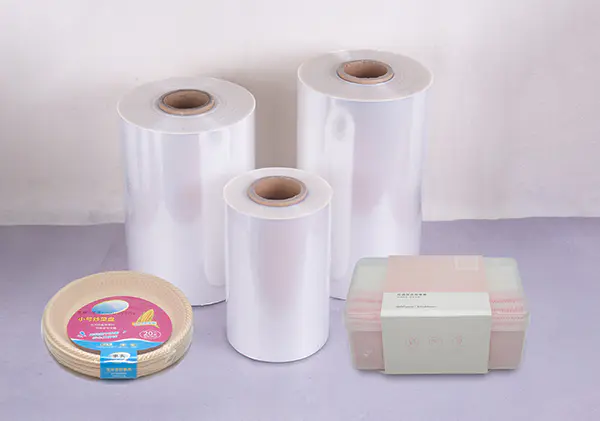
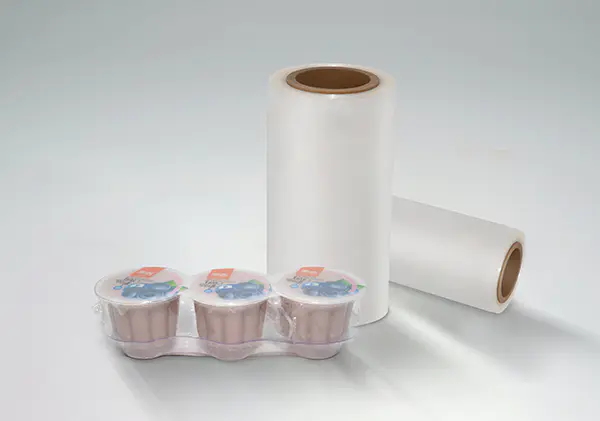
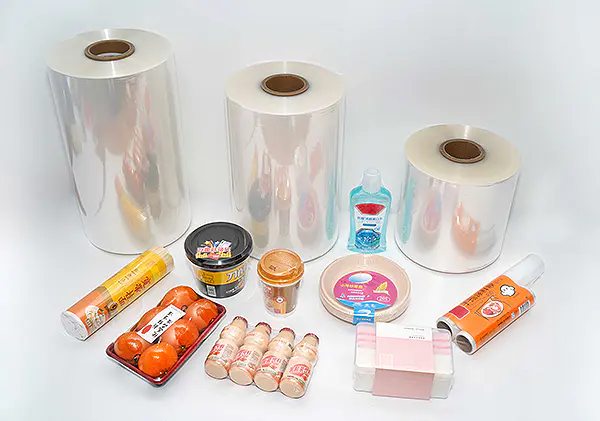
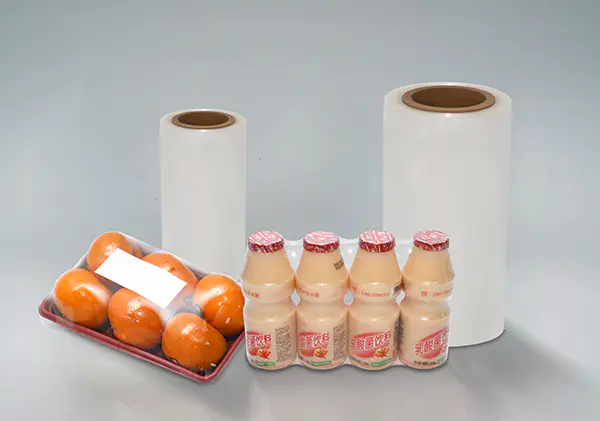
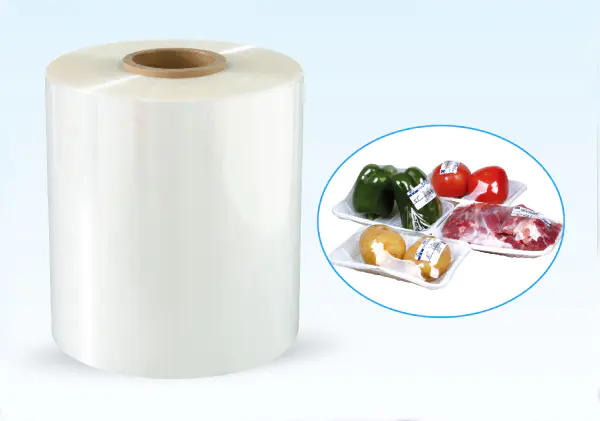
JT05 Antifog Crosslinked Shrink Film is an ideal o...

Copyright © Zhejiang Jiuteng Packaging Co., Ltd.
 简体中文
简体中文
 Home
Home
