
Packaging engineers evaluating shrink wrap materials are moving away from chlorine-based films and toward polyolefin shrink film for one simple reason: it solves problems that older materials never fully addressed. Traditional PVC shrink wrap seals at lower temperatures but releases hydrochloric off-gas during sealing, requires ventilation systems, and becomes brittle in cold storage. Polyolefin-based film avoids that chemistry entirely while matching or exceeding optical clarity.
The material is built from a blend of polyethylene and polypropylene resins, which gives it a wider sealing window, better puncture resistance, and a softer hand-feel that reduces noise on automated bundling lines. For operations running multi-shift production, that noise reduction alone can meaningfully improve the working environment on the packaging floor.
When a packaging line switches to pof shrink film, the change usually shows up first in sealing consistency. PVC film tends to seal inconsistently at high line speeds because its sealing range is narrow, which forces operators to slow down bundling equipment to avoid burn-through or weak seals. POF material has a broader sealing temperature range, which gives operators more margin for error without sacrificing seal integrity.
| Property | Standard PVC Film | Polyolefin (POF) Film |
|---|---|---|
| Sealing Temperature Range | Narrow | Wide |
| Odor During Sealing | Noticeable | Minimal |
| Cold Storage Performance | Brittle Below 0C | Stable to -40C |
| Recyclability | Limited | Widely Accepted |
| Optical Clarity | Good | Very High |
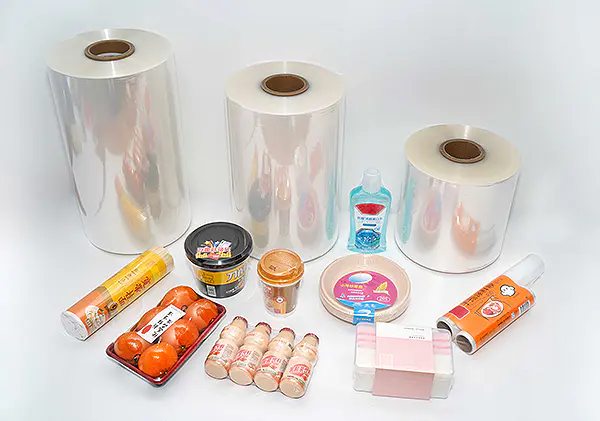
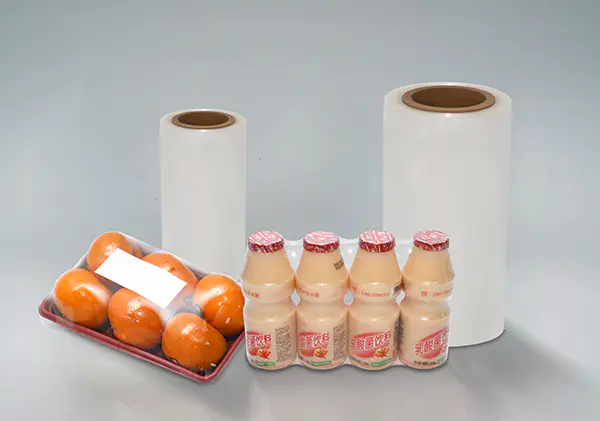
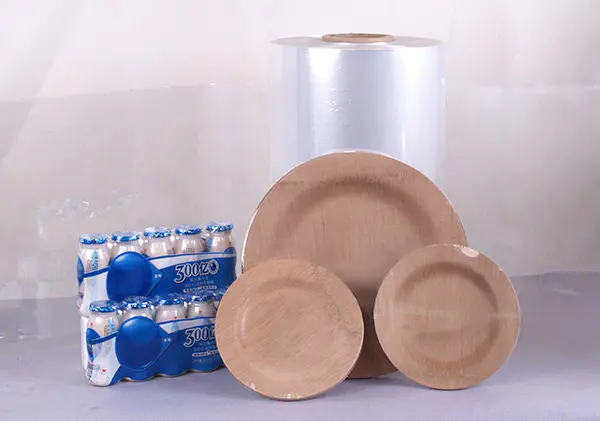
A polyolefin shrink film roll prepared for multi-pack bundling applications.
Beyond the sealing behavior, POF film also holds up better under mechanical stress. Its elongation properties allow it to stretch around irregular product shapes without tearing, which is particularly valuable for bundling items with uneven surfaces such as canned goods, cartons, or mixed-case pallets.
Crosslinked shrink film starts as a standard polyolefin base but goes through an additional processing stage that permanently changes its molecular structure. Instead of the polymer chains remaining loosely arranged, the crosslinking step bonds them into a network structure. That network is what gives the finished film its higher tensile strength, better puncture resistance, and more uniform shrink behavior across the entire sheet.
Crosslinked Film Production Flow
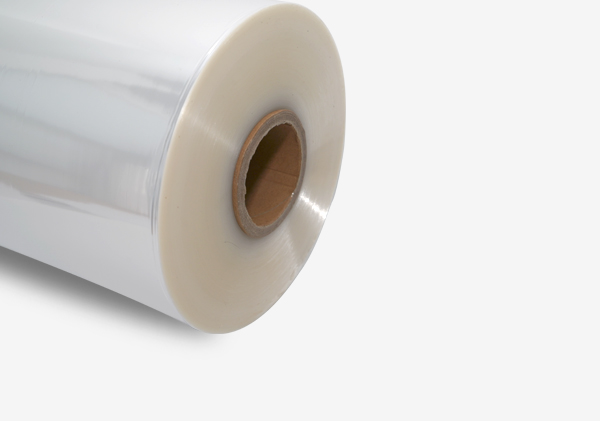
Crosslinked shrink film after biaxial orientation, showing a tighter, more uniform surface.
The crosslinking step is what separates a general-purpose shrink film from one that can withstand repeated handling, sharp edges, and long-distance transit without failing at the seal.
Choosing between standard polyolefin shrink wrap and its crosslinked counterpart often comes down to how a product line balances cost against performance. Standard POF film is more economical and performs well for lightweight, low-abrasion applications. Crosslinked film costs more to produce because of the added irradiation step, but it pays for itself on lines handling heavier loads, sharper product edges, or extended distribution cycles.
Performance Index by Film Type (0-100 Scale)
The gap widens most on shrink uniformity, which matters more than it sounds. A film that shrinks unevenly leaves loose corners or wrinkled panels that fail visual inspection on retail-ready pallets. Crosslinked film's tighter molecular network resists that unevenness even when the shrink tunnel has minor temperature variation across its width.
Centerfold shrink wrap is film that arrives pre-folded down its center, so a single roll unfolds into a tube around the product rather than requiring two separate sheets sealed on both sides. This configuration cuts down on the number of seals needed per pack, which reduces both material waste and the number of potential failure points on each bundle.
Average Line Throughput by Bundling Configuration (Packs per Minute)
maximum rated speedFewer seams also means fewer opportunities for a loose corner to catch during transit, which is one reason distribution centers with high pallet-handling volume tend to prefer centerfold configurations for multi-can and multi-bottle packs. The tradeoff is that centerfold film requires precise folding tolerance during manufacturing, since any misalignment in the fold shows up as an off-center seal on every pack that runs through the line.
Shrink tunnel temperature setting is one of the most common sources of packaging line downtime, because it directly affects both seal quality and film clarity after shrinking. Running the tunnel too cool leaves loose film that fails to fully conform to the product. Running it too hot causes scorching, pinholes, or uneven shrink that pulls the film away from sharp corners.
Shrinkage Rate Across Tunnel Temperature Settings
The curve flattens near the top of the range, which tells operators something practical: pushing temperature higher past a certain point adds very little additional shrink while increasing the risk of scorch marks. Most well-run lines find a stable operating point in the middle of the range and hold it there rather than chasing marginal shrink gains at the high end.
Film gauge and layer structure determine how a shrink film performs once it leaves the tunnel and enters distribution. A single-layer film is cheaper but offers a narrower balance of properties, while a multilayer structure lets each layer be engineered for a specific job: an outer layer for slip and abrasion resistance, a core layer for strength, and an inner layer for consistent sealing.
Standard vs Heavy-Duty Multilayer Film Attributes
Heavy-duty multilayer film trades some cost efficiency for a clear gain in puncture resistance and seal strength, which matters most on lines handling products with sharp edges, uneven weight distribution, or long transit times where the pack gets handled multiple times before reaching a shelf.
Because polyolefin shrink film is built from a single polymer family rather than a chlorinated compound, it is easier to route into existing polyethylene recycling streams. That single-material structure is also what makes downgauging possible without sacrificing strength: manufacturers can reduce film thickness while relying on the crosslinked structure to maintain tear resistance, cutting material use per roll without a proportional drop in performance.
For companies managing packaging film roll inventory across multiple production sites, downgauged crosslinked film also reduces freight weight and storage footprint, since more linear meters fit on a roll of the same diameter. Combined with its wider sealing window, this makes durable shrink film a practical lever for reducing both material cost and transport-related emissions without changing line equipment.
Standard polyolefin film is extruded and oriented without further treatment, while crosslinked film goes through an additional irradiation step that bonds the polymer chains into a stronger network, improving puncture resistance and shrink uniformity.
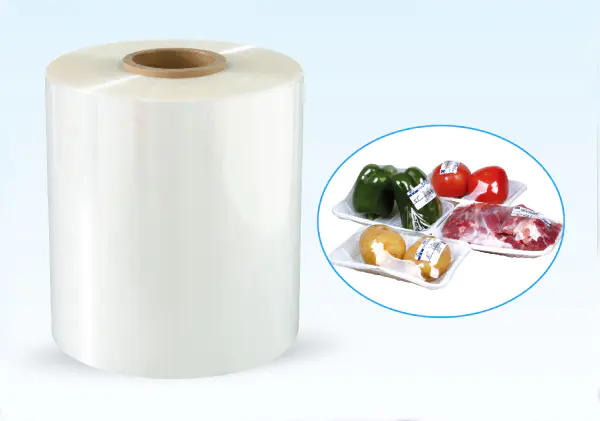
POF film is widely used in food packaging applications because it does not release the chlorinated by-products associated with PVC-based shrink wrap during sealing, though specific food-contact approval should always be confirmed against local regulatory requirements.
Centerfold film is pre-folded so one continuous sheet wraps around the product, which removes one of the two side seals a flat sheet configuration would otherwise require, reducing the number of failure points per pack.
Running the tunnel too hot can scorch the film surface and dull its clarity, while running it too cool leaves the film under-shrunk and loose, so most lines hold a stable mid-range temperature rather than adjusting toward either extreme.
Yes, the crosslinked molecular structure allows a thinner film to retain much of the tear and puncture resistance of a thicker, non-crosslinked film, which is why downgauging is more common with crosslinked material.
Products with sharp edges, uneven weight distribution, or long distribution chains, such as palletized cases, glass containers, or export shipments, generally benefit most from the added strength of a heavy-duty multilayer structure.
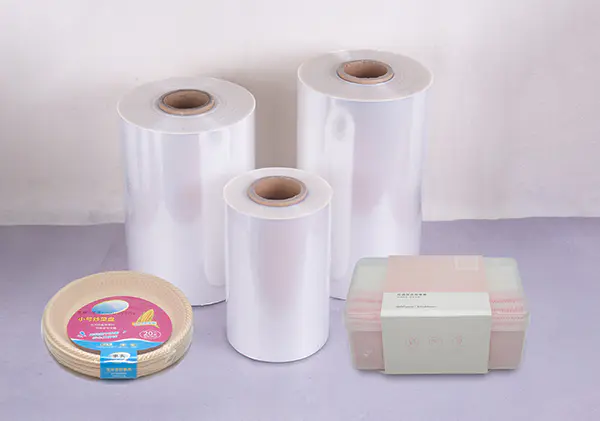
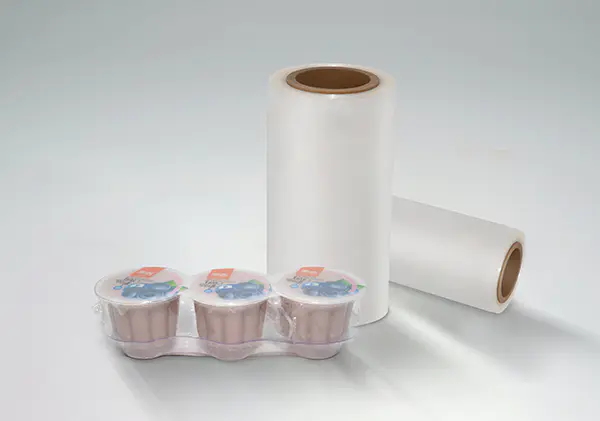
JT05 Antifog Crosslinked Shrink Film is an ideal o...
Copyright © Zhejiang Jiuteng Packaging Co., Ltd.
 简体中文
简体中文
 Home
Home
