
Retail and product packaging teams rarely think about shrink film until a batch of bags arrives loose, cloudy, or prone to splitting on the sealer. Yet the choice between a standard polyethylene bag and a purpose-built polyolefin shrink film has a direct effect on line speed, seal consistency, and how a product looks on a shelf. Shrink packaging bags are used across food service, electronics, printed media, and industrial parts, and each of these categories places different demands on gauge, shrink ratio, and clarity.
The wider category of shrink wrap bags includes several base resins, but polyolefin-based films have steadily displaced PVC in markets where odor, recyclability, and low-temperature sealing matter. A film that shrinks evenly at a lower tunnel temperature reduces energy use per pack and lowers the risk of scorching printed graphics, which is a common complaint with heavier gauge PVC bags.
| Film Type | Optical Clarity | Shrink Onset Temp | Odor Level | Recyclability |
|---|---|---|---|---|
| Standard PVC Bag | Moderate | Higher | Noticeable | Limited |
| Standard PE Bag | Low to Moderate | Moderate | Low | Good |
| POF Shrink Film | High | Lower | Very Low | Good |
Because clarity and low odor are non-negotiable for food-adjacent and consumer-facing packaging, many buyers now specify POF shrink film as the default rather than the upgrade. The remaining question is which structure of polyolefin film fits a given application, and that comes down to whether the film is crosslinked or non-crosslinked.
Procurement teams that switch resin families often underestimate how much a change in shrink packaging bags affects downstream steps that have nothing to do with the film itself. Carton fill weight, pallet stacking pattern, and even the humidity of the warehouse floor all interact with how a bag behaves once it leaves the tunnel. A film that performs well in a controlled lab test can still disappoint on a working line if the operator has not adjusted dwell time or air flow to match the new material. This is one reason experienced converters recommend a short trial run before committing to a full changeover, rather than relying only on a technical data sheet.
Beyond the tunnel itself, storage conditions before use matter more than most buyers expect. Rolls of shrink wrap bags left in a hot, humid stockroom can pre-shrink slightly or develop static that causes bags to cling together during loading. Keeping incoming rollstock in a stable environment protects both the shrink ratio and the printed graphics on custom orders.
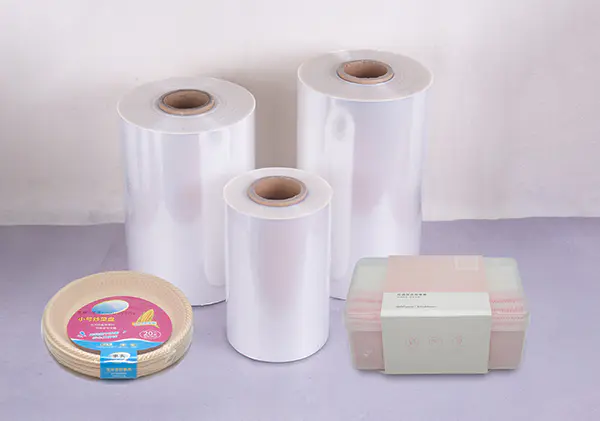
Polyolefin shrink film is produced from blends of polyethylene and polypropylene resins, coextruded into a multi-layer structure that balances puncture resistance with optical clarity. The outer layers are typically formulated for slip and scuff resistance, while the core layer carries most of the tensile strength. This layered approach is why polyolefin film reads as a clear plastic film rather than the slightly hazy appearance associated with single-layer PE.
Crosslinked shrink film starts from the same polyolefin base but goes through an additional irradiation step after extrusion. High-energy electrons bond adjacent polymer chains together, which raises the film's tensile strength, puncture resistance, and hot tack while it is still soft inside the shrink tunnel. In practice this means a crosslinked bag can hold its seal around a sharp-cornered box or a stack of printed cards without splitting at the fold, something a non-crosslinked bag of the same gauge often cannot do.
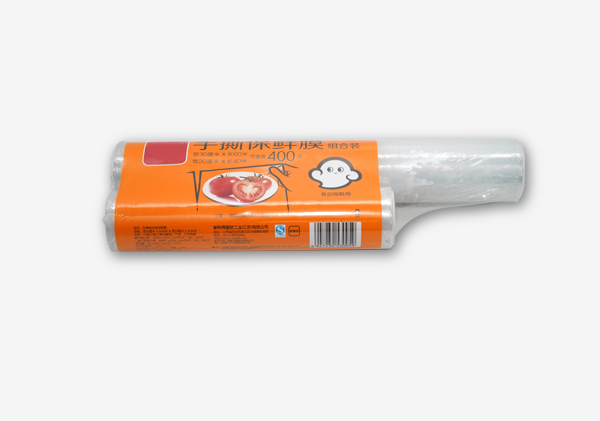
The tradeoff is cost and processing complexity. Crosslinking adds a manufacturing step, so crosslinked film is usually reserved for products with sharp edges, multi-pack bundling, or e-commerce shipping where the bag also functions as a light protective wrap rather than pure cosmetic packaging.
There is also a practical difference in how each film behaves under repeated flexing. Non-crosslinked polyolefin film tends to whiten slightly, a defect converters call stress-whitening, when it is folded sharply and then reheated during a second pass through the tunnel, which sometimes happens with irregular or overstuffed bundles. The crosslinked structure resists this because the bonded polymer network distributes stress more evenly across the film rather than concentrating it at a single fold line. For products that pass through a bundling step and a separate overwrap step, this resistance to stress-whitening can be the deciding factor even when raw puncture resistance is not the primary concern.
Seal integrity is another area where the two structures diverge. A standard polyolefin film reaches a workable seal window quickly but can also over-seal if the bar dwell time runs long, producing a seam that looks fused but peels under light pressure. Crosslinked film holds a stable seal across a wider dwell-time window, which is one reason packaging engineers with multiple product lines on a shared sealer often standardize on crosslinked stock even for items that do not strictly need the extra puncture resistance, simply to reduce the number of machine adjustments between changeovers.
Property Comparison: Standard PE Bag vs POF / Crosslinked Film
Shrink wrap bags come to a converter as flat rollstock, centerfold rollstock, or pre-cut bags with a side seal or end seal already formed. Centerfold shrink film is folded once along its width during extrusion, which lets a single roll open into a bag around a product without a separate bottom seal, reducing one point of potential leakage. This format is common for board games, printed booklets, and multi-item bundles where a clean bottom edge matters visually.
Custom shrink wrap, by contrast, is built to a specific bag dimension and often includes registered print so that a logo or barcode lands in the same spot on every pack. Buyers ordering custom shrink wrap should confirm gauge tolerance and shrink ratio early, since a bag cut too close to the product leaves no room for the film to pull tight without tearing at the seal.
Typical Gauge Range by Application (microns)
Flat seal bags remain the simplest and least expensive format, and they work well for single, low-value items such as stationery or hardware kits where visual seam lines are not a concern. For anything shipped through automated bundling equipment, though, centerfold construction is generally the safer default because it feeds more predictably through a rotary sealer.
Bag width tolerance is worth specifying explicitly rather than leaving it to a converter's default. A bag cut only a few millimeters wider than necessary can leave excess film bunching at the corners after shrinking, which looks unfinished even though the seal itself is sound. On the other end, a bag cut too tight forces the film to stretch before it even starts shrinking, which raises the chance of pinholing along stress points. Buyers who supply exact product dimensions, including any irregular protrusions such as handles or connector ports, generally receive a tighter first-run fit and spend less time on sample rejections.
Print registration deserves the same attention. Shrink packaging bags with printed graphics stretch unevenly as they shrink, so artwork intended to land in a fixed position, such as a barcode panel or a tamper-evident seal line, needs to be pre-distorted by the converter to compensate for the expected shrink pattern. Skipping this step is a common reason a first print run looks correct on the flat roll but appears skewed once the bag has been shrunk around the actual product.
Shrink force is the pulling tension the film generates as it contracts, and it is not constant across the tunnel. Film that enters the tunnel too cold will not develop enough force to remove wrinkles, while film held too long at peak temperature can over-shrink and pull away from corners. Mapping shrink force against tunnel temperature lets a line operator find the narrow window where a bag looks tight without stressing the seal.
Shrink Force vs Tunnel Temperature
A film that reaches peak shrink force at a lower tunnel setting gives an operator more room for error before print distortion or seal failure begins, which is often the real cost advantage over a cheaper bag that only performs correctly in a narrow temperature band.
Because POF film reaches usable shrink force at a lower temperature and holds that force across a wider band, lines running mixed product sizes tend to see fewer rejects than lines running PVC bags calibrated for a single product profile.
Line speed and dwell time interact with this temperature curve in ways that are easy to overlook. Running film through the tunnel faster to raise throughput effectively shortens the time available for shrink force to build, which can leave visible wrinkles on odd-shaped products even though the tunnel temperature reading looks correct. Slowing the belt slightly and lowering the set point together, rather than adjusting only one variable, tends to produce a more consistent finish because the film spends more total time in its optimal shrink window instead of just passing through a hotter zone quickly.
Understanding how shrink packaging bags are built helps a buyer ask better questions when comparing suppliers, particularly around where crosslinking sits in the sequence and how many conversion steps happen after the base film is formed.
Shrink Film to Shrink Bag Production Flow
Non-crosslinked polyolefin film skips the electron beam step entirely, which keeps unit cost lower and is perfectly adequate for lightweight, cosmetic packaging. The crosslinking stage is only worth the added cost when the finished bag needs to survive sharp corners, tight bundling, or rough handling during transit.
Quality inspection at the end of the line typically checks three things together rather than in isolation: gauge consistency across the web width, seal strength at random sample points, and optical haze under standard lighting. A roll can pass a gauge check and still fail in the field if seal strength varies from edge to center, which is why converters running tight tolerances sample seals from both edges and the middle of the web rather than only the center, where readings tend to look better than the true average.
Sustainability pressure is reshaping how shrink wrap bag specifications are written. Two parallel paths have emerged: films that incorporate a higher share of post-consumer recycled resin without changing the base polyolefin chemistry, and biodegradable shrink film formulated to break down faster under composting conditions once discarded. Neither path is a universal replacement yet, since recycled-content film can show slightly reduced clarity and biodegradable film often carries a shorter usable shelf life before it becomes brittle.
Recycled-Content Adoption in Shrink Film Orders
Buyers evaluating a biodegradable shrink film should request seal-strength data at their actual production gauge rather than relying on a supplier's general datasheet, since additive packages that speed up breakdown can also change hot tack behavior on the sealer.
Recycled-content film has moved from a niche request to a standard line item on many quote sheets, but the percentage that a line can absorb without a visible quality drop depends heavily on the source of the recycled resin. Post-industrial regrind, taken from a converter's own production scrap, tends to blend more predictably than post-consumer material collected from mixed waste streams, because the polymer chain length and contamination level are more consistent. Buyers targeting a specific recycled-content percentage for a sustainability claim should ask which source the supplier is using, since the two are not interchangeable on a technical data sheet even when the headline percentage looks the same.
A useful way to narrow down a specification is to start from how the product will be handled after it leaves the shrink tunnel, not just how it looks on day one. A retail item that sits on a shelf for months needs UV-stable, high-clarity film, while a product shipped loose in a carton benefits more from puncture resistance than from perfect optical clarity.
| Application | Recommended Gauge | Seal Type | Bag Format |
|---|---|---|---|
| Retail Multi-Pack | 50-75 micron | Side Seal | Centerfold |
| Printed Booklets | 30-50 micron | Side Seal | Centerfold |
| Electronics Accessories | 60-90 micron | End Seal | Flat Cut |
| Industrial Hardware | 90-150 micron | End Seal | Custom Shrink Wrap |
For anything with sharp edges, bundled units, or export shipping, specifying a crosslinked structure at the higher end of the gauge range is usually cheaper in the long run than reworking split bags on the receiving dock.
It is also worth reviewing seal type alongside format rather than treating them as separate decisions. Side seal bags generally suit products loaded from an open end on a horizontal line, while end seal bags work better where a vertical drop-load motion is already built into the equipment. Mismatching seal type to the loading motion is a common cause of slow changeovers, since operators end up rotating product by hand to fit a bag orientation the line was not designed for. Reviewing the full handling sequence, from loading through sealing to final inspection, before finalizing a specification tends to prevent this kind of avoidable friction later in production.
POF shrink film uses a coextruded polyolefin structure that offers clearer optics, lower odor, and a lower shrink-onset temperature than typical PVC or single-layer PE bags, while still sealing on most standard shrink tunnel equipment.
Crosslinked film is worth the added cost when a product has sharp corners, is bundled into a multi-pack, or ships loose and needs extra puncture resistance, since the irradiation step raises tensile strength and hot tack during shrinking.
Most retail and printed-media applications fall between 30 and 90 microns, while industrial or export packaging typically moves toward 90 to 150 microns; the right gauge depends on product weight, edge sharpness, and handling conditions.
Biodegradable film can perform similarly for short-term retail display, but it often has a shorter shelf life before becoming brittle, so it is best specified with a known turnover timeline rather than for long-term storage.
Centerfold construction removes one seal point along the bottom edge, which generally lowers the rate of seam splitting on automated bundling lines compared to bags built entirely from flat stock with two side seals.
Not directly. POF film reaches usable shrink force at a lower temperature, so tunnel settings calibrated for PVC often over-shrink or scorch POF film; line speed and temperature should be re-tuned when switching resin types.
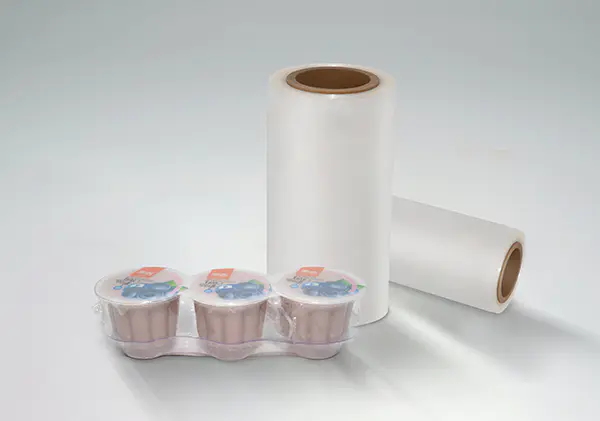
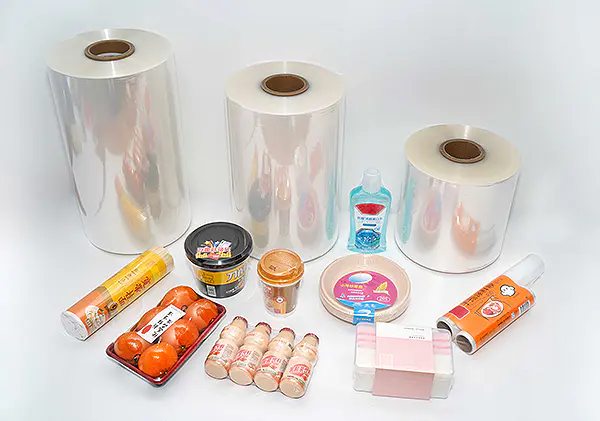
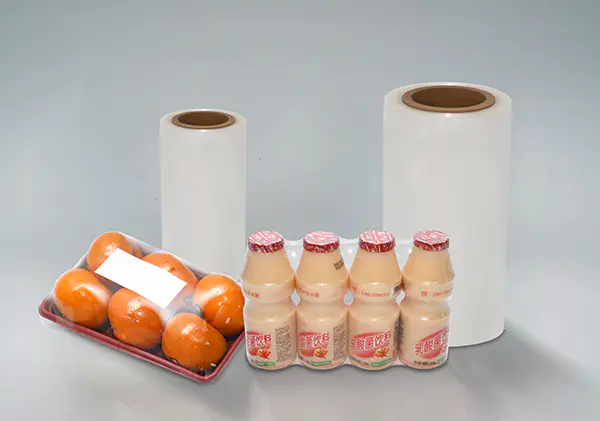
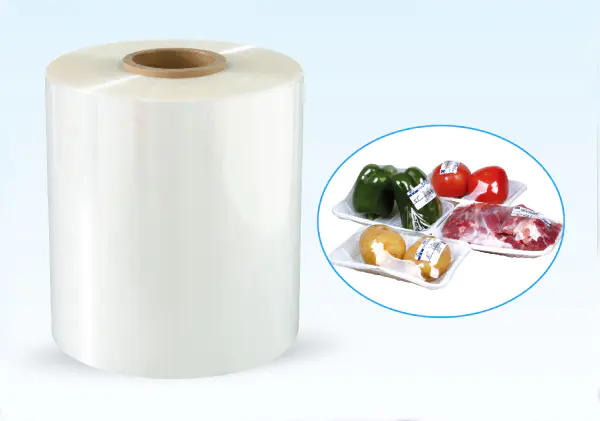
JT05 Antifog Crosslinked Shrink Film is an ideal o...
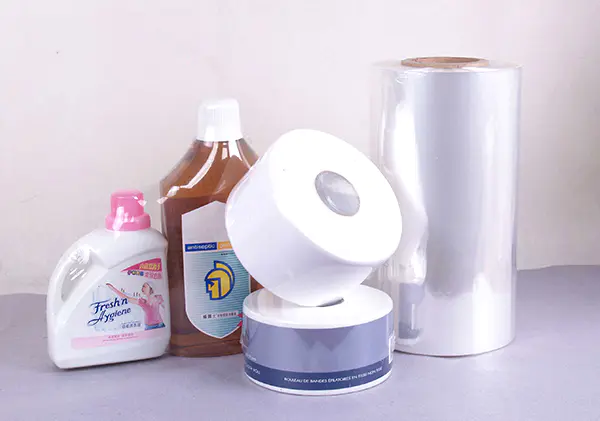
Copyright © Zhejiang Jiuteng Packaging Co., Ltd.
 简体中文
简体中文
 Home
Home
