
Polyolefin shrink film, often called POF shrink film in packaging plants, is produced from polyolefin-family resins rather than from a single pure polymer grade in isolation. Formulations commonly draw on polyethylene and polypropylene components, sometimes in layered structures, so that the finished web balances clarity, flexibility and controlled shrinkage when heat is applied on the packing line.
Polyethylene-related components often support toughness and a soft hand feel that helps the film drape around irregular shapes. Polypropylene-related components can contribute stiffness, optical clarity and shrink behaviour depending on how they are oriented in the process. The exact blend and layer design are set to the film's intended gauge and end use. Because small shifts in resin quality change haze, tear behaviour and shrink tension, raw material consistency is treated as a production control point: incoming lots are checked against agreed specifications so that extrusion and orientation see a predictable feedstock rather than a moving target.
Suitable polyolefin materials are selected and prepared according to the film specification. Moisture control, contamination checks and correct grading of components reduce gels and weak spots later in the web. Preparation sets the baseline for every downstream step.
Components are combined in ratios that target the intended balance of optics, mechanics and shrink. Uniform blending avoids streaks of different properties across the width. Where multilayer film is produced, each layer's recipe supports a specific role such as sealability, strength or surface behaviour.
Prepared material is melted and forced through extrusion equipment to form a continuous tube or sheet, depending on the line design. Temperature profiles, screw condition and die geometry influence melt uniformity. Unstable extrusion shows up as gauge bands, gels or poor clarity that orientation cannot fully repair.
The extruded film is stretched under controlled temperature and draw conditions so that molecular orientation develops in one or more directions. That orientation is what allows the film to shrink back toward its unstretched state when heated on a packaging machine. Draw ratios and temperature windows are held steady so that shrink force and shrink percentage remain within the band expected by the customer's tunnel or heat-gun process.
After orientation, temperature is managed so the structure stabilizes before winding. Cooling too slowly or unevenly can leave residual stresses that cause roll telescoping or uneven shrink. Controlled setting locks in the properties created during stretching.
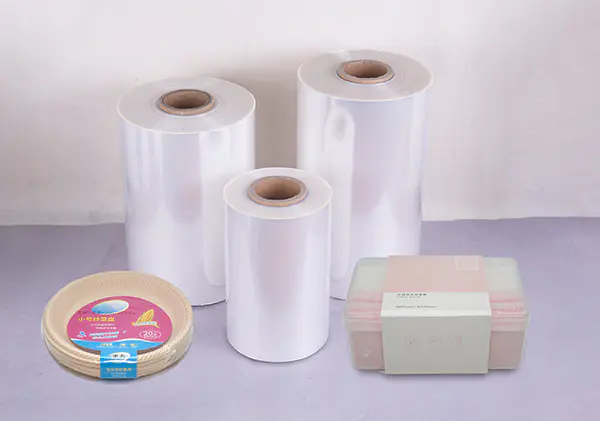
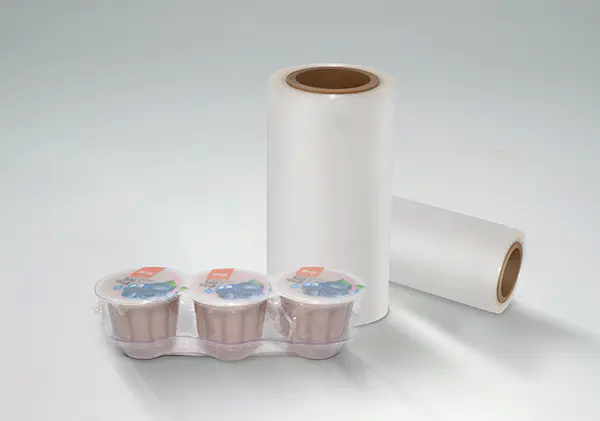
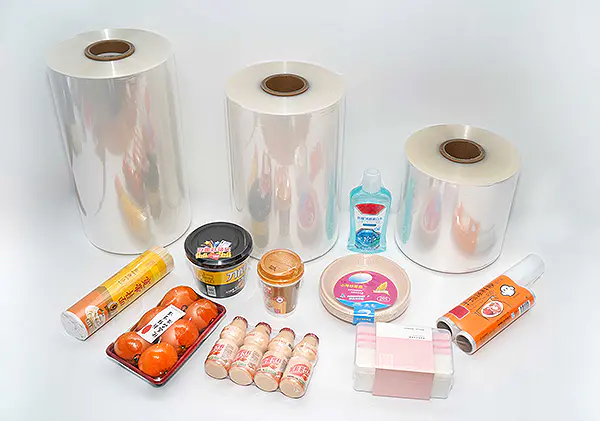
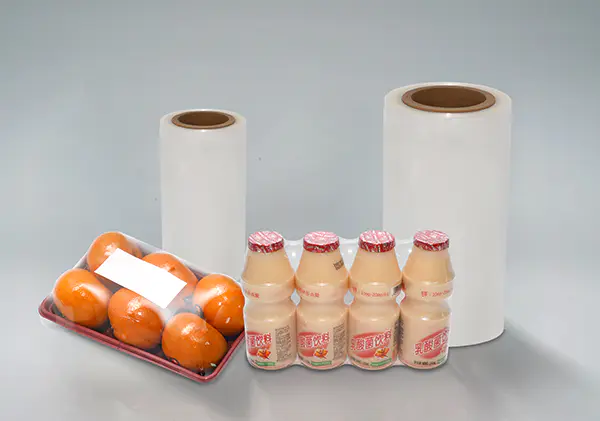
Finished film is cut to ordered widths and wound into rolls with attention to tension and edge quality. Poor winding creates soft rolls, hard bands or crushed edges that jam packing equipment. Roll identity and specification marking support traceability from resin lot to packed goods. Polyolefin Shrink Wrapping Film leaving this stage is defined by gauge, width, orientation type and the quality checks applied on the line.
Transparency depends on resin choice, melt cleanliness and orientation conditions. Dust, degraded polymer or unstable temperatures raise haze and can dull the retail appearance of the wrapped product.
Controlled extrusion and monitoring across the web keep thickness within the agreed tolerance. Uneven gauge causes loose panels on one side of a pack and over-tight, stress-whitened areas on the other when the film shrinks.
Formulation and process history determine how the film bends and folds around corners without cracking. Excessively stiff film fights the product shape; overly soft film may lack the toughness needed in distribution.
Orientation level and uniformity govern how the film responds in the heat tunnel. Balanced shrink reduces dog-ears and empty corners; unbalanced shrink twists light products or opens weak seals.
Mechanical properties such as resistance to puncture and tear grow from both the resin system and the orientation pattern. Handling on automatic lines and in transit depends on that strength remaining consistent across the roll. Polyolefin Shrink Film Manufacturer operations treat these quality attributes as linked outcomes of material and process control, not as isolated lab numbers.
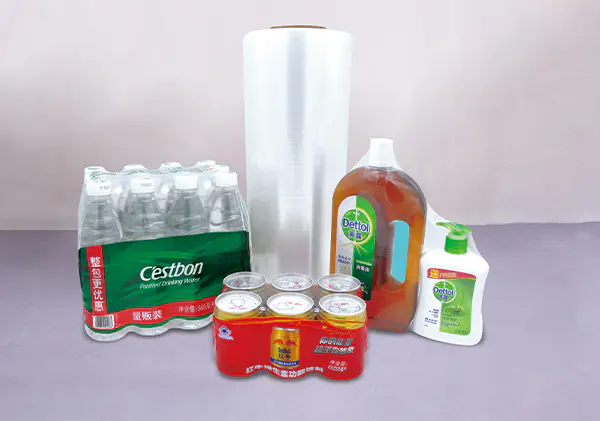
Transparent film keeps labels and product colour visible after wrapping, which supports retail display and barcode scanning when the shrink is smooth and the film remains low-haze.
A flexible web conforms to multipacks, trays and irregular outlines more readily than rigid alternatives, provided the shrink force matches the load.
Under suitable heating, the film contracts to form a close-fitting outer wrap. Tunnel temperature, dwell time and air flow must still match the film's design; incorrect heat settings produce either under-shrunk loose packs or scorched, brittle film.
When thickness stays within specification, machine settings transfer more reliably from shift to shift and from roll to roll, which stabilizes pack appearance.
Width and thickness are selected from available product ranges to fit product size and machine capability. Matching film to both the item and the equipment avoids chronic tracking and seal problems.
Controlled production narrows the gap between successive batches so that a line qualified on one lot is less likely to need full re-optimisation on the next. Finished specifications—width, gauge, orientation—are chosen to suit the packing format, whether single items or grouped units. Film width must align with folding boxes or wrappers; thickness must suit seal jaws and tunnel capacity. Manufacturing quality shows in the final wrapped look: tight corners without burn-through, clear faces without fish-eyes and seals that hold through shipping.
| Stage | Primary purpose | Quality influence |
|---|---|---|
| Material preparation | Clean, correct resins for the grade | Fewer gels; stable melt behaviour |
| Blending | Uniform composition | Even optics and mechanics across the web |
| Extrusion | Form continuous film | Gauge control; baseline clarity |
| Orientation | Build shrink character | Shrink balance and strength |
| Cooling and setting | Stabilize structure | Roll quality; residual stress control |
| Slitting and winding | Deliver usable roll formats | Edge condition; machine runnability |
Storage away from heat and direct sun preserves shrink potential until the film reaches the line. Rolls should be handled to avoid edge damage. Trial packs on the actual product and tunnel settings confirm that a new lot behaves like the qualified reference before long runs begin. When product shape or machine settings change, film specification may need review rather than forcing an unsuitable gauge to work.
Polyolefin shrink film is manufactured by preparing and blending polyolefin materials, extruding a continuous web, orienting it to create heat-shrink behaviour, stabilising the structure, then slitting and winding to ordered sizes. Material choice and process control together shape clarity, thickness uniformity, flexibility, shrink response and strength. Zhejiang Jiuteng Packaging Co., Ltd. produces polyolefin shrink films for heat-shrink packaging applications. Review of film gauge, width, shrink behaviour and packaging machine requirements against the product to be wrapped supports selection of POF film suited to consistent, clear finished packs.
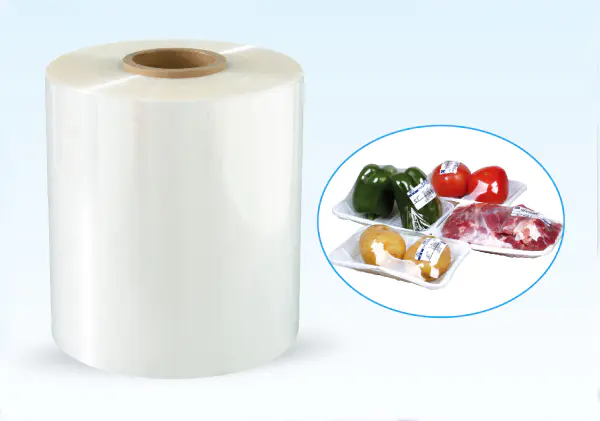
JT05 Antifog Crosslinked Shrink Film is an ideal o...
Copyright © Zhejiang Jiuteng Packaging Co., Ltd.
 简体中文

 Home

