
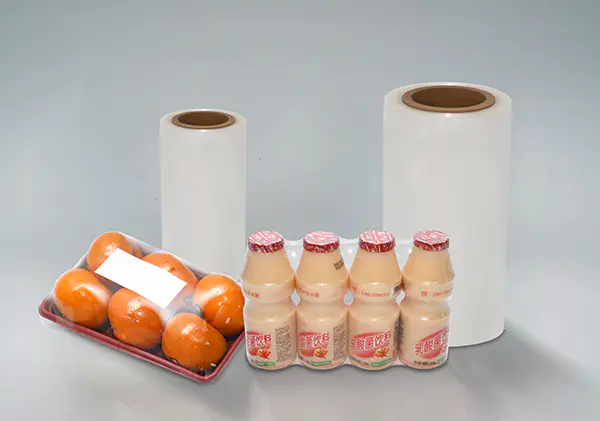
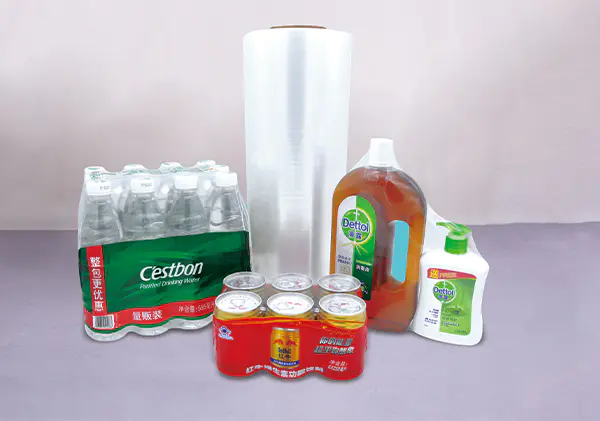
Anyone who's grabbed a six-pack of water bottles off a grocery shelf has probably noticed how tightly and cleanly that plastic wrap hugs every bottle, holding them together like they were somehow molded that way from the start. That's not tape or glue doing the work — it's a heat-shrink film that gets wrapped loosely around the bottles, then shrinks down tight once it passes through a heat tunnel on the packaging line. A lot of that film is POF, and it shows up in a lot more places than just the beverage aisle once you start noticing it. Shrink Film POF is a type of packaging film that tightens itself around a product when exposed to controlled heat, creating a snug, clean-looking wrap without needing much else to hold everything together. It's become a pretty common choice across food, household goods, retail products, and industrial items, mostly because it handles such a wide range of shapes and sizes without requiring a completely different setup for each one.
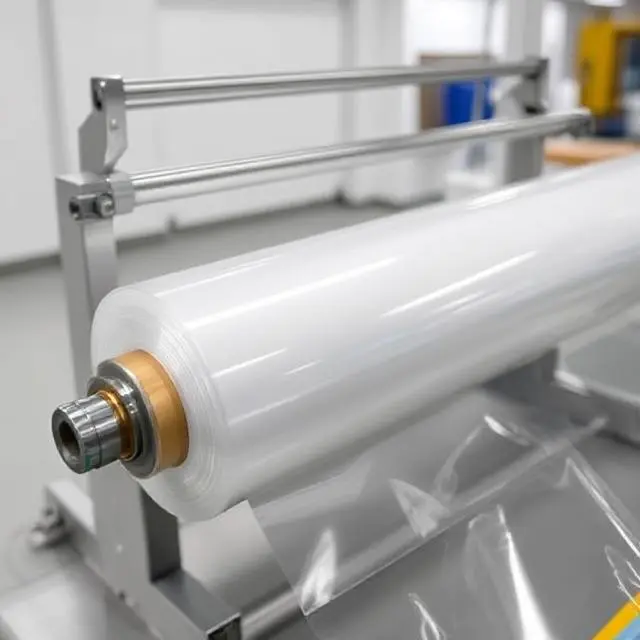
At its core, shrink film starts out loose around whatever it's covering, then gets heated just enough to pull tight and conform to the actual shape underneath. That's the whole trick — the film physically shrinks, rather than being stretched tight from the start.
A typical packaging run using this film follows a fairly consistent sequence:
| Stage | What's Actually Happening |
|---|---|
| Preparing the film | Getting the material ready before it goes around the product |
| Wrapping the product | Covering the item or group of items loosely |
| Applying heat | Running the wrapped product through a heat source so the film tightens |
| Checking the result | Making sure the final wrap looks clean and holds properly |
Because this process is relatively simple mechanically, it ends up working across a really wide range of products, from a single bottle to a stack of boxes bundled together for shipping.
Walk through any warehouse or retail stockroom and you'll see products in every shape imaginable — rectangular boxes, oddly shaped tools, stacks of cans, irregular household items. A packaging material built for one shape often struggles with another.
Manufacturers generally need their packaging to handle a few recurring needs:
A packaging material that flexes across different shapes saves a company from having to build a separate wrapping system for every single product line they carry.
Shrink Film POF fits into that need reasonably well, since its shrinking behavior naturally adapts to whatever shape it's wrapped around, rather than requiring a custom mold or fixed form.
Products obviously don't come in one standard size. Some are simple rectangular boxes, others have odd angles, multiple parts, or bundled groupings that need to stay together during shipping.
Shrink Film POF handles that variety because the shrinking process itself does the adapting — the film pulls tight around whatever shape it's covering, rather than needing to be pre-formed to match.
That flexibility shows up in situations like:
| Product Type | How the Film Gets Used |
|---|---|
| Boxed items | Wraps around the box for a protective outer layer |
| Multiple items bundled together | Holds a group of products together as one unit |
| Retail display products | Wraps neatly for a cleaner shelf presentation |
| Household goods | Adds a layer of surface protection during handling |
That adaptability is really what lets one film work across such a broad mix of product types on the same packaging line, without operators needing to switch materials constantly.
Protection is often the main reason a company chooses shrink film in the beginning. Products go through a lot between the factory floor and the store shelf — stacking, shipping, warehouse storage, sometimes rough handling along the way.
Shrink Film POF helps with that by:
It's worth being clear that this film isn't meant to replace every other form of protective packaging — a fragile item might still need cushioning or a rigid outer box. But as one layer in a broader packaging approach, it does a lot of practical work.
Packaging isn't purely functional. How a product looks sitting on a shelf genuinely affects whether someone picks it up or scrolls past it.
A tightly wrapped, clean-looking package tends to read as more put-together than something loose or poorly sealed.
Shrink Film POF supports that visual side of things through:
| Feature | Effect on the Package |
|---|---|
| Clear, transparent film | Lets the actual product show through |
| Smooth, tight wrap | Creates a neat, finished appearance |
| Flexible fit | Works with a variety of product shapes and sizes |
| Clean surface finish | Helps the product look presentable on a shelf |
For anything sold at retail, that visual impression matters a lot more than people might initially assume. A product that looks a little sloppy in its packaging can create doubt about the product itself, even if there's nothing actually wrong with it.
The right film ends up balancing both jobs at once — protecting the product physically while also making it look appealing sitting on a shelf.
Shrink Film POF gets used across a genuinely wide mix of industries, mostly because so many different products need some form of adaptable wrapping.
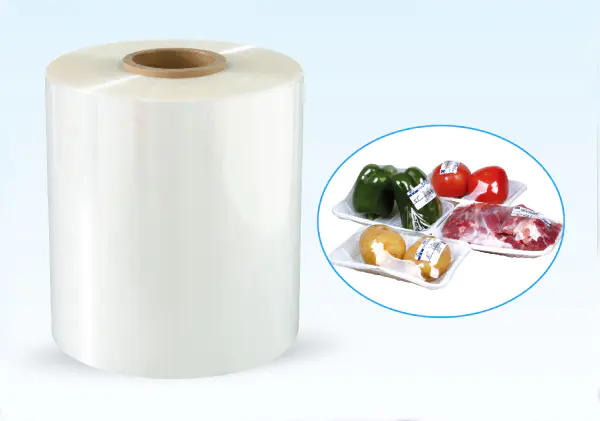
Food items often need packaging that keeps things clean while still letting customers see what they're actually buying before purchase.
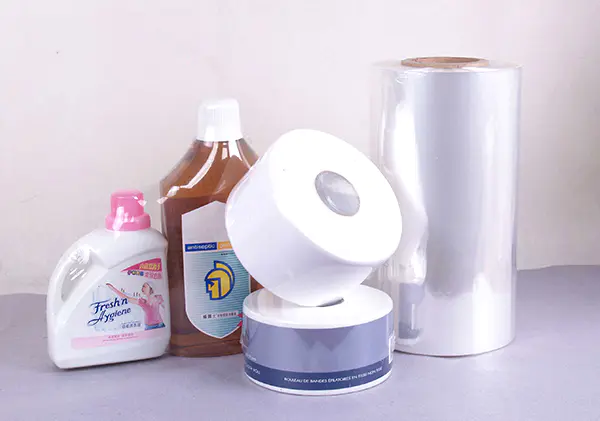
Everyday items around the house benefit from packaging that keeps them organized and protected, both on a store shelf and during shipping.
Plenty of retail products lean on shrink film specifically to improve how they look and how easily they can be handled at checkout or on a shelf.
Manufactured parts and equipment sometimes need a layer of packaging support just to survive the move from factory to warehouse to final destination.
Each of these industries has its own specific priorities, but the underlying need — a material that adapts without requiring a custom setup for every product — stays pretty consistent across all of them.
Packaging keeps shifting as businesses look for approaches that are practical without being overly complicated or wasteful.
A lot of that shift centers around:
Shrink Film POF fits comfortably into that direction because it works across so many different product categories rather than being locked into one narrow use.
That flexibility lets manufacturers adjust their packaging approach based on what a specific product actually needs, rather than forcing every item through the same fixed process regardless of shape or size.
Choosing the right shrink film is not about selecting a low-cost or widely used option. It depends on the product itself and how it moves through the production pr
A few practical things worth working through:
| Consideration | Why It Actually Matters |
|---|---|
| What the product actually looks like | Shapes what kind of wrap will actually work well |
| How the package needs to look | Affects customer perception on the shelf |
| How the packaging line is set up | Impacts how smoothly the film integrates into production |
| How the product will be stored afterward | Affects how well the wrap holds up over time |
The right choice for a specific film really depends on how well it fits into a company's actual production process, rather than just picking based on general reputation.
A solid packaging decision should hold up for what a company needs right now while still leaving room for whatever product changes might come down the line.
Efficient packaging matters a lot to a manufacturer trying to keep a production line moving without constant slowdowns.
Shrink Film POF supports that by offering a wrapping method that's relatively simple mechanically, yet still works across a lot of different product types without requiring separate setups for each one.
A few practical benefits that tend to show up:
When the packaging process itself isn't creating constant friction, manufacturers can spend more attention on things that actually matter more directly to customers — product quality, consistency, and getting orders out the door on time.
New products keep showing up in the market constantly, often with shapes, sizes, or packaging requirements that didn't exist a few years ago. A packaging material that only handles one narrow use case tends to become a limitation pretty quickly.
Shrink Film POF offers a genuine advantage here because it adapts to a wide range of shapes and packaging styles rather than being locked into one specific format.
That kind of flexibility tends to help companies:
As product variety keeps expanding across pretty much every industry, having a packaging material that can flex alongside that variety becomes a lot more valuable than one that's built for just a single use case.
Packaging keeps evolving as businesses look for approaches that balance protection, appearance, and practical everyday use, without overcomplicating the production process. Shrink Film POF continues to play a role in that evolution because it supports a genuinely wide range of packaging needs through flexible application and dependable wrapping performance. Its ability to adapt across different products, industries, and production setups is really what keeps it showing up in so many places — including, as it turns out, that unremarkable six-pack of water bottles sitting on a grocery shelf, wrapped tight and clean without anyone giving it a second thought.
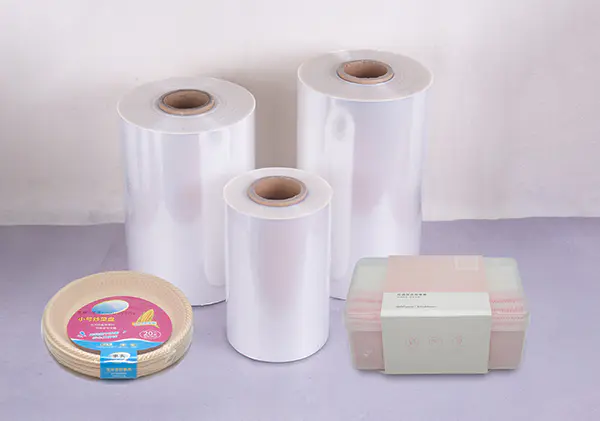
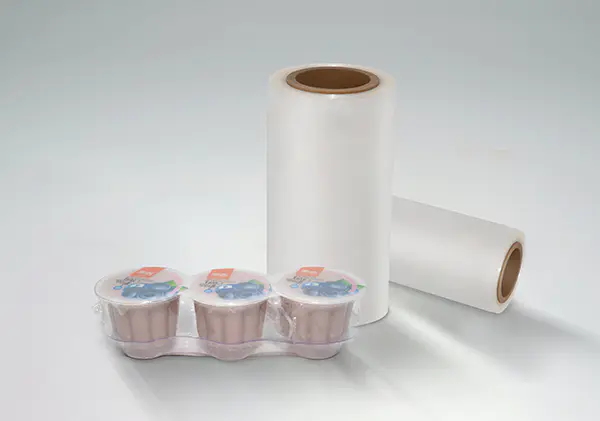
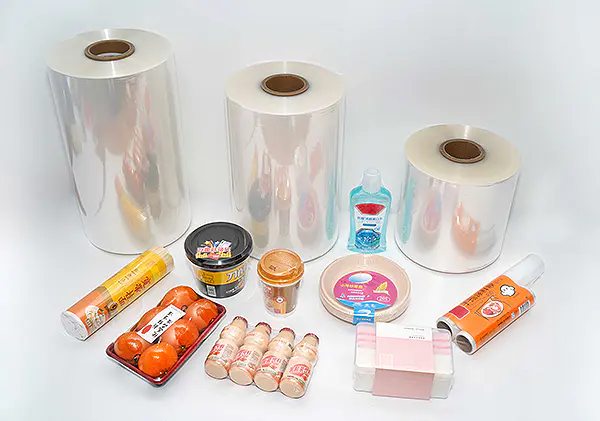
JT05 Antifog Crosslinked Shrink Film is an ideal o...
Copyright © Zhejiang Jiuteng Packaging Co., Ltd.
 简体中文
简体中文
 Home
Home
