
Packaging that obscures the product, allows moisture to penetrate over time, or loses its seal integrity before the product reaches the consumer creates problems at both the retail and the supply chain level. Food manufacturers and retail packaging buyers consistently face pressure to extend shelf life without compromising the visual presentation that drives purchase decisions at the shelf. Shrink Film POF — polyolefin shrink film — addresses both requirements through a single material: a clear, conforming barrier that protects the product while displaying it fully, without the opacity or bulk that older shrink materials introduced.
Shrink Film POF is a multi-layer polyolefin film that shrinks tightly around a product when exposed to heat during the packaging process. Unlike polyvinyl chloride alternatives, it is formulated without chlorine or plasticizers, making it suitable for direct food contact applications and compliant with food safety regulations across major markets.
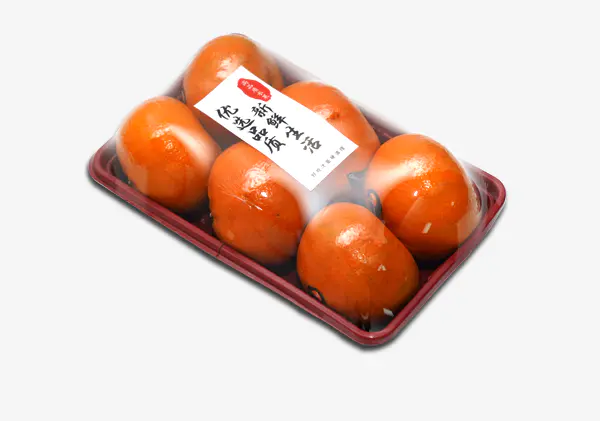
The film works through a heat-shrink mechanism:
The uniform shrink in both directions is a defining characteristic of polyolefin film. It produces packages that look clean and intentional rather than wrinkled or loose at the corners — which matters at the retail level where shelf appearance affects consumer perception.
The sealed shrink wrap around a food product creates a physical barrier that slows the exchange of air, moisture, and contaminants between the product and its environment. For products where oxidation drives quality degradation — baked goods, snack items, processed meats — reducing air contact extends the window during which the product remains at acceptable quality.
Moisture management works in both directions. The barrier retains moisture inside the package for products that need to stay soft, and keeps external humidity from penetrating for products that require dry conditions. The tightness of the shrink fit reduces the internal air volume, which further limits the oxygen available for oxidation reactions.
Shrink packaging provides a layer of protection against physical contamination, dust, and incidental contact during distribution and retail display. Products that would otherwise be exposed to handling during stacking, transport, and shelf replenishment are enclosed within the film, reducing surface contamination.
For products with irregular surfaces — bakery items, bundled goods, produce sets — the conforming nature of Shrink Film POF holds the package together and reduces the movement of product within the package during transit, which limits physical damage from vibration and impact.
A shrink-wrapped package provides a visible indication of tampering or opening. Once the film is sealed and shrunk, any subsequent opening breaks the seal in a visible way. For retail environments where product integrity is a customer and regulatory concern, this tamper evidence is a functional requirement that shrink packaging meets without adding separate sealing components.
The purchasing dynamic in food retail is strongly influenced by product visibility. Consumers make assessments of freshness, quality, and appeal based on direct visual inspection — color, texture, and form all factor into purchase decisions. Packaging that obscures the product shifts the evaluation to the label and the brand, which is a weaker position than letting the product speak for itself.
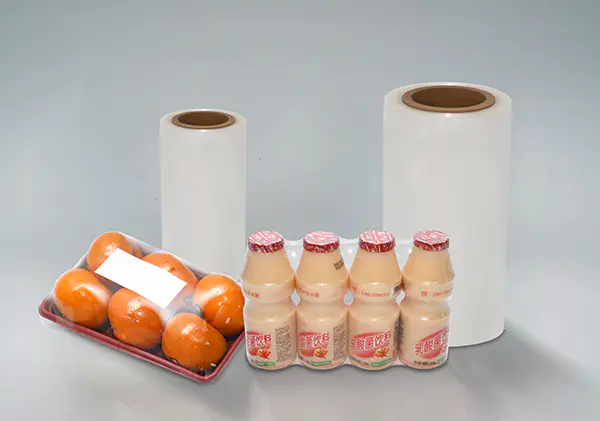
Clear shrink packaging allows full visibility while maintaining the protective barrier. The consumer sees the product as it actually appears, without distortion from haze or yellowing.
High-gloss shrink film enhances the visual presence of the product beyond simple clarity. The reflective surface creates a polished, premium appearance that flat or matte packaging cannot replicate. For products positioned in a competitive retail environment, packaging that looks clean and finished attracts attention in a way that functional but visually plain packaging does not.
POF shrink film accepts printed labels and maintains label adhesion after shrinking. For retail products that carry regulatory information, barcodes, or brand graphics directly on the package, the film must hold label adhesion through the shrink process and through the temperature and humidity variations of the distribution chain. Properly formulated polyolefin film manages this without the label lifting or the print degrading.
Bread, pastries, cakes, and confectionery items benefit from the moisture retention and visible presentation that shrink film provides. Products that arrive at the shelf looking dry or compressed have already lost consumer appeal before the customer makes a decision. A tight, clear shrink package keeps the product visible, preserves its physical condition, and retains the moisture that influences texture and freshness perception.
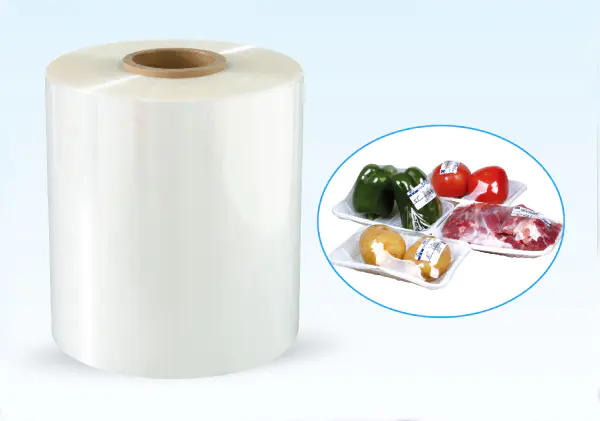
Poultry, sausage, processed meat products, and cheese benefit from the barrier properties of shrink packaging combined with the ability to display the product directly. For products where color and texture are primary quality indicators, packaging that maintains those visual qualities throughout the cold chain supports both the consumer decision and the retailer's shrinkage management.
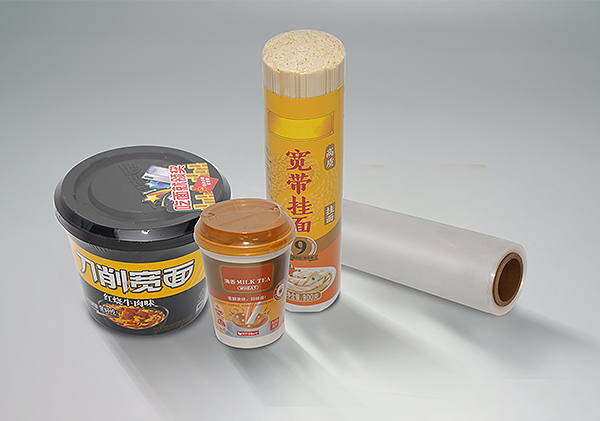
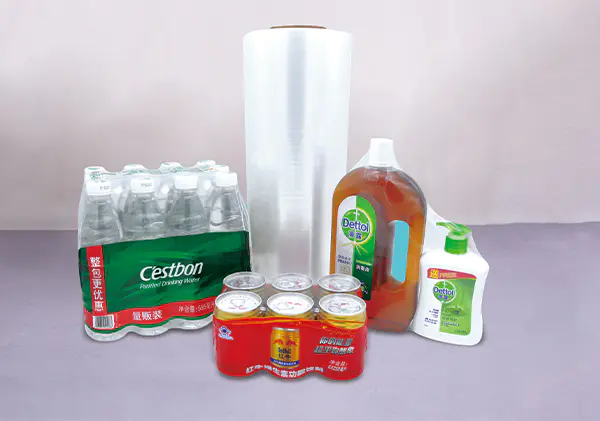
Packaged snacks, cookies, nuts, and similar dry goods use shrink film for bundle packaging, overwrapping, and multi-unit packs. The film holds the package together, provides a clean retail presentation, and adds a layer of protection against dust and handling contamination in environments where products are displayed on open shelves.
Grouped produce, herb bundles, and fresh items sold in sets benefit from the conforming wrap that holds the group together without crushing the product. The tight fit reduces movement and air volume around the product, which slows quality degradation while keeping the product visible.
| Property | POF Shrink Film | PVC Shrink Film | PE Shrink Film |
|---|---|---|---|
| Food contact safety | Suitable — no chlorine or plasticizers | Requires specific grade for food use | Suitable for food use |
| Optical clarity | High transparency and gloss | High clarity but yellows over time | Lower clarity than POF |
| Shrink behavior | Balanced in both directions | Cross-directional shrink predominates | Lower shrink ratio |
| Seal strength | Strong seal suitable for automated lines | Good seal strength | Variable seal quality |
| Fragrance permeability | Low — product scent retained | Higher permeability | Moderate |
| Environmental profile | No chlorine — cleaner combustion | Produces hydrogen chloride on combustion | Recyclable but thicker |
| Typical application | Food retail, cosmetics, pharmaceutical | Industrial wrapping, non-food retail | Beverage bundling, heavy products |
Shrink Film POF is engineered to run on standard L-bar sealer and shrink tunnel combinations as well as flow-wrapping equipment used in high-volume food production environments. The film's consistent sealing temperature range and reliable shrink response allow packaging lines to operate at production rates without frequent adjustments or downtime from seal failures.
For operations transitioning from older film materials, polyolefin film typically requires recalibration of tunnel temperature settings rather than equipment replacement — the sealing behavior differs from PVC, but the equipment compatibility is broad.
Products that cannot tolerate high mechanical pressure during packaging benefit from the low sealing tension of POF film. The shrink force is sufficient to form a tight package without compressing fragile products — baked goods with soft textures, produce items susceptible to bruising, or irregularly shaped products that would be damaged by a tight mechanical wrap.
Film thickness — or gauge — affects both the protective properties and the economic profile of the packaging program. Thinner gauges produce lighter, more economical packages suitable for lightweight products with lower protection requirements. Thicker gauges provide additional mechanical protection and barrier performance for heavier or more demanding applications.
Selecting the appropriate gauge for the product and distribution channel is a specification decision that affects total packaging cost as well as product protection performance. This is worth discussing with the film supplier before finalizing the packaging specification.
For packaging operations evaluating Shrink Film POF suppliers, the specification review should cover:
Packaging performance under laboratory conditions and packaging performance in a retail supply chain are different things. Film that seals cleanly in a sample run but develops seal failures after a week in a cold chain distribution environment has not been properly validated for the application. Film that appears clear on initial inspection but hazes under the temperature cycling of a distribution network does not deliver the shelf visibility it was specified to provide.
For food manufacturers and retail packaging buyers sourcing polyolefin shrink film at production volumes, working with a supplier who understands the gap between specification and field performance makes a measurable difference in the outcome. Jiuteng Packaging manufactures shrink packaging materials including polyolefin shrink film for food retail and commercial packaging applications, with product formulations verified for food contact safety and supply capability for consistent batch quality across volume production requirements. Zhejiang Jiuteng Packaging Co., Ltd. provides technical specifications, sample film for equipment trials, and production capacity documentation to support procurement decisions before volume commitment — and works with packaging engineers and buyers to match film specification to the actual conditions of the production line, distribution channel, and retail environment the product will move through.
JT05 Antifog Crosslinked Shrink Film is an ideal o...
Copyright © Zhejiang Jiuteng Packaging Co., Ltd.
 简体中文
简体中文
 Home
Home
