
If you have ever watched a pallet of product come off the line with loose, wrinkled film, or worse, torn packaging on a sharp cornered box, you already know why gauge selection matters. Picking the wrong thickness for Shrink Film POF is not just a technical detail buried in a spec sheet. It shows up as wasted material, slower packing lines, and complaints from customers who receive damaged goods. Getting gauge right, on the other hand, quietly saves money and keeps a packaging line running the way it should. This is a question that comes up again and again among procurement teams, packaging engineers, and factory floor supervisors. They are not asking what shrink film is. They already know that. What they want to understand is how thick their film needs to be for a specific product, a specific line speed, and a specific budget.
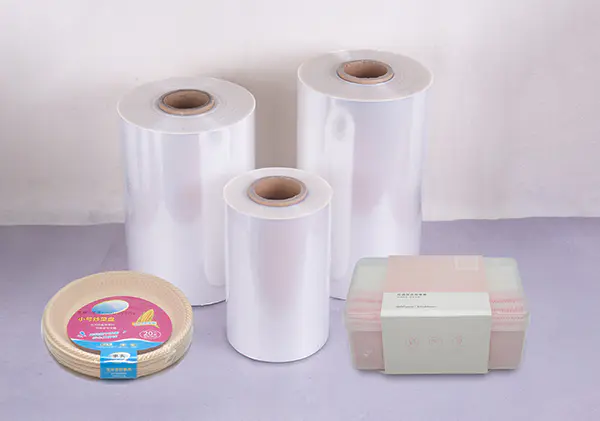
Gauge, in the world of shrink film, refers to how thick the film is. People sometimes use micron or gauge interchangeably, and honestly, the exact unit matters less than understanding the relationship it represents. Thicker film generally holds up better against punctures and rough handling. Thinner film costs less and shrinks tighter around irregular shapes, but it can tear if pushed past what it was made for.
Here is where a lot of buyers get tripped up. They assume thicker is automatically safer, so they default to ordering the heaviest film available. That instinct is understandable, but it often backfires. Heavier film uses more resin per wrap, adds cost across thousands of units, and can actually reduce clarity depending on the resin blend. A film that is too thick may also resist shrinking evenly around smaller items, leaving loose corners instead of a tight wrap.
Not necessarily, and this is worth sitting with for a moment. Strength depends on more than raw thickness. The molecular structure of the film, whether it has been cross linked, and how it was extruded all play a role. A moderately thick Cross Linked Film can outperform a heavier standard film when it comes to puncture resistance and stretch recovery. Thickness by itself does not determine performance, but it is still an important factor that many buyers consider when beginning the sourcing process.
Every product category places different demands on film. A useful way to think about this is by asking three questions before locking in a gauge choice.
Lightweight, soft items like small cosmetics or stationery rarely need heavy film. A lighter gauge Shrink Film POF wraps tightly, keeps costs down, and still holds up fine under normal handling. Push into heavier categories, though, like tools, electronics with boxed corners, or stacked multipacks, and the calculation shifts. These products push against the film from the inside, and a thin wrap simply will not survive the trip.
This point deserves its own space because it trips up so many buyers. A rounded, soft product and a boxed item with ninety degree corners are not the same challenge, even if they weigh about the same. Corners concentrate stress. Film that would comfortably wrap a rounded bottle can split at the seam when forced around a rectangular carton. In cases like this, either a heavier gauge or a Cross Linked Shrink Film becomes worth the extra cost, since cross linking improves tear resistance in exactly the situations where standard film gives out.
Packaging engineers sometimes forget that gauge selection is not purely a materials question, it is also a machine question. Faster lines apply heat quickly and move product through the tunnel with less dwell time. Film that is too thick may not shrink fully before it exits the tunnel, leaving a baggy, unfinished look. Film that is too thin, on the other hand, might over shrink or scorch under the same heat exposure.
When a factory manager asks which gauge to choose, a practical answer is that the decision depends not only on the product itself but also on the packaging equipment. A medium-weight film can provide steady performance across different line speeds, making it a common starting choice before adjustments are made through actual testing and production feedback.
Not every application calls for cross linked material, and there is no need to pay for it if standard film does the job. But certain situations genuinely benefit from it. A Cross Linked Polyolefin Shrink Film holds up under lower gauge while still resisting punctures, which means you can sometimes drop to a thinner spec without losing durability. This matters when a business wants tighter, more transparent packaging without sacrificing strength, such as with retail ready food items or multi pack bundles that need to look clean on a shelf.
The tradeoff is cost. Cross Linked Film typically runs more expensive per roll than standard film. Whether that expense is justified comes down to whether your product actually needs the extra resistance, or whether you are paying for a capability you will not use.
It is worth pausing here, because buyers researching Shrink Film POF often end up comparing it against PVC alternatives. The gauge discussion does shift slightly between the two. POF vs PVC Shrink Film comparisons usually show that POF holds strength at thinner gauges compared to PVC, partly because of how the material stretches and recovers. This means a business switching from PVC to POF may find they can drop down in thickness and still get comparable protection, which changes the cost equation in a favorable direction.
That said, PVC has its own history in certain applications and some buyers stick with it out of familiarity rather than performance. The decision often comes down to what result matters more: clarity and puncture resistance, which POF tends to handle well, or raw material cost per roll, where PVC sometimes has an edge depending on the supplier.
The chart below is meant as a general orientation rather than a strict rulebook, since every packaging line has its own quirks.
| Product Category | Typical Handling Demand | Suggested Gauge Direction |
|---|---|---|
| Light Stationery, Small Cosmetics | Low stress, soft edges | Lighter gauge |
| Books, Boxed Retail Goods | Moderate stress, some corners | Mid-weight gauge |
| Tools, Hardware, Electronics | High stress, sharp edges | Heavier gauge or cross-linked |
| Multipack Bundles, Food Trays | Variable stress, visual clarity needed | Mid-weight, often cross-linked for clarity |
| Palletized Bulk Shipments | High stress, long transit | Heavier gauge |
Treat this as a starting point for conversation with your supplier rather than a final answer. Actual trial runs on your own line will always tell you more than a general chart.
Gauge selection is not a decision that buyers need to handle completely on their own. A supplier with experience across different applications, including soft goods, hardware, and food service packaging, can provide practical insights that are difficult to gain through repeated testing alone. When choosing a POF Shrink Film Factory, consider whether the supplier understands products similar to yours and whether they can provide trial runs before moving forward with a larger order. A factory that evaluates different gauge options based on your actual product needs, instead of recommending a fixed specification for every case, can help reduce unnecessary costs and avoid production issues.
It also helps to ask how consistently a supplier holds gauge tolerance across production runs. Even a well chosen gauge target loses its value if the actual rolls vary noticeably from batch to batch, since that inconsistency shows up as unpredictable results on your packing line.
Choosing the right gauge for shrink film is rarely a one time decision made in isolation. It tends to evolve as product lines shift, as packaging speeds increase, or as a business moves into new markets with different handling and shipping demands. What starts as a simple question about thickness often opens into a broader conversation about material behavior, line compatibility, and long term cost control. Buyers who treat gauge selection as an ongoing conversation with their supplier, rather than a fixed choice made once and never revisited, tend to end up with packaging that performs consistently and costs less to maintain over time. Zhejiang Jiuteng Packaging Co., Ltd. works with businesses across these varied applications, helping match film specifications to real production needs rather than generic assumptions, and welcomes an inquiry from any team looking to refine their current packaging approach.
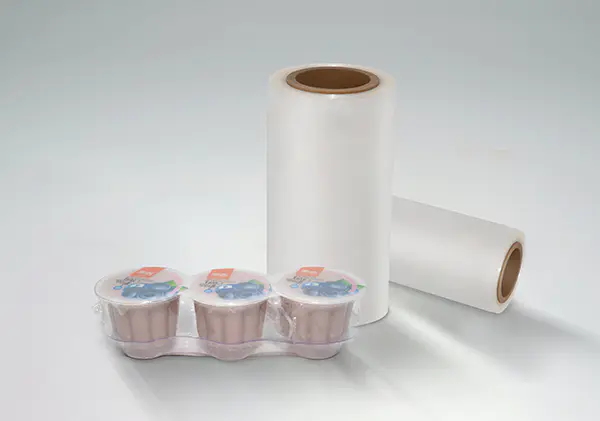
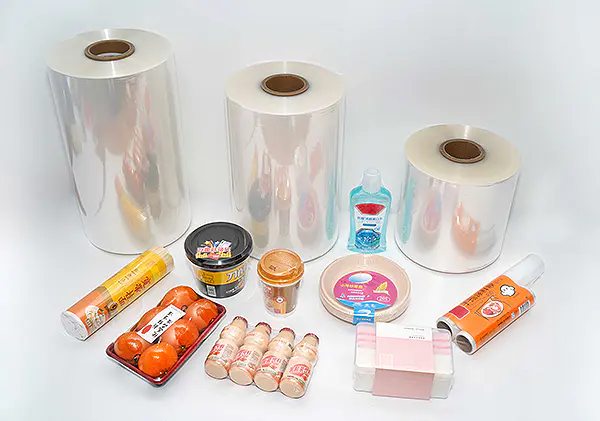
JT05 Antifog Crosslinked Shrink Film is an ideal o...
Copyright © Zhejiang Jiuteng Packaging Co., Ltd.
 简体中文
简体中文
 Home
Home
