
Packaging material selection in food production carries consequences that extend well beyond the immediate cost per roll. A film that seals inconsistently under high-speed production conditions, loses integrity when exposed to freezing temperatures, or shrinks unevenly around irregularly shaped products creates downstream problems — rejected units, customer complaints, and line stoppages — that dwarf any savings made at the procurement stage. Cross Linked Polyolefin Shrink Film has become the specified material in a growing share of food packaging programs precisely because its molecular structure addresses the failure modes that standard films encounter under demanding production and distribution conditions.
Polyolefin shrink film is a thermoplastic material — typically a blend of polyethylene and polypropylene — that contracts uniformly around a product when heat is applied. The film is extruded in multiple layers and oriented during production to build in the shrink potential that activates in the heat tunnel. In its standard form, the polymer chains within the film are linear and largely independent of one another.
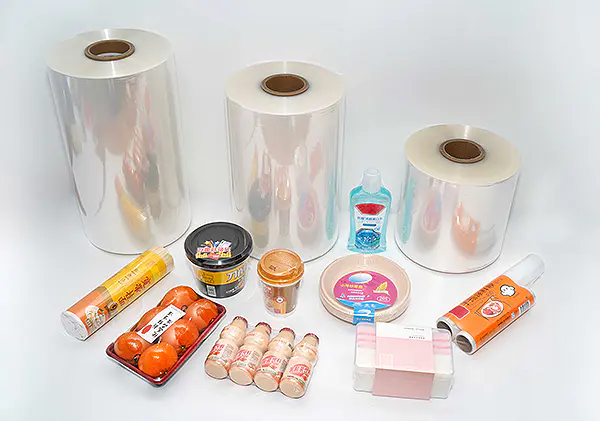
Cross linking modifies that molecular structure by creating covalent bonds between adjacent polymer chains. The process — typically achieved through irradiation after extrusion — converts what was a collection of parallel chains into a three-dimensional network. The film retains its thermoplastic shrink behavior, but the network structure changes how it responds to stress, heat, and mechanical force. It is that structural change, rather than any additive or coating, that produces the performance differences food packaging operations rely on.
The cross-linked network resists deformation more effectively than uncross-linked polymer chains, which can slide past one another under load. In practical packaging terms, this means the film is less likely to puncture when a sharp corner, bone, or protruding edge presses against it during wrapping or transit. For products with irregular geometries — bone-in meat cuts, irregularly shaped baked goods, products with protruding labels or closures — the puncture resistance of a Cross Linked Shrink Film reduces the reject rate at the packaging line and the damage rate in distribution.
A cross-linked film shrinks more evenly across its surface area than a standard film of comparable thickness. The network structure distributes the shrink force more uniformly, which reduces the tendency to develop thin spots, web distortion, or uneven gathering at the corners of a wrapped package. For retail-facing food products where appearance on the shelf influences purchase decisions, the visual quality of the wrapped package — tight, clear, with no fish-eye distortion or loose panels — is a direct function of how evenly the film shrinks around the product profile.
Sealing performance is where the difference between cross-linked and standard films becomes more consequential in food packaging. A heat seal in a shrink-wrapped food product is simultaneously a closure and a structural element — it must hold the film in tension around the product through handling, stacking, freezing, and thawing. The cross-linked network maintains seal integrity across a wider temperature range than standard polyolefin, which is why the material is specified for frozen food applications where the seal must remain intact at sub-zero storage temperatures and then survive the temperature cycling of distribution without delaminating or cracking.
The performance difference between these two material categories is real but not uniform across all applications. Understanding where the gap matters helps identify when the higher cost of the cross-linked version is justified and when standard polyolefin performs adequately.
| Property | Cross Linked Shrink Film | Standard POF Shrink Film |
|---|---|---|
| Tensile Strength | Higher | Moderate |
| Puncture Resistance | High | Standard |
| Shrink Consistency | Uniform | Variable at extremes |
| Seal Strength | High across temperature range | Adequate at ambient |
| Clarity | High | Good |
| Heat Tunnel Compatibility | Wide temperature window | Narrower window |
| Frozen Food Suitability | Yes | Limited |
| Cost | Higher | Lower |
| Gauge Range | Thinner gauges viable | Requires heavier gauge for equivalent strength |
The table reflects the material tendency rather than absolute performance limits — a well-specified standard POF film at an appropriate gauge will outperform a poorly specified cross-linked film in some metrics. But the cross-linked construction allows the food packager to achieve a given strength and seal performance at a thinner gauge, which has its own economics: less material per package, lower roll weight, and in some cases higher machine speed because the thinner film moves more freely through the heat tunnel.
Food contact compliance is not optional in food packaging material selection, and it is worth addressing directly rather than treating as an assumed property.
Cross Linked Polyolefin Shrink Film produced for food packaging applications is formulated without plasticizers, chlorine, or heavy metal stabilizers. It does not produce toxic byproducts when sealed or shrunk within normal operating temperature ranges, and it does not impart odor or taste to the packaged product — a property that matters particularly in direct-contact wrapping of fresh produce, bakery items, and processed foods where even a faint plastic odor would be commercially unacceptable.
Compliance with food contact regulations — including those governing direct food contact applications in major export markets — requires that the film manufacturer maintain documentation of material composition, additive specifications, and compliance testing. Buyers sourcing Cross Linked POF Shrink Film for food export packaging should request this documentation as part of the supplier qualification process, not as an afterthought following initial orders.
PVC shrink film was the prevalent choice in food retail packaging for an extended period and remains in use in some applications. The comparison between PVC and cross-linked polyolefin matters for operations that are evaluating a material transition or specifying a new packaging line.
PVC shrinks at lower temperatures and is available at low cost, but it produces hydrochloric acid gas when sealed at high temperatures — a risk that requires ventilation at the sealing station and creates concerns in food production environments. Its use in food contact applications is restricted or banned in several markets, and the environmental profile of PVC creates disposal and recyclability issues that are increasingly relevant to food brand sustainability commitments.
Cross Linked Polyolefin Shrink Film does not produce chlorine compounds during sealing or disposal. It is compatible with standard recycling streams for polyolefin plastics, and its food contact compliance is straightforward to document across major regulatory frameworks. For food packaging operations serving export markets or working under retailer sustainability programs that specify recyclable or chlorine-free packaging materials, the transition from PVC to cross-linked polyolefin eliminates a compliance exposure that will only grow more significant as packaging material regulations tighten.
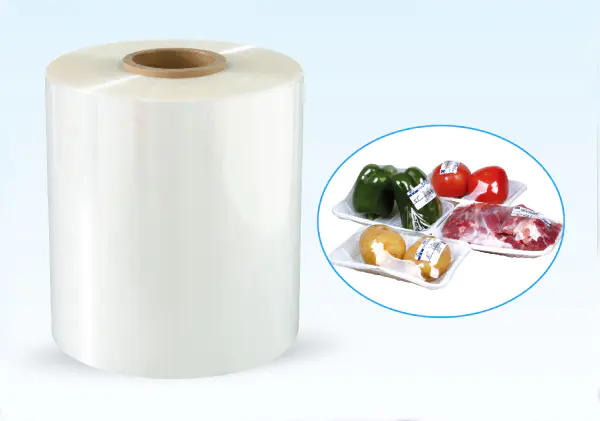
The combination of seal strength at low temperature, puncture resistance for products with irregular surfaces, and clarity for retail display makes cross-linked polyolefin the material of choice for frozen meat, poultry, seafood, and prepared meals. The film maintains its properties through freeze-thaw cycles in a way that standard polyolefin does not always reliably deliver, which reduces the rate of package failure during distribution.
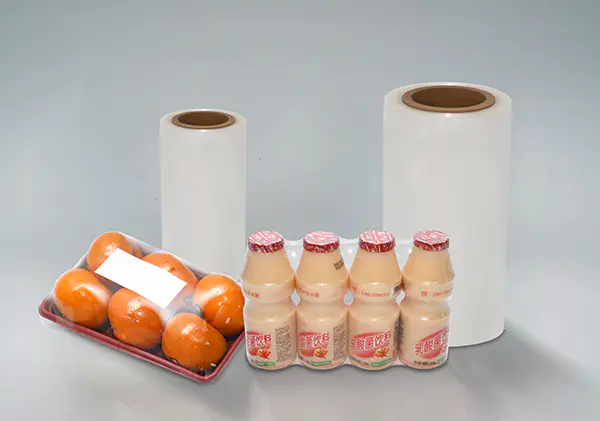
Bakery items and fresh produce wrapped in cross linked film benefit from the optical clarity that allows the product to present well at retail without secondary display packaging. The film's conformability around irregular shapes — a loaf with a crust that protrudes, a bunch of vegetables with stems at varying angles — combined with its even shrink behavior produces a tight, clear wrap that standard films sometimes fail to achieve without adjustment to tunnel temperature or conveyor speed.
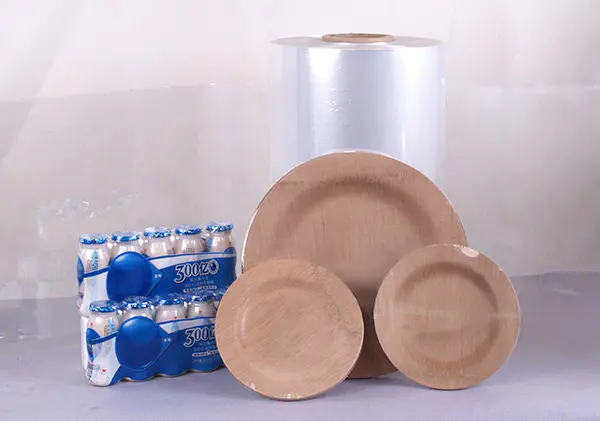
Grouping multiple individual units into a multi-pack with shrink film places high demands on seal strength and film integrity because the wrapped assembly is handled multiple times between the packaging line and the consumer. Cross linked film holds the multi-pack assembly together through distribution without the seal peeling or the film tearing at handling points — a failure mode that generates returns and damages the brand presentation at retail.
Cross Linked Polyolefin Shrink Film is compatible with the L-bar sealers, side-seal machines, and continuous flow wrappers that are standard in food packaging operations. Its behavior in the heat tunnel is generally more forgiving than standard POF — the cross-linked network provides a wider processing window before the film over-shrinks or develops burn marks, which translates to less sensitivity to tunnel temperature variation during high-speed production runs.
For operations running at high line speeds where tunnel dwell time is short, the cross-linked film's ability to shrink fully within a tighter time window without distortion is a practical advantage that reduces the rate of cosmetically rejected packages. This is particularly relevant in high-volume food production where the cost of rework or rejected output is a significant line-efficiency variable.
The gauge selection for a given application depends on the product profile, the line speed, and the target seal strength. Thinner gauges are viable with cross-linked film than with standard polyolefin because the cross-linked structure provides equivalent strength at lower mass — which also means lower material cost per package at equal performance, partially offsetting the higher per-kilogram cost of the cross-linked material.
For food packaging operations sourcing Cross Linked POF Shrink Film at volume, the supplier qualification process should address material traceability, food contact compliance documentation, gauge consistency across rolls and between production batches, and the manufacturer's capacity to supply consistently against a production schedule.
Gauge variation between rolls or within a roll creates problems at the packaging line — seal temperature settings calibrated to one gauge may produce inconsistent seals or burn marks on a roll that runs slightly thicker or thinner. Requesting specification data for gauge tolerance and roll-to-roll consistency, rather than accepting a nominal gauge specification, is a reasonable expectation from a supplier whose material will run on automated food packaging equipment. Zhejiang Jiuteng Packaging Co., Ltd. produces Cross Linked Shrink Film for food and consumer goods packaging applications, with food contact compliance documentation available for major export markets and production capability across a range of gauges and roll specifications. For procurement teams evaluating material specifications, requesting samples for compatibility testing on existing equipment, or comparing material performance against current supplier specifications, contacting the production team with application details is the starting point for a qualified supply arrangement.
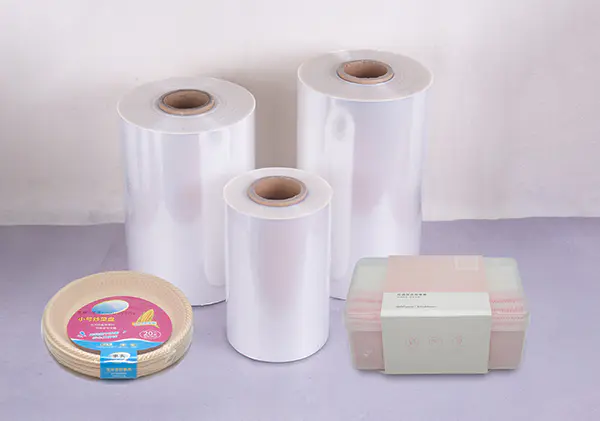
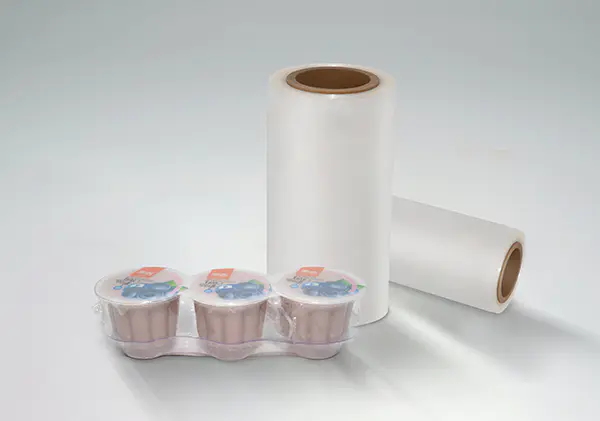
JT05 Antifog Crosslinked Shrink Film is an ideal o...
Copyright © Zhejiang Jiuteng Packaging Co., Ltd.
 简体中文
简体中文
 Home
Home
