
Packaging does more than hold a product together. The material chosen for wrapping a loaf of bread, a tray of pastries, or a case of bottled drinks influences how the product looks on a shelf, how well it survives transport, and how long it stays fresh once it leaves a production line. A film that wrinkles easily or fogs up under moisture can make even a well-made product look careless, while a tight, clear wrap gives the same item a polished, trustworthy appearance.
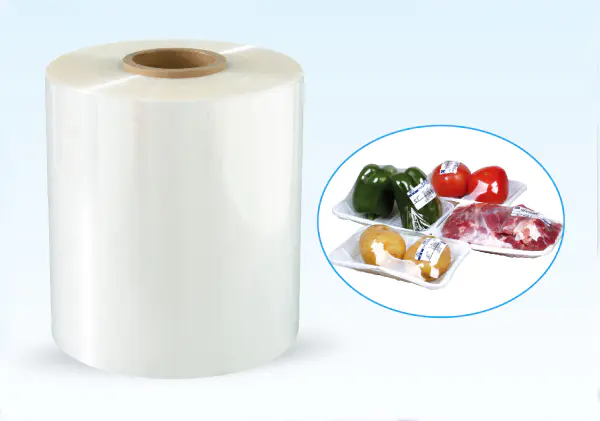
Shrink film has become a common choice across food packaging lines because it conforms closely to irregular shapes, holds multiple units together, and offers a see-through surface that lets shoppers inspect what they are buying without opening the pack. Among the available shrink film categories, one made from a blend of polyolefin resins has gained attention for balancing softness, clarity, and shrink response. Before adopting any wrapping material, though, food manufacturers need to weigh performance against the specific requirements of food-contact packaging, since not every film grade is formulated the same way or cleared for the same contact level.
A transparent wrap allows shoppers to see color, texture, and portion size before purchase, which matters for bakery items, snack multipacks, and gift assortments where appearance drives the buying decision. A hazy or dull film can undercut an otherwise attractive product.
Once heat is applied through a shrink tunnel, this category of film tightens around the product, pulling out slack and following the contours of boxes, trays, or bundled units. The result is a snug, wrinkle-reduced package that looks deliberate rather than loosely assembled.
Depending on the thickness and formulation selected, the wrap can act as a barrier against dust and surface contact during handling and shipping. It will not replace a sealed container for moisture-sensitive goods, but it does add a layer of protection for dry or shelf-stable items moving through distribution.
Because this film works with standard shrink-wrapping equipment, packaging operations can maintain a steady rhythm without reconfiguring machinery for every product run. Consistent film behavior under heat helps keep output steady across shifts.
Certain baked goods, particularly those sold as single units or small multipacks, are wrapped for freshness retention and shelf appeal. Direct-contact suitability should always be confirmed against the specific film grade before use, since bakery items often carry oils or moisture that interact differently with various plastics.
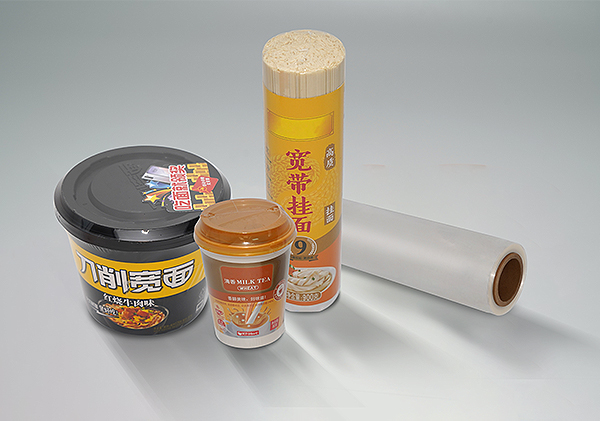
Individually wrapped candies, bars, and snack multipacks frequently rely on shrink film for a tight outer layer that keeps units together without adding bulky secondary packaging.
For frozen goods, shrink film is more often used as a secondary layer around boxes or trays rather than in direct contact with the product. Low-temperature flexibility should be checked, since film that becomes brittle in cold storage can crack or tear during handling.
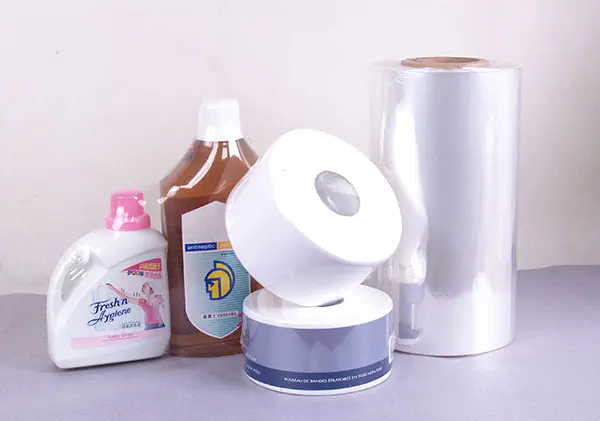
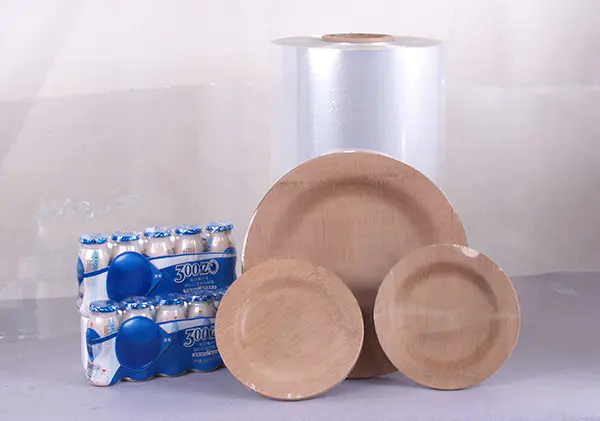
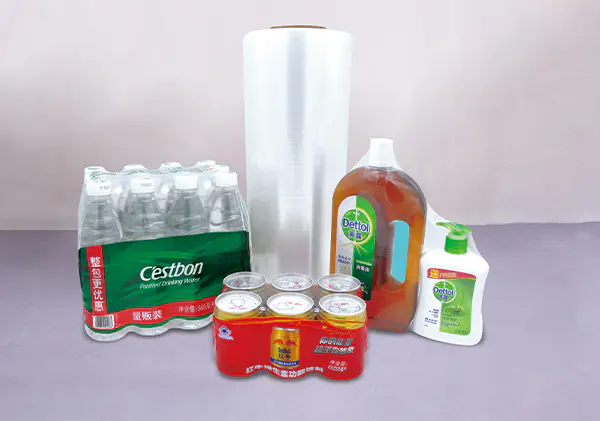
Multi-unit bundling of bottles and cans for retail display or bulk distribution is one of the common uses of this film category, holding units together securely while keeping labels visible.
Seasonal gift boxes and promotional bundles benefit from a clear outer wrap that presents the full assortment at a glance, adding a tidy, finished look to multi-item packs.
Packaging contact generally falls into two categories: material that touches the food surface directly, and material that wraps around an already-sealed container, tray, or box. These two situations carry very different requirements. A film used only as an outer bundling layer around sealed bottles does not need the same clearance as a film pressed directly against an unwrapped baked good.
Whether a polyolefin shrink film is appropriate for direct contact depends on the specific resin formulation, the type of food involved, the duration and temperature of contact, and the regulations that apply in the market where the product will be sold. A film that performs well as secondary packaging is not automatically cleared for direct contact, and assuming otherwise can create compliance gaps that are costly to correct later.
Before committing to any film for a food-contact application, packaging teams should request compliance documentation and test reports from the supplier, confirming that the specific grade being purchased — not just the general film category — meets the applicable requirements for the intended food type and contact scenario.
Different shrink film families bring different strengths, and the choice often comes down to the balance between clarity, flexibility, and the processing conditions available on a given line.
| Film Category | General Characteristics | Typical Packaging Role | Points to Review for Food Use |
|---|---|---|---|
| PVC-based shrink film | Offers strong clarity and a firm shrink response under heat | Often chosen for retail display wrapping and bundling | Odor sensitivity and disposal considerations may warrant extra review |
| PE-based shrink film | Tends to be more flexible and durable for heavier or bulkier loads | Common for multipack bundling and outer protective wrapping | Usually suited to secondary packaging rather than close product contact |
| Polyolefin-based film | Combines clarity with a softer, more adaptable shrink behavior | Works across a range of retail and bundling applications | Specific formulation and documentation should be confirmed for the intended food type |
No single category is universally superior; the right match depends on the product shape, the packaging line's heat settings, and whether the wrap will touch the food directly or sit around an already-protected package.
Choosing a suitable film specification involves matching several variables to the product and the production environment:
Film Thickness: Heavier products or sharp-edged packaging generally call for a thicker film to resist tearing, while lighter items can use a lighter gauge without sacrificing protection.
Film Width and Roll Size: Dimensions should align with both the product footprint and the shrink-wrapping machine's capacity, avoiding excess trim waste or undersized coverage.
Shrink Performance: The film should achieve a tight, even finish under the heat settings already available on the production line, without requiring equipment changes that disrupt output.
Seal Strength: A reliable seal helps prevent accidental opening during transport and shelf stocking, especially for multipacks that pass through several handling steps before reaching shoppers.
Equipment Compatibility: Confirming that the film works smoothly with existing sealing bars and shrink tunnels avoids slowdowns and reduces the risk of inconsistent output.
Food-Contact Documentation: Supporting paperwork, including relevant declarations and test reports, should be requested and reviewed for the specific product and contact scenario before any large-scale order is placed.
Loose or wrinkled wrapping is a common complaint on packaging lines, and the cause is rarely a single factor. Sometimes the film roll simply doesn't match the product dimensions closely enough, leaving extra material that never pulls taut. Other times the tunnel temperature was set for a different film batch and nobody adjusted it afterward. Walking through both the sizing and the heat cycle together, rather than guessing at one or the other, tends to get to the root of it faster.
Seals that look fine on the table but pop open during transit point to a different kind of problem. Temperature, dwell time, and the physical condition of the sealing bar all interact, and a slight drift in any one of them can produce a seal that passes a quick visual check yet fails the moment real pressure is applied. It helps to look at these variables as a set rather than troubleshooting them one at a time.
Punctures and small tears usually trace back to the product itself — a sharp carton corner, a tray edge that wasn't rounded off, or rough handling somewhere between the wrapper and the pallet. Film that's simply too thin for the load adds to the risk. Reviewing the thickness in use alongside how the packages are actually being moved and stacked often turns up the fix.
Uneven shrink, where parts of a pack look crisp and others still sag, generally comes down to inconsistent tunnel speed or heat zones that aren't quite matched to each other. Checking whether the film grade in use is really suited to the machine settings already running is usually a better starting point than tweaking the tunnel blindly.
Film chosen to fit the actual product — its shape, weight, and how it moves through the line — tends to hold up better over time than film picked off a generic spec sheet. Clear appearance, steady quality from roll to roll, and a straightforward fit with the equipment already in use all add up to fewer stoppages and fewer packs sent back for rework.
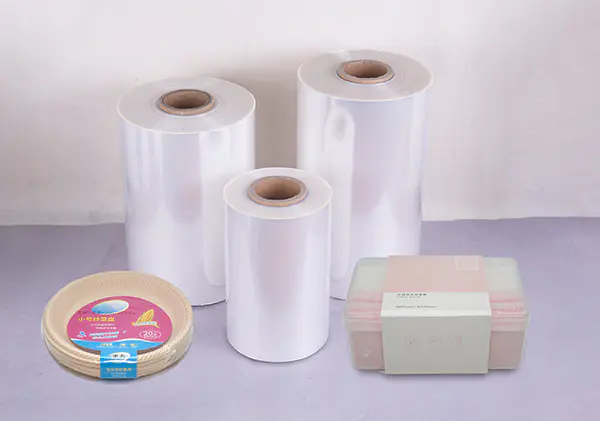
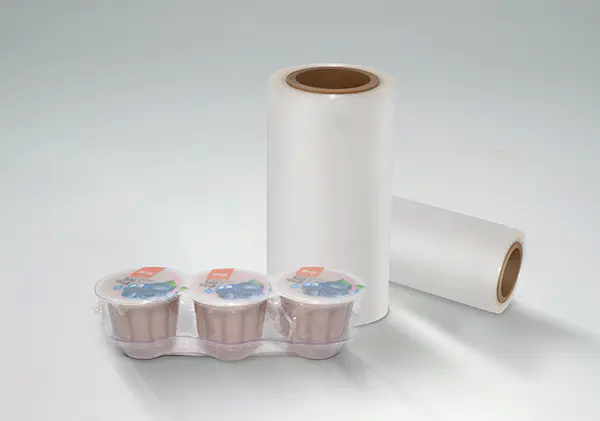
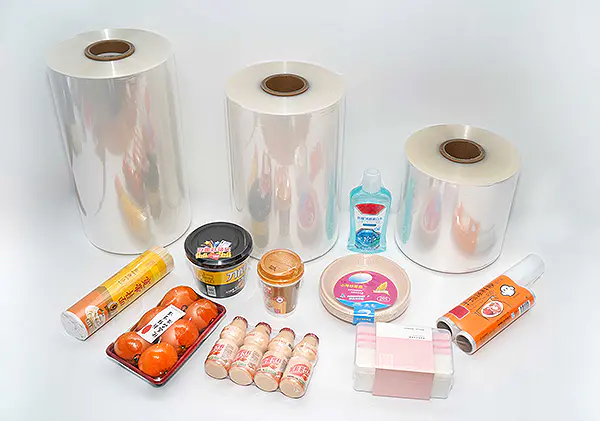
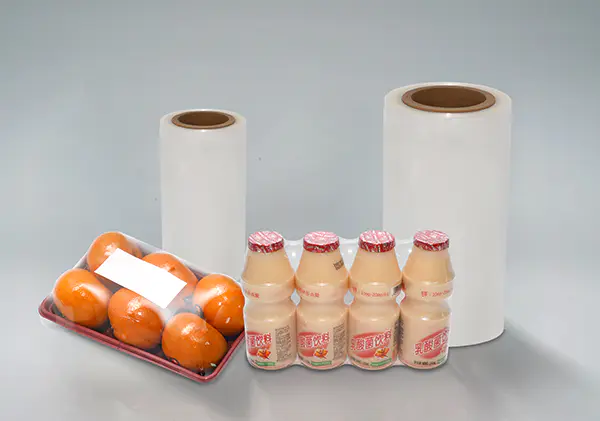
Zhejiang Jiuteng Packaging Co., Ltd. produces polyolefin shrink film for food brands and packaging operations looking for a wrapping material that behaves consistently across different product runs. The range covers a mix of thicknesses, widths, and roll sizes, built to work across different line setups rather than a single fixed configuration.
Teams considering a change in film are generally better served by laying out the product dimensions, the packaging method in use, and the equipment on hand before placing an order — along with whatever food-contact requirements apply to that particular product. Addressing these details early makes it easier to select the right specification from the outset, rather than discovering a mismatch after a trial run has already consumed time and material.
Whatever the deciding factor turns out to be — contact type, product category, or the particular conditions on a given line — the better approach is matching film characteristics to what the operation actually needs, rather than assuming any shrink film will behave the same way once it's running.
JT05 Antifog Crosslinked Shrink Film is an ideal o...
Copyright © Zhejiang Jiuteng Packaging Co., Ltd.
 简体中文

 Home

