
You have just received a new batch of packaging film rolls, the line operator loads one onto the machine, and within half an hour the packer reports that the film is not shrinking evenly around the tray. Is the film defective? Probably not. In most cases, the roll is fine; it is simply the wrong film for the product, the wrong film for the shrink tunnel, or the wrong film for the speed at which the line is running.
The purchasing decision for a packaging film roll comes down to matching five variables: polymer type, gauge, roll format, shrinkage behaviour and supplier consistency. This article walks through each one in practical terms, so you can compare quotes with more confidence and fewer surprises.
A packaging film roll is a continuous length of flexible plastic film wound on a core and used for wrapping, shrinking or bundling products. The similarities between different rolls end at the core. The polymer structure determines clarity, strength, shrink force, sealing behaviour and cost.
Polyolefin (POF) shrink film rolls are the most common choice for general packaging because they combine high transparency, uniform shrinkage, good seal strength and food-contact compliance. PE shrink film rolls are tougher and often cheaper per square metre, which makes them practical for large or heavy items. PVC shrink film still appears on some price lists, but plasticizer concerns, seal-bar corrosion and lower storage stability have pushed most modern lines toward polyolefin films.
A typical POF packaging film roll is a multi-layer structure: an outer layer for gloss and sealability, a core layer that provides mechanical strength and, in crosslinked grades, an electron-beam treatment that links the polymer chains. This is why datasheet terms such as three-layer or crosslinked matter far more than the colour of the cardboard core.
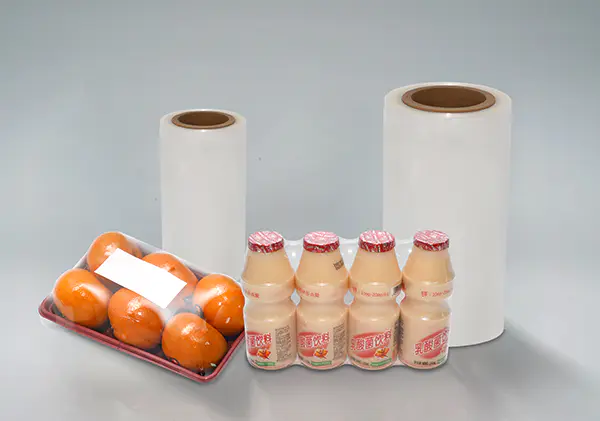
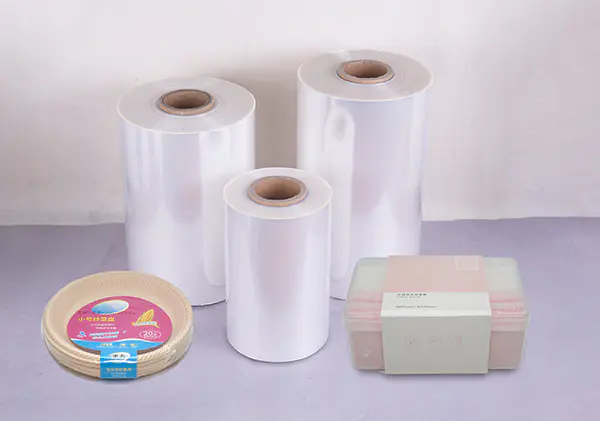 Biaxially Oriented Polyolefin Shrink Film with Balanced StrengthThis three-layer POF film is highlighted after the discussion of multilayer structure and crosslinking, offering gloss, sealability, and mechanical strength for packaging applications needing clarity and reliable shrink.View Product →
If you are new to the category, our overview of what is polyolefin shrink film explains how the film is made and where it sits in the packaging material family.
| Property | POF shrink film | PE shrink film | PVC shrink film |
|---|---|---|---|
| Typical thickness | 12 to 25 µm | 20 to 80 µm | 15 to 30 µm |
| Clarity after shrinking | High | Moderate | Medium |
| Puncture resistance | Good | Excellent | Fair |
| Shrink temperature range | 130 to 180 °C | 110 to 150 °C | 90 to 140 °C |
| Typical applications | Food, retail, printed packaging | Heavy industrial items | Legacy displays, now less common |
Buyers often focus on price per kilogram, but that number hides the real costs. What matters is yield, which is how many packages one roll can wrap, and running stability, which is how long the machine runs before an operator has to adjust or stop.
A reliable supplier prints target values and tolerances on the datasheet: width tolerance, thickness tolerance, shrinkage values and seal temperature range. If a supplier cannot provide these numbers, the line speed becomes their guess rather than your control.
A packaging film roll is not expensive because it is thick. It becomes expensive when it blocks the line, breaks in the tunnel or fails the drop test at the customer's warehouse.
The word shrink covers several different behaviours. A low-temperature shrink film activates at reduced heat input, which protects heat-sensitive contents such as chocolate or candles and lowers energy use in the shrink tunnel. A hot-slip shrink film contains an additive package that keeps film from sticking to seal bars and tunnel belts at high speed, which is the difference between 30 packages per minute and 50.
Crosslinked films take this further. After electron-beam crosslinking, the polymer network behaves like a stiff yet elastic membrane: it resists punctures from sharp corners, generates stronger shrink force around heavy products and allows a thinner gauge without sacrificing strength. This is the grade usually chosen for multipacks, hardware and large printed bottles.
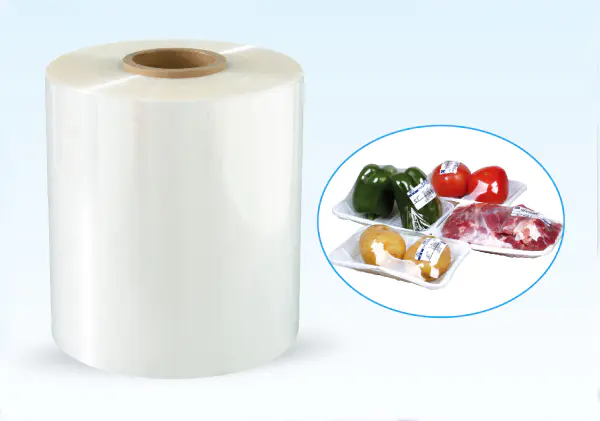
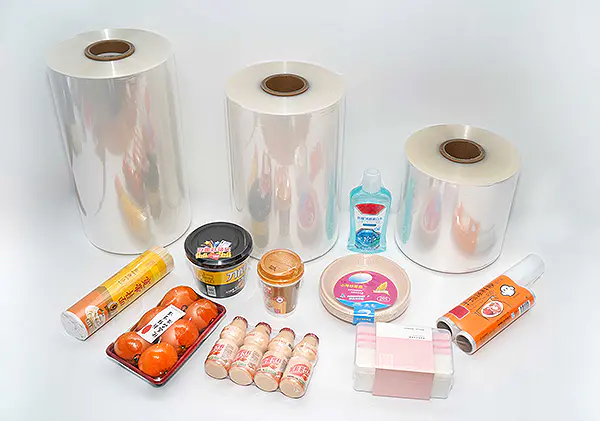 Electron-Beam Crosslinked Shrink Film for Heavy-Duty PackagingPositioned after the explanation of crosslinked film benefits, this grade provides enhanced puncture resistance and shrink force, making it suitable for multipacks, hardware, and large printed bottles where durability matters.View Product →
If line speed is the real bottleneck in your packing area, look at the interface between film and machine: seal bar temperature, tunnel air temperature and conveyor speed must be matched to the film grade. Small adjustments in these settings often recover more output than switching to a cheaper film.
There is no single best packaging film roll. There is only the best film for a given product, packing line and budget.
This is also the point where cheap film stops being cheap. A low-priced PE roll may save a fraction of a cent per unit on paper, but if the line runs slower, the energy bill rises and the return rate moves up, the total unit cost moves in the opposite direction. Evaluate film on total production cost: material, machine speed, energy, rejects and warehousing.
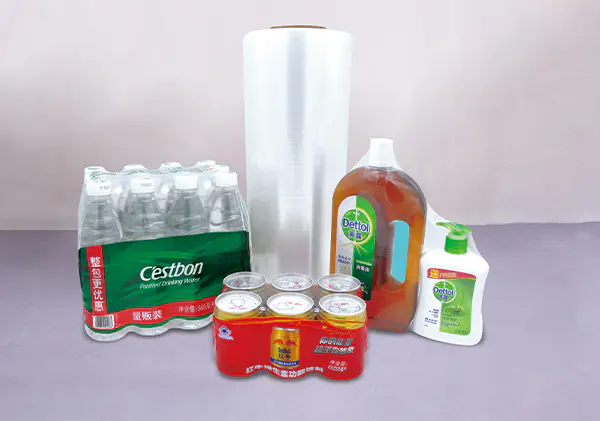 PE Shrink Film Grade JT09 for Cost-Conscious OperationsIntroduced following the warning about cheap film hidden costs, this PE film is worth evaluating when comparing total production cost, including line speed, energy, rejects, and warehousing, rather than price alone.View Product →
Before signing a contract, experienced packaging engineers do three things: run line trials with at least two production batches, measure thickness at several points across the web with a micrometer and compare shrinkage results against the datasheet. These steps sound basic but they filter out a surprising number of suppliers.
All film rolls look identical from the outside. What differs is consistency: gauge distribution along the roll, gel count, wrinkle level, core concentricity and how the film behaves after a month in the warehouse. Zhejiang Jiuteng Packaging, for example, states that it checks quality from material input through slitting and rewinding, holds certifications such as ISO, BRC, SGS and FDA, and uses imported raw material on all production lines. Whether you buy from them or from someone else, ask for these assurances in writing.
Location also matters. A film plant near a major port shortens shipping windows and reduces freight cost per roll. Jiuteng's factory in Jiashan, close to Shanghai, is an example of a location chosen with export packaging customers in mind. Distance from the factory is not a minor detail; it directly affects your landed cost and your safety stock.
A shrink film roll is heated so the film conforms tightly to the product, which suits tamper-evident and contour-fitting packaging. A stretch film roll is mechanically elongated around a pallet or bundle without heat. The two are not interchangeable.
Start with the product weight and the sharpness of its edges. Light retail items usually run on 12 to 19 µm POF; heavier multipacks and cornered items often need 20 µm or above in a crosslinked grade. Run a trial before committing to a full order.
The seal temperature may be above the film's recommended sealing window, the dwell time may be too long, or the film lacks a hot-slip additive. Check the seal-bar temperature first. If it sits inside the recommended range, ask the supplier for a hot-slip grade.
Keep rolls in their original packaging, away from direct sunlight, dust and heaters. Ideal storage is a dry room below 30 °C. High humidity or heavy compression on the roll face can cause blocking, so rotate stock and use older rolls first.
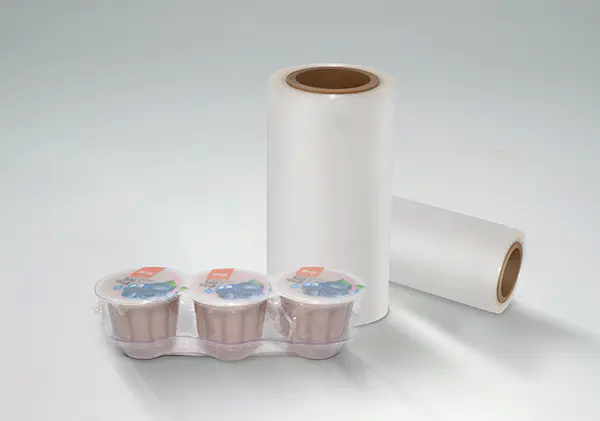
JT05 Antifog Crosslinked Shrink Film is an ideal o...
Copyright © Zhejiang Jiuteng Packaging Co., Ltd.
 简体中文

 Home

