
Packaging shrink is rarely a one-material decision. A beverage multipack, a boxed toy, and a heavy machine part place completely different demands on film clarity, strength, and heat tolerance. Buyers who start with price alone often pay twice: once for the film, and again for rejected packs, wrinkle complaints, and re-runs. The faster path is to define the application first, then match it with the right family of shrink film. This guide compares the major film types, explains the specifications that matter in a real production environment, and lays out a practical selection sequence.
Shrink film is a plastic web that is stretched in a controlled way during manufacturing and then cooled while held in that stretched state. When the wrapped product passes through a heat tunnel, the film relaxes and pulls tightly around the product. In packaging language, this memory effect creates the clean, glossy, tamper-evident contour that retailers and consumers expect from professionally packed goods.
Two factors decide whether that memory effect works well on your line: the film's orientation balance and the heat profile of your tunnel. A properly oriented film shrinks evenly in both the machine and transverse directions. Uneven orientation shows up as wrinkles or distorted printing, which is why manufacturers that control every step, from imported quality raw materials to slitting and folding, tend to deliver more consistent runs.
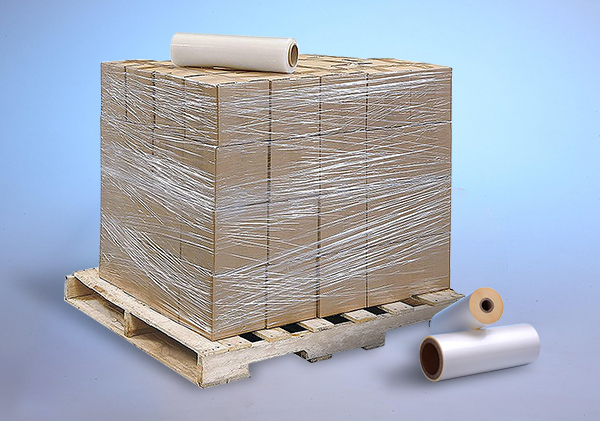
It is also worth distinguishing packaging shrink from stretch wrapping. Shrink film requires a sealed envelope and heat to form to the product. Stretch film is wrapped around a pallet load on cold equipment and held in place by elastic tension. Both products stabilize goods, but they solve different problems and are not interchangeable on a packing line.
The four families below cover the large majority of commercial packaging shrink applications.
| Film type | Shrink temperature | Clarity | Mechanical strength | Typical use |
|---|---|---|---|---|
| POF (polyolefin) | 150-180 °C | High | Good | Retail packs, multipacks, printed film |
| PVC | 90-140 °C | Medium | Moderate | Budget overwraps, shape-following items |
| PE shrink film | 160-200 °C | Low-medium | High | Heavy or abrasive products |
| Crosslinked POF | 140-180 °C | High | Very high | Sharp edges, cold chain, high return risk |
POF remains the default for most consumer goods because it combines optical clarity, a broad sealing window, and food-contact compliance. PVC still appears in price-sensitive overwraps, but it is being phased out in many markets because of environmental concerns. PE shrink film sacrifices some transparency but offers toughness for industrial items. Crosslinked POF is produced with electron-beam treatment after extrusion, which raises tear and puncture resistance while keeping the clarity that retail packaging requires.
If your products have sharp corners, heavy weights, or a history of film breakage in transit, a crosslinked grade is a proven upgrade.
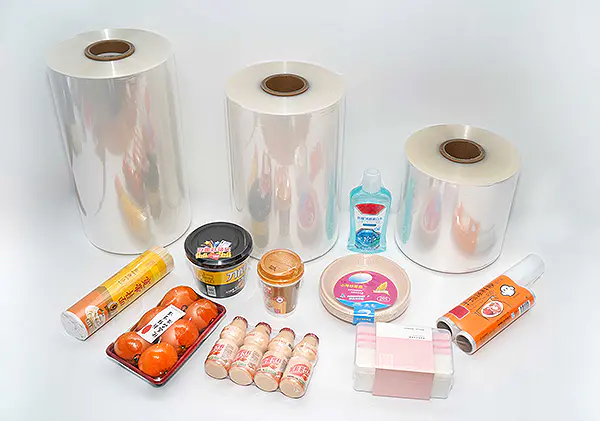 Crosslinked Shrink Film for Heavy or Sharp-Edge ProductsThis upgraded film offers extra toughness and heat resistance, making it suitable for items with sharp corners or high weight that may cause standard films to break during transit.View Product →
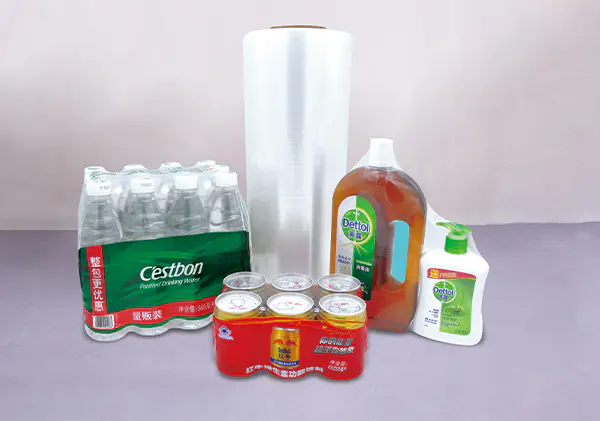
Multipacks need a film that seals quickly, stays tight after cooling, and does not distort the label artwork underneath. A standard POF film with balanced shrinkage is usually the right starting point because it performs well across bottle shapes, can sizes, and boxed goods.
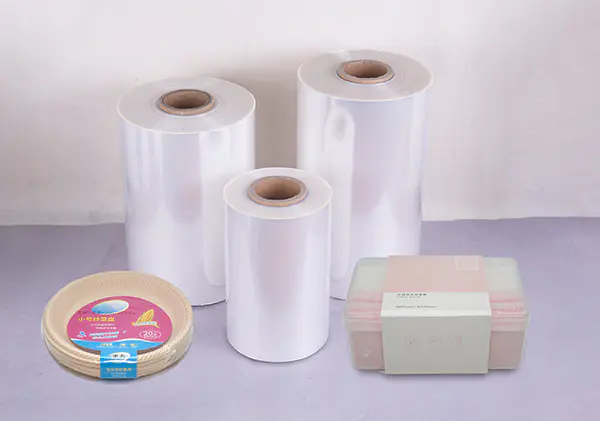 Polyolefin Shrink Film (POF) for Multipack StabilityA biaxially stretched POF film with balanced shrinkage and clear presentation, ideal for multipacks where quick sealing, tight fit, and label protection are key requirements.View Product →
Chocolate, cosmetics, candles, and some pharmaceutical items cannot tolerate excessive heat. A low-temperature shrink film is formulated to reach full shrinkage at lower tunnel settings, which protects the product while still producing a tight, glossy pack.
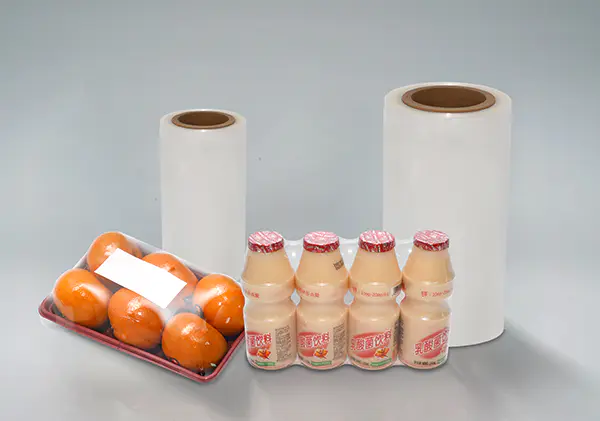 Low-Temperature Shrink Film JT04 for Heat-Sensitive GoodsFormulated to shrink fully at lower tunnel settings, this film protects temperature-sensitive products like chocolate and cosmetics while providing a tight, glossy finish. It also offers good clarity and puncture resistance.View Product →
On fast machines, hot slip shrink film reduces friction between the film and the sealing jaws or forming collars. Packs separate cleanly, and the adhesion problems that cause line stops are reduced.
If your pack carries a logo, a nutrition table, or a promotional message, the film needs a stable surface for ink adhesion. Printing film is engineered for this role, and the final print quality depends on the film surface treatment as well as the ink system.
These five numbers explain most of the difference between a trouble-free shrink packaging line and a chronic problem line.
Thickness in microns. Lighter products run at 15-20 micron; heavy or sharp items need 25 micron and above.
The percentage of contraction after heating. Balanced rates in both directions prevent distortion.
How much force the seam resists before opening. Critical for heavy or springy products.
The friction between film layers. Low COF improves feeding in automatic machines.
Optical transparency and the milky haze of the film. High clarity sells the product, not the wrapper.
FDA, BRC, ISO, and SGS documentation supports food-contact and export requirements.
Specifications alone do not finish the job. The same film can behave differently in a short tunnel versus a long tunnel, or on a form-fill-seal machine versus a seal-and-shrink line. Ask for a sample roll and run it on your own equipment before committing to a full container.
Most defects trace back to three variables: film sizing, tunnel settings, and sealing conditions. The checklist below shows the typical symptoms and the first thing to check.
Keeping records of tunnel temperature, conveyor speed, and seal bar settings for each product family reduces repeat issues and makes troubleshooting much faster when a defect appears.
Cost per pack depends on more than the film price per kilogram. A film that runs faster, seals at a lower temperature, and produces fewer rejects is usually cheaper in total cost than a marginally cheaper film that causes line stops. Thinner gauges reduce material usage, but only when the product geometry and line conditions allow it without losing pack strength.
From an environmental standpoint, polyolefin film is chlorine-free, so it does not release dioxins during incineration and is more accepted in recycling streams than PVC. Lighter packs also reduce transport weight and fuel consumption. These advantages are one reason many brand owners are reviewing their shrink film specifications. The environmental benefits of switching to polyolefin shrink film are covered in more detail in our industry notes.
Shrink film is closed around a single product and heated so it contracts and hugs the item. Stretch film is applied onto a pallet load under tension and does not use heat. The two products serve different stages of the supply chain.
Yes. Many POF grades are formulated from food-contact approved resins and carry FDA or BRC documentation. The film is widely used for bakery items, fresh produce, dairy, and beverages. Always confirm the specific certification before purchase.
Start with the product weight and the risk of punctures. A 15-20 micron film covers most light consumer goods, while 25 micron or heavier gauges suit heavy tools, hardware, and sharp-edged items. Testing on your own line is the only reliable method.
The usual causes are uneven heat distribution inside the tunnel, a film that is too large for the product, or a mismatch between conveyor speed and tunnel temperature. Check these three variables in that order.
It is worth the cost when puncture resistance, seal integrity, or cold-chain durability is a real risk in your supply chain. For standard lightweight retail packs, regular POF is usually sufficient.
Packaging shrink is a systematic decision that starts with the product, the line speed, and the route to the retail shelf. Polyolefin film covers most applications well, while crosslinked, low-temperature, and hot slip grades close the gap for specific conditions. Zhejiang Jiuteng Packaging manufactures these films in a 20,000 square meter facility near Shanghai Port, using imported quality raw materials and checking quality at every step from film casting to packing. ISO, BRC, FDA, and SGS certifications support export supply to Europe and the Americas. If you are unsure which packaging shrink film fits your line, request a sample roll and run the film on your own machine before buying in volume.
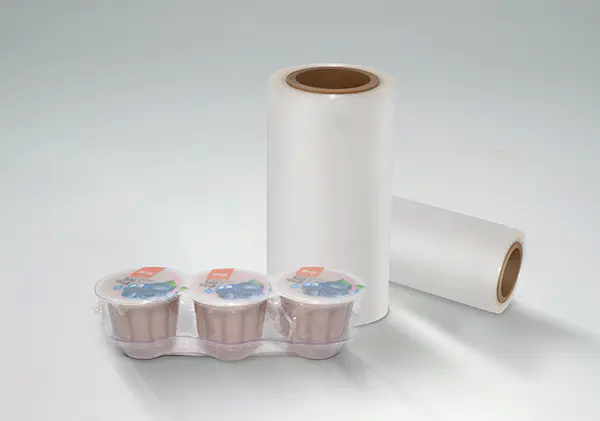
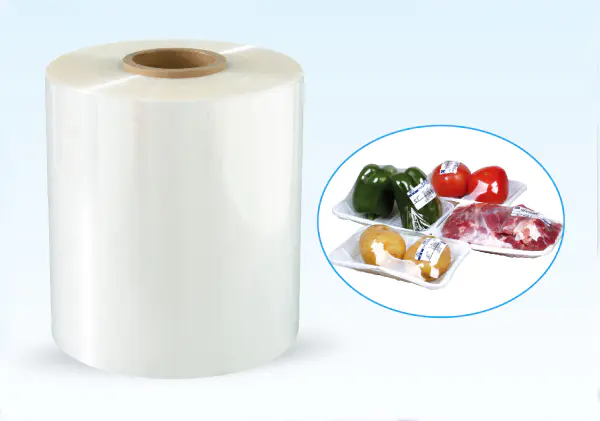
JT05 Antifog Crosslinked Shrink Film is an ideal o...
Copyright © Zhejiang Jiuteng Packaging Co., Ltd.
 简体中文

 Home

