
When a shipment of heavy industrial goods arrives damaged, the packaging usually failed before the logistics did. The film tore under load, split along a sharp edge, or peeled away during transit vibration — problems that a thicker, better-matched material would have prevented. For procurement managers and packaging engineers sourcing wrapping solutions for dense, angular, or high-value products, POF Shrink Film thickness is not a background specification. It is the variable that determines whether the product reaches the end customer intact or requires a costly replacement claim.
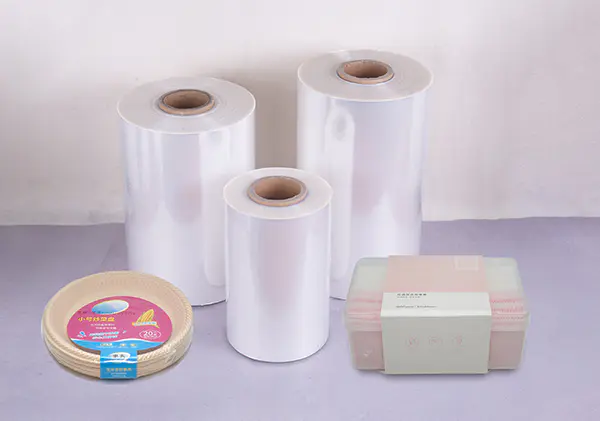
The answer depends on the product's weight, edge profile, and transit conditions — but a clear working range exists for industrial applications.
The principle behind these ranges is straightforward: thicker film carries higher tensile strength, greater resistance to puncture, and more reliable seal integrity under mechanical stress. For heavy industrial items, those three properties are the packaging specification that matters.
Industrial packaging operates in a fundamentally different environment from retail or consumer packaging. The differences are not minor.
A film that performs adequately for consumer electronics or boxed goods may fail completely under these conditions. The specification decision needs to reflect the actual environment, not a general packaging standard.
Selecting film that falls below the appropriate thickness range for the product creates a predictable set of failures:
The downstream cost of these failures, including replacement goods, return freight, and customer relationship damage, typically far exceeds any savings made on film cost.
Selecting film well above the appropriate range creates a different set of problems:
The selection goal is a match between film specification and product requirement, not the thickest available option.
Weight is the primary driver of thickness selection. A practical way to frame the decision:
Weight alone does not determine the right specification. A product that is lighter but has multiple protruding connection points, machined corners, or angular brackets can puncture thinner film during sealing and handling. When edge profile is a factor, move to the upper end of the applicable weight range.
A single item wrapped individually places all mechanical stress on one film layer. A multi-item bundle concentrates internal pressure points across a combined load. For bundled configurations or multi-unit trays, add one specification tier above what the individual product weight would suggest.
Products moving through a single controlled distribution step can tolerate a lower specification than products passing through multiple handling stages, outdoor staging, or international freight. When transit conditions are variable or extended, select toward the upper bound of the applicable range.
Thickness ranges are linked to typical industrial applications, key performance characteristics, and the conditions under which each range works reliably.
| Thickness Range | Typical Application | Key Strength | Conditions Where It Works |
|---|---|---|---|
| 15 to 19 microns | Light industrial components, small tools | Cost-efficient, good clarity | Short transit, no sharp edges, indoor storage |
| 20 to 25 microns | Medium industrial goods, boxed assemblies | Balanced strength and flexibility | Standard distribution, moderate handling |
| 25 to 30 microns | Heavy products, angular components, stacked goods | High puncture and tear resistance | Multi-stage transit, edge-heavy products |
| 30 microns and above | Machinery parts, precision equipment, export shipments | Maximum integrity under stress | Long transit, outdoor storage, high-value items |
Use this table as a starting reference. Final selection should be validated through a small-batch trial before full production runs.
Thickness is the primary variable, but it works alongside other film properties that determine real-world packaging performance.
A film's ability to resist propagating tears once a small break begins is critical for industrial packaging. Products with edge exposure can initiate a small cut during sealing; tear resistance determines whether that small cut stays contained or runs along the entire wrapped surface.
Measured by how much force is required to penetrate the film at a single point, puncture resistance is particularly relevant for products with bolt heads, mounting studs, or machined corners. Thicker film generally improves this property, but the film's formulation also affects it independently of gauge.
The seal lines where the film closes around the product are the structural weak points of any shrink-wrapped package. A strong, consistent seal is particularly important for heavy products where gravitational and transit forces concentrate at the base of the package.
Film that shrinks unevenly under heat creates loose areas that reduce protection and affect appearance. For industrial products with irregular geometry, a film with uniform shrink behavior across its surface distributes tension more evenly and produces a tighter, more stable wrap.
PVC film is rigid at lower temperatures and produces brittle behavior under cold transit conditions. It also releases gases during the heat shrinking process that limit its use in enclosed or ventilated-only packing environments. For heavy industrial items that may be wrapped indoors or in mixed ventilation settings, the formulation flexibility of polyolefin-based film offers a practical advantage.
Polyethylene film offers strong puncture resistance and is widely used for pallet wrapping and bundling. For individual product wrapping where clarity, a finished appearance, and seal aesthetics matter, the tighter shrink profile and clearer finish of polyolefin film tends to produce a cleaner result. For pure mechanical protection without appearance requirements, PE film at appropriate gauge can be a cost-effective alternative.
Even experienced procurement teams make predictable errors when specifying film for heavy products.
Follow this sequence to reduce selection error and avoid over- or under-specification.
Standard thickness ranges cover the majority of industrial packaging requirements. Some product categories warrant a conversation about custom specification.
In these cases, working directly with a film manufacturer rather than selecting from a standard product range produces a more reliable outcome.
When the packaging decision for heavy industrial products comes down to which film thickness provides the protection the product actually needs, the answer lies in matching specification to product reality rather than defaulting to a general standard or a budget constraint. A film that holds through every stage of transit, protects against every edge and pressure point, and arrives with the product intact is the one that does its job. If you are sourcing film for heavy or complex industrial products and need guidance on selecting the right specification, Zhejiang Jiuteng Packaging Co., Ltd. offers technical support and product ranges across industrial packaging applications. Reaching out with your product weight, edge profile, and transit requirements gives their team the information needed to recommend a specification that matches your actual packaging conditions rather than a generic category.
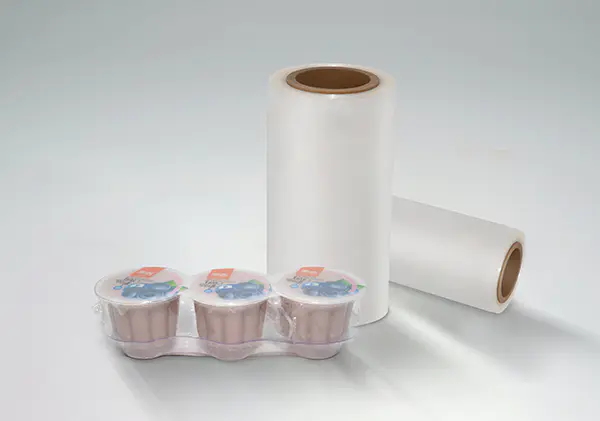
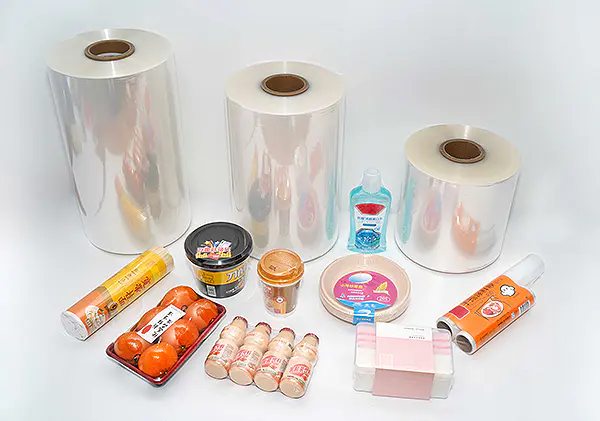
JT05 Antifog Crosslinked Shrink Film is an ideal o...
Copyright © Zhejiang Jiuteng Packaging Co., Ltd.
 简体中文
简体中文
 Home
Home
