
Packaging material decisions look simple on paper until you are actually sitting with two supplier quotes, one for POF and one for PVC, trying to justify the difference to a procurement committee that wants lower costs but also wants better shelf presentation and no complaints from food safety auditors. The POF vs PVC Shrink Film comparison is a common part of flexible packaging sourcing, and incorrect assumptions made early in the process can result in a specification that does not match the buyer's actual requirements. Understanding how the two materials differ, where each performs more effectively, and when those differences influence the final decision provides a practical basis for comparison.
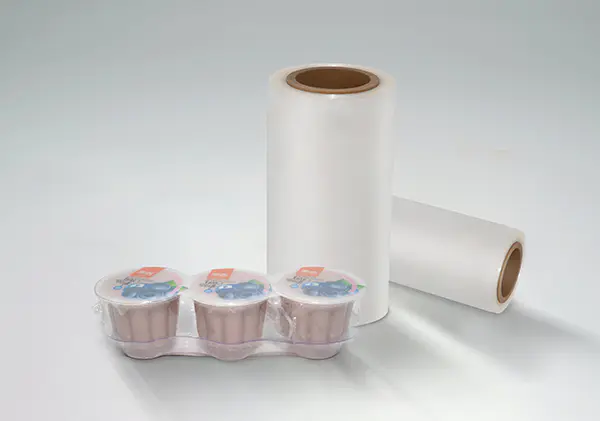
Polyolefin film — the material behind Shrink Film POF — is a broad category of thermoplastic polymers based on polyethylene and polypropylene. What makes POF appropriate for heat-shrink packaging applications is its ability to shrink uniformly in multiple directions when exposed to heat, producing a tight, clear wrap that conforms closely to the packaged product. The material is free of chlorine compounds, which matters both for food contact safety and for regulatory compliance in markets where PVC has faced restrictions.
PVC shrink film is produced from polyvinyl chloride, a polymer that has been used in packaging for decades. It shrinks primarily in one direction, which affects how it handles irregular shapes compared to POF. PVC is generally less expensive as a raw material, and it seals readily at lower temperatures, which is part of why it persists in certain lower-speed packaging operations and in markets where cost is the governing factor.
The structural difference between them affects everything downstream — how they behave on packaging equipment, how the finished package looks, how the film holds up in storage, and whether the packaged product can be sold into markets with specific regulatory requirements.
Shrink performance is one of the aspects buyers notice directly during packaging operations and in the finished package. POF shrinks in all directions — both machine direction and transverse direction — and does so relatively uniformly. The result is a tight, smooth wrap that conforms to the product's shape without bunching, tunneling, or creating stress points at edges and corners.
PVC shrinks primarily in the transverse direction, which means it is better suited to products with consistent cross-sections and less well-suited to irregular shapes. On products where the film needs to pull uniformly across a complex geometry, the directional behavior of PVC produces visible imperfections — wrinkles, gathering at flat faces, uneven tension across curved surfaces. These are not just aesthetic issues; they also affect seal integrity along the edges.
Practical implications of this difference:
Optical clarity is one of the properties that drives the strongest preference for POF in consumer-facing packaging applications. POF film produces a high-gloss, highly transparent finished package — the product inside is visible with minimal haze, and the wrap itself adds a visual quality impression to the package.
PVC is less optically clear. It can develop a slight haze, particularly at seam areas, and its gloss level is generally lower than POF. In categories where the visual presentation of the packaged product is part of the value proposition — fresh food, cosmetics, premium consumer goods — this difference is commercially relevant. In categories where the film is primarily a functional wrap and presentation quality is less critical, the difference matters less to the buyer.
A connected factor is the behavior of each material over time in storage. PVC becomes brittle with age and under temperature variation — a package that looks acceptable when produced may crack or show stress marks after weeks on a retail shelf or in transit. POF ages more gracefully, maintaining its clarity and flexibility across a wider range of storage and transit conditions. For supply chains with longer production and delivery schedules or products stored before retail placement, this difference becomes more noticeable over time.
The regulatory environment around PVC in food contact applications varies by market, and this is where the POF vs PVC Shrink Film comparison starts to look less like a preference question and more like a compliance question. PVC contains chlorine, and when PVC film is incinerated as waste, it can produce compounds that have raised environmental and health concerns. Several markets have moved to restrict or discourage PVC use in food contact packaging, and major food retailers in Europe, North America, and elsewhere have progressively removed PVC from their approved packaging specifications.
POF does not carry these concerns. It is produced without chlorine compounds, burns more cleanly, and is accepted for food contact applications without the regulatory ambiguity that follows PVC in some markets. For buyers supplying into retail channels with defined sustainability or material specifications, this is often the deciding factor — not performance, but access.
Key compliance considerations in this comparison:
Within the POF category, there is a meaningful technical distinction between standard polyolefin film and cross-linked shrink film. Cross-linked polyolefin shrink film — sometimes identified as cross-linked POF shrink film — undergoes an irradiation or chemical cross-linking process after extrusion that creates molecular bonds between polymer chains. These bonds change the mechanical behavior of the film in ways that affect packaging performance.
The practical effects of cross-linking include:
Cross-linked POF is not necessary for every application. For products that are lightweight, smooth-surfaced, and moving through controlled distribution chains, standard POF provides adequate performance at lower cost. The case for cross-linked film becomes stronger when the product has sharp edges or hard corners, when the packaging line runs at high speed, or when the distribution chain involves conditions that stress the packaging film.
Film selection does not happen in isolation from packaging equipment. A film that performs well technically may create problems on a specific machine configuration, or may require equipment modifications to deliver consistent results.
PVC seals at lower temperatures, which can be an advantage on older equipment with less precise temperature control. Its lower shrink temperature also makes it more forgiving on tunnels designed for earlier-generation materials. For operations that have established PVC-based processes and are evaluating whether to switch, the equipment compatibility question is relevant — some tunnels require modification or re-profiling to handle POF's different temperature requirements.
POF performs more consistently at higher line speeds and is the standard film for modern L-bar and flow-wrap systems running at elevated throughput. Its wider processability — particularly in cross-linked grades — means that variation in tunnel temperature has less effect on output quality, which reduces downtime from seal failures and rejects.
Practical line considerations when comparing the two materials:
Raw material cost for PVC film is generally lower than for POF, and this is where the conversation often starts in procurement discussions. But raw material price is only one component of total packaging cost, and buyers who have completed a POF vs PVC evaluation across a full production cycle often find the gap is narrower than the per-kilogram price difference suggests.
| Comparison Factor | Shrink Film POF | PVC Shrink Film |
|---|---|---|
| Shrink direction | Bi-directional (uniform) | Primarily transverse |
| Optical clarity | High gloss, low haze | Moderate, may haze at seams |
| Food contact compliance | Broadly accepted, chlorine-free | Market-dependent; restricted in some channels |
| Aging and brittleness | Flexible over time | Can become brittle in storage |
| Raw material cost | Higher per kg | Lower per kg |
| Line speed compatibility | Suitable for high-speed lines | Better suited to lower-speed operations |
| Cross-linked upgrade available | Yes — cross-linked POF shrink film | Not applicable |
| Environmental profile | Cleaner combustion, no chlorine | Chlorine content raises waste disposal concerns |
Moving from a general comparison to a confirmed material selection requires working through the specific conditions of the application. General principles inform the direction; the specifics determine the outcome.
The POF vs PVC Shrink Film comparison is not a single-answer question. It is an evaluation that produces different outcomes depending on the product, the packaging line, the target market, and the buyer's total cost priorities. For operations moving into food-adjacent or premium retail channels, the combination of compliance clarity and visual performance tends to make POF the working specification regardless of the per-unit cost premium. For operations where cost discipline governs and the product conditions do not demand the performance advantages of POF, PVC continues to be a functional choice in the right contexts.
The cross-linked category adds a further dimension for buyers whose applications push the limits of standard POF — it extends what polyolefin film can do without introducing new regulatory complexity. Evaluating whether that extension is needed is part of a complete film specification process, not an afterthought. For procurement teams working through a shrink film selection or reviewing an existing specification against current performance requirements, Zhejiang Jiuteng Packaging Co., Ltd. manufactures POF shrink film across standard and cross-linked grades, with production capability suited to a range of packaging applications and market requirements. Reaching out to discuss film grades, gauge options, and compatibility with your current line configuration is a practical starting point for finalizing your material specification.
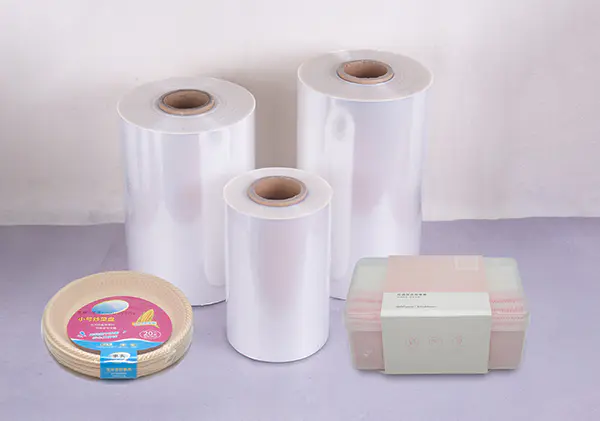
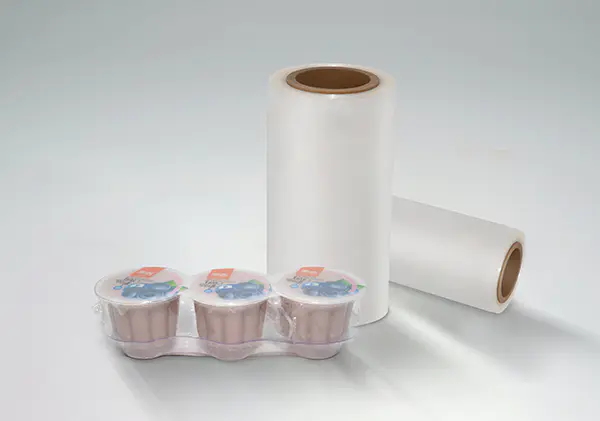
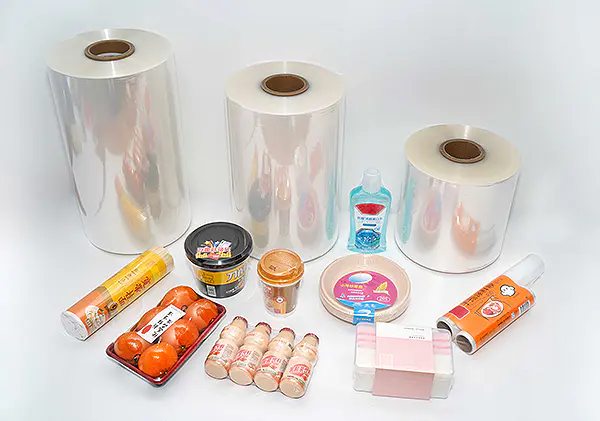
JT05 Antifog Crosslinked Shrink Film is an ideal o...
Copyright © Zhejiang Jiuteng Packaging Co., Ltd.
 简体中文
简体中文
 Home
Home
