
Shrink packaging plays a growing role in industries that need unitization, tamper evidence, scuff protection, and retail presentation without adding bulky materials or complex assembly steps. From consumer goods to printed products to multipacks, shrink wrapping remains popular because it's fast, adaptable, and visually clean when executed well.
The growing role of shrink packaging in modern industries
Several trends keep pushing shrink packaging forward:
Limitations of standard shrink films in high-demand applications
Standard (non-crosslinked) shrink films can perform extremely well, but high-demand conditions expose their weak points. Typical pain areas include:
In many plants, the film isn't "bad"—it's simply being asked to do a tougher job than it was optimized for.
Why cross-linked POF has become a preferred solution
Cross-linked POF is often chosen because it adds mechanical durability and thermal stability that help packaging operations:
Cross-linked POF shrink film is a polyolefin-based shrink film whose polymer chains have been partially connected (cross-linked) to create a more robust internal network. It remains a shrink film—designed to be oriented and then shrink under heat—but its internal structure is reinforced in a way that changes how it responds to stress and temperature.
In practical packaging terms, it is:
Standard POF relies on polymer chain entanglement and multi-layer design to deliver strength and sealing. Cross-linked POF adds an extra structural element: chemical/physical links between chains. This typically results in:
It's not that standard POF "can't work"; it's that cross-linked POF often provides more process headroom.
Imagine polymer chains as long strands of cooked spaghetti. In a non-crosslinked film, the strands are mostly separate but tangled. In a cross-linked film, some strands are tied together at points, creating a net-like structure. Those ties don't turn the film into a rigid plastic—done correctly, they help the film resist tearing and excessive softening when heated.
A few misunderstandings show up frequently in sourcing discussions:
Cross-linking changes film behavior by altering how polymer chains move under heat and stress—without eliminating the shrink function created during orientation.
Polymer chain structure before and after cross-linking
Methods used to create cross-linking (e.g., irradiation vs. chemical)
Two common industrial approaches are:
Both methods aim to achieve a target cross-link structure while preserving optical quality and machinability.
How cross-link density affects film behavior
Cross-link density (how many link points exist) is a tuning knob, not a "more is always better" setting.
Good cross-linked films target a density that supports runnability and appearance rather than simply maximizing cross-links.
Impact of cross-linking on thermal and mechanical performance
Cross-linking can improve packaging performance in ways operators notice immediately:
In real production, these improvements often translate into fewer stoppages, cleaner packs, and greater confidence when pushing speed or reducing gauge.
Cross-linked POF shrink film is typically selected for environments where standard films approach their performance limits. The difference is not only "stronger film," but more stable behavior under stress, heat, and speed—the exact combination that causes defects in real production.
Tensile strength and tear resistance
Tensile strength describes how well the film resists stretching under load, while tear resistance reflects how easily a small defect becomes a running tear. In practical packaging terms, tear resistance is often the more meaningful metric because most failures start as minor nicks, imperfect cuts, or stress concentrations at corners.
Cross-linking tends to improve tear resistance by reducing the tendency of polymer chains to slip apart under sudden tension spikes. The result is a film that is less likely to "zipper" from a small initiation point—useful on automatic equipment where tension is dynamic and products may not enter the sealing area perfectly centered every time.
Puncture resistance and abuse tolerance
Puncture resistance matters when packaging products with:
Cross-linked POF generally shows better "abuse tolerance"—its ability to absorb handling stress without pinholing or developing weak spots that later tear in the shrink tunnel. This is particularly valuable when downgauging, where thin films can look excellent but become unforgiving in distribution.
Shrink force and shrink balance (MD/TD behavior)
Shrink performance is not just shrink percentage. It includes:
A well-designed cross-linked film can provide tighter, more controlled shrink behavior with less risk of localized over-shrinking that distorts packs. Balance matters most on rectangular cartons and printed packs where distortion looks "cheap" immediately. Too much shrink force can also crush lightweight cartons or deform flexible products, so film selection and tunnel settings should aim for conformity without excessive pulling.
Heat resistance and performance stability
Cross-linking often improves how the film behaves near processing temperatures by reducing excessive softening. On the line, this can show up as:
This doesn't mean cross-linked film is immune to poor settings. It means it typically provides more stability when conditions vary slightly—an important advantage in plants where multiple operators, SKUs, or shifts share the same equipment.
Flexibility across temperature ranges
Many packaged products experience temperature swings during warehousing and transport. Films that become brittle in cold conditions are more likely to crack or split at corners. Cross-linked POF is often valued for maintaining useful flexibility across a wider temperature range, helping packages stay intact during cold-season logistics and reducing “mystery failures” that appear after shipment rather than on the line.
If mechanical properties determine whether a film survives handling, sealing performance determines whether you can run production without constant babysitting. Cross-linked POF is widely used because it often improves the overall process window—the range of settings where seals remain strong and appearance stays consistent.
Seal strength and seal integrity during shrinking
A seal that looks fine at the sealing station can fail later in the shrink tunnel if the seam is stressed by heat and shrink force. Cross-linked films often maintain better seal integrity through shrinking because the film structure resists thinning and tearing at the seal edge when heated.
This matters in high-speed work where micro-variations are unavoidable: minor product misalignment, small changes in dwell time, or slight contamination. Stronger seal integrity reduces rework, leakage of multipacks, and customer-visible defects.
Sealing temperature range (seal window)
The seal window is the operating range where you can achieve strong seals without burn-through. In production, a wider seal window means:
Cross-linked POF is often chosen specifically because it can be more tolerant of normal variations, especially on equipment that is mechanically sound but not perfectly "laboratory stable."
Performance on L-sealers, side-seal machines, and high-speed systems
Advantages in demanding and variable production environments
Cross-linked POF tends to perform well when your operation includes:
In these environments, the economic value often comes less from "best-case performance" and more from reduced defect rate and reduced downtime.
High-performance packaging is still packaging—if it looks rough, it weakens brand perception. Cross-linked POF is often used for performance reasons, but it must also deliver the optics that make shrink packaging attractive in the first place.
Clarity, haze, and gloss characteristics
Optical quality is typically discussed as:
Retail buyers and brand teams care because optics directly affect perceived product quality. Operations care because optical defects are often the first thing that triggers customer complaints even when the pack is mechanically sound.
How cross-linking affects visual presentation
Cross-linking itself is not an "optics feature," but it can support optics indirectly by improving process stability. When film performance is stable, you're less likely to compensate with overly aggressive tunnel heat or marginal sealing settings—two common causes of poor appearance (wrinkles, distortion, dullness, or inconsistent tightness).
A well-designed cross-linked film should maintain clean optics comparable to premium standard POF while offering more robustness during processing.
Maintaining premium appearance at reduced thickness
Downgauging is where cross-linked POF often shines. Thinner films can improve presentation by reducing bulky seams and creating a tighter, more “painted-on” look—if the film remains strong enough to survive the process and distribution.
Cross-linked structures can help preserve durability at lower thickness so you can achieve:
Why optics still matter in high-performance packaging
Even in industrial channels, optics matter because appearance is a proxy for control. A tight, clear, consistent pack signals:
In retail, optics are even more direct: the film is part of the product's visual identity. Cross-linked POF succeeds when it combines line reliability with a finished, premium look—no heroics required from the operator.
Cross-linked POF is often purchased for one very practical reason: it can deliver equivalent real-world performance at a lower thickness, which reduces material use without inviting downtime and defects. The trick is understanding what "equivalent" means on your line—seal integrity, puncture resistance, shrink appearance, and stability at speed—not just a lab number.
Typical thickness ranges for cross-linked POF
Cross-linked POF is commonly available across many of the same gauges as standard POF, but it is frequently chosen in the thinner-to-mid range where downgauging is most attractive. Typical commercial offerings often fall roughly into:
The practical difference is not that cross-linked film "must be thinner," but that it often allows you to use a thinner gauge confidently where standard film would be near its failure threshold.
How downgauging works without sacrificing performance
Downgauging is successful when the film maintains its functional margins while using less material. Those margins usually include:
Cross-linking contributes by making the film less prone to localized thinning and "weak spot" formation under heat and tension. That stability is what keeps downgauging from becoming a false economy.
A realistic downgauging project usually follows this pattern:
If the defect rate rises, the "saved" material is quickly erased by waste and lost throughput.
Cost-in-use vs. cost-per-roll considerations
Cross-linked film may cost more per kilogram or per roll. The more accurate financial comparison is cost per acceptable packaged unit produced at target speed. Cost-in-use is influenced by:
In many plants, the largest hidden cost is not film price; it's unstable production. A film that runs consistently can outperform a cheaper alternative when the line is fast or the SKU mix is difficult.
Material efficiency and waste reduction benefits
Downgauging and stability improvements typically deliver four measurable benefits:
Cleaner roll utilization: fewer partially used rolls discarded due to damage or inconsistency.
From a sustainability lens, these are meaningful because they reduce total plastic used and reduce the wasted energy/labor tied to defective packs.
The best comparison is not theoretical—it's what happens when products are slightly misaligned, temperatures drift, and operators change shifts. That's where cross-linked POF typically earns its reputation.
Performance differences in real production conditions
In real lines, cross-linked POF often shows advantages in:
Standard POF often performs very well under controlled conditions, especially on smooth products with moderate speeds. The difference shows up as you push speed higher or your product becomes more demanding.
When standard POF is sufficient
Standard POF is usually the right choice when:
If your current line already has low scrap and stable seals, switching to cross-linked film may not create meaningful additional value.
Clear indicators that cross-linked POF is needed
Cross-linked POF becomes a strong candidate when you see repeated patterns such as:
These are signs that your line is operating near the boundary of what a standard film can tolerate.
Decision rules for upgrading
A practical set of upgrade rules used by many packaging teams:
The best upgrade decision is data-driven: compare defect rate, downtime minutes, and finished-pack quality across sustained production trials.
|
Comparison Area |
Standard POF |
Cross-Linked POF |
|
Performance under real line stress |
Stable under controlled speed and conditions |
More tolerant of speed changes, misalignment, and variability |
|
Web strength & film breaks |
Adequate at moderate tension |
Fewer breaks during acceleration and tension spikes |
|
Seal integrity after shrinking |
Reliable within a narrower process window |
Better seal survival through tunnel heat |
|
Corner & edge resistance |
Works well on smooth, low-risk products |
Reduced punctures and corner failures |
|
Downgauging capability |
Limited before scrap increases |
Thinner gauges remain usable with stable performance |
|
Best use case |
Stable lines, smooth products, cost-focused operations |
High speed, sharp edges, variability, or material reduction goals |
Cross-linked POF is best where packaging is not a gentle, perfectly repeatable process. It shines when the line is fast, the product is challenging, or the cost of defects is high.
High-speed automated packaging lines
High-speed systems magnify small instabilities. Cross-linked film is often selected because it reduces:
Products with sharp edges or irregular shapes
Sharp corners and uneven geometries concentrate stress and can initiate tears. Cross-linked POF is frequently used for:
Multi-packs and bundled items
Bundles introduce friction, voids, and pressure points. Cross-linked film can help maintain:
Retail packaging requiring durability and consistency
Retail wrap must look clean and stay intact through distribution and store handling. Cross-linked POF is well suited when the brand requires:
Industrial and semi-industrial uses
While very heavy bundling may favor other materials, cross-linked POF is commonly used in light-to-medium industrial settings where a tight, durable wrap is desired—especially for kits, boxed components, and items that experience frequent handling before end use.
Application Scenarios Best Suited for Cross-Linked POF
|
Application Scenario |
Why Cross-Linked POF Is Used |
|
High-speed automated lines |
Handles tension changes better, reducing web breaks, seal failures, and appearance rejects |
|
Sharp-edged or irregular products |
Improved resistance to punctures, corner splits, and stress concentration |
|
Multi-packs and bundles |
Stronger seams and better durability under higher shrink force and internal abrasion |
|
Retail packaging with appearance demands |
Delivers consistent corners, high clarity, and fewer scuffs or rewraps |
|
Light-to-medium industrial use |
Provides tight, durable wraps for kits and boxed components under frequent handling |
Cross-linked POF shrink film is widely used around food products, but "used in food packaging" is not the same as "approved for food contact." For converters, brand owners, and co-packers, the right approach is to treat food-contact suitability as a defined specification with evidence, not a marketing label.
Food-contact suitability and compliance frameworks
Food-contact suitability typically depends on the film's formulation, intended use, and applicable jurisdiction. In practice, buyers often evaluate compliance under established regulatory frameworks (for example, U.S. FDA-based expectations and/or regional equivalents), focusing on:
Because cross-linked films may be produced via different cross-linking routes, compliance should be verified for the specific grade and manufacturing route, not assumed by film family alone.
Differences between food-grade and non-food-grade films
"Food-grade" is not simply "cleaner film." It typically indicates a tighter set of controls and declared compliance for food-contact applications, such as:
Non-food-grade films may be mechanically similar but lack the documentation, traceability, or formulation assurances required for food-contact claims. The risk is not only regulatory—it is commercial: major retailers and brand owners often require auditable proof, not verbal confirmation.
Documentation, traceability, and quality control expectations
Food packaging supply chains tend to expect stronger paperwork discipline. Common expectations include:
For high-volume food operations, a stable quality system is often as valuable as the film's technical properties, because it reduces requalification cycles and audit friction.
Hygiene and handling best practices
Even compliant film can be disqualified by poor handling. Best practices commonly include:
In food environments, "film hygiene" is less about the polymer and more about the discipline of handling.
Lab properties matter, but production and distribution are where films succeed or fail. Cross-linked POF is often selected because it maintains performance under the combined stresses of handling, temperature variation, and long-run production realities.
Resistance to scuffing, vibration, and handling damage
During case packing, palletizing, transport, and retail handling, shrink film experiences repeated contact and abrasion. Cross-linked structures typically improve resistance to tear propagation and reduce the chance that minor scuffs become functional failures.
In practical terms, this can mean:
Performance in cold storage and distribution
Cold environments can expose brittleness and seal weakness. A film that performs well at room temperature may crack or split when cartons are dropped or vibrated in colder conditions.
Cross-linked POF is often valued where goods enter:
The advantage is typically not "cold-proof packaging," but a wider margin of toughness that reduces temperature-driven failures.
Long-run stability during extended production runs
Extended runs reveal issues like roll build inconsistency, gauge variation, static accumulation, or gradual drift in sealing conditions. Cross-linked POF is frequently chosen for long runs because it can be more tolerant of the small variations that appear over time, helping maintain:
The business impact is straightforward: stable runs reduce operator intervention, reduce scrap, and support predictable output.
Reducing downtime and film-related line stops
Downtime is often driven by a short list of film-related triggers: web breaks, seal failures, poor tracking/unwind behavior, and tunnel appearance rejects that force rework. Cross-linked POF can reduce stops by providing higher resistance to tension spikes and better survival through heat exposure—especially at higher line speeds or with sharp-edged SKUs.
Importantly, cross-linked film is not a substitute for equipment maintenance. It is a way to increase process resilience once the machine is fundamentally sound.
Sustainability decisions in shrink packaging are increasingly measured by outcomes: how much material is used, how much is wasted, and how consistently the line performs. Cross-linked POF supports many sustainability goals indirectly through material reduction and operational stability.
Downgauging as a sustainability strategy
Downgauging—reducing thickness while maintaining package integrity—is one of the most immediate ways to lower environmental burden in shrink wrapping. Cross-linked POF is often used to make downgauging feasible without triggering higher scrap, more downtime, or increased damage in distribution.
A downgauging project is "sustainable" only if it holds up under real conditions: stable seals, low breakage, and acceptable appearance at target speed.
Material efficiency vs. total material usage
Material efficiency is not only microns. It includes:
A slightly thicker film that prevents widespread damage can reduce total material usage across the supply chain. Conversely, aggressive thinning that increases failures can raise total waste—even if each pack uses less film.
Waste reduction through improved line performance
Waste reduction often comes from eliminating:
Because cross-linked films can widen the operating window, they can reduce these failure modes and the waste tied to them—sometimes producing bigger sustainability gains than polymer-level changes.
Market perception and regulatory trends
Brand owners and retailers increasingly prefer packaging strategies that emphasize:
As policies and customer expectations evolve, films that support measurable reduction targets—without sacrificing pack quality—tend to gain market share.
Selecting cross-linked POF is less about choosing a "premium film" and more about choosing the right performance margin for your product and your line. The best grade is the one that runs at target speed with acceptable appearance and minimal intervention—day after day, shift after shift.
Matching film grade to product risk and geometry
Start with the product, not the supplier brochure. Product "risk" usually comes from geometry and contact points:
For higher-risk products, prioritize grades known for tear propagation resistance and puncture tolerance. For lower-risk products where appearance is the main driver, a lighter, optics-focused grade may be sufficient.
Choosing thickness based on handling stress
Thickness should reflect the full handling journey, not just the moment it exits the tunnel.
A practical approach is to define a "stress tier" (low / medium / high) based on distribution abuse, then choose the thinnest option that survives that tier with margin. Downgauging only "counts" if it doesn't increase scrap, rewrap, or field damage.
Compatibility with sealing and tunnel systems
Cross-linked POF is generally forgiving, but it still must match your equipment realities:
Compatibility isn't theoretical. It's the difference between a film that "can run" and a film that runs with low operator attention.
Importance of structured trials and validation
Film changes should be validated like process changes. A structured trial typically includes:
If the trial only lasts a few minutes, it mostly proves the machine can start—not that it can run.
Most "film problems" are really system problems. Cross-linked POF can widen your operating window, but it cannot compensate for poor sealing hardware, misapplied tunnel heat, or incorrect bag sizing.
Seal failures and inconsistent seams
Symptoms: split seams after the tunnel, peeling seals, weak corners, occasional burn-through.
Cross-linked POF often helps by improving seal survival during shrinking, but the seal must still be formed correctly.
Excessive shrink force or product distortion
Symptoms: crushed cartons, warped trays, "necking" around soft products, distorted labels.
Cross-linking can improve toughness, but it does not automatically reduce shrink force. Product protection still depends on tuning the shrink process.
Wrinkling, ballooning, or poor corner shrink
Symptoms: loose corners, wrinkles on large flat faces, "pillowing" around bundles.
How cross-linked POF can help—or when it's not the solution
Cross-linked POF helps most when the problem is margin-related: tears from tension spikes, seal failures under heat stress, or downgauging that becomes unstable. It is not the solution when:
In those cases, film upgrades may improve symptoms but won't eliminate the underlying causes.
Shrink packaging economics are won or lost in throughput, scrap, and stability. Price per roll is easy to compare, but it is rarely the metric that determines profitability.
Total cost of ownership in shrink packaging
A useful TCO view includes:
Cross-linked POF often reduces TCO by improving run stability, even if the material price is higher.
Balancing film price, downtime, and scrap
A film that costs less but increases breaks, seal failures, or appearance rejects can quickly become more expensive than a higher-grade alternative. The key is to measure cost per good pack, not cost per kilogram.
Operationally, the biggest value often comes from:
ROI considerations for upgrading to cross-linked POF
ROI is strongest when any of the following are true:
The upgrade should be justified with trial data: defect rate reduction, downtime reduction, and sustained throughput improvement.
Examples of cost-saving scenarios
Cross-linked POF is engineered for robustness, but it still behaves like a precision web material: it performs best when rolls are stored correctly, handled gently, and run with disciplined setup routines. Many avoidable line problems—tracking issues, breaks, optical defects, and inconsistent sealing—start long before the film reaches the sealer.
Proper storage conditions to maintain performance
The goal of storage is to keep rolls clean, dimensionally stable, and free from thermal abuse.
If rolls are stored cold, allow acclimation before running so condensation does not contaminate sealing surfaces or degrade optics.
Roll handling and setup recommendations
Roll condition directly affects unwind stability. Treat roll handling like handling a critical machine component.
A short pre-run checklist—roll edges, core integrity, threading path, and tension settings—often prevents hours of downtime later.
Operator training considerations
Cross-linked film can be more forgiving, but consistent results still depend on operator habits.
Training should focus on:
Well-trained operators reduce both scrap and "parameter drift," which is the slow creep of settings that eventually destabilizes a previously good process.
Maintaining consistency across shifts and SKUs
Consistency is usually lost at changeovers and shift handoffs. Strong plants institutionalize repeatability:
Cross-linked POF supports consistency by widening the operating window, but discipline is what keeps that window from being accidentally narrowed again.
Cross-linked shrink films continue to evolve in response to two pressures that rarely slow down: higher automation and higher sustainability expectations. The most meaningful innovation tends to happen in areas that improve cost-in-use, not just headline properties.
Advances in resin and layer design
Film development is increasingly focused on multi-layer architecture where each layer has a job:
Better layer design can deliver performance gains without forcing higher gauges, supporting downgauging targets while maintaining pack integrity.
Improved recyclability and material innovation
Sustainability-driven innovation often aims to reduce complexity and improve compatibility with established polyolefin recycling streams, while still meeting performance needs. Practical trends include:
The direction is clear: films are being asked to do more with less, and to do it in a way that fits evolving packaging policies and customer expectations.
Integration with automated and smart packaging lines
Packaging lines are increasingly instrumented. This favors films that are consistent roll-to-roll and tolerant of high-speed variability. Expect growth in:
In that environment, cross-linked POF's value proposition—stability under speed and variability—becomes even more relevant.
Evolving customer and regulatory expectations
Customers increasingly expect documentation, traceability, and measurable sustainability progress. Regulatory trends and retailer requirements also push toward:
Films that enable reliable downgauging and stable production will continue to be favored because they generate results that can be measured and audited.
When it comes to choosing the right packaging solution, cross-linked POF film stands out for its exceptional strength, puncture resistance, crystal-clear transparency, and eco-friendly profile—making it an excellent choice for food, personal care, electronics, and premium gift packaging. It not only extends shelf life and reduces transit damage but also enhances product presentation and reinforces brand perception.
If you're looking for a reliable, high-performance shrink film solution that balances quality, efficiency, and cost, Jtpackage is ready to be your trusted partner. With years of industry expertise and a full range of services—from custom film formulation to technical support—we help businesses achieve optimal packaging performance. Contact the Jtpackage team today and let us help you protect and showcase your products with professional, secure packaging that truly stands out.
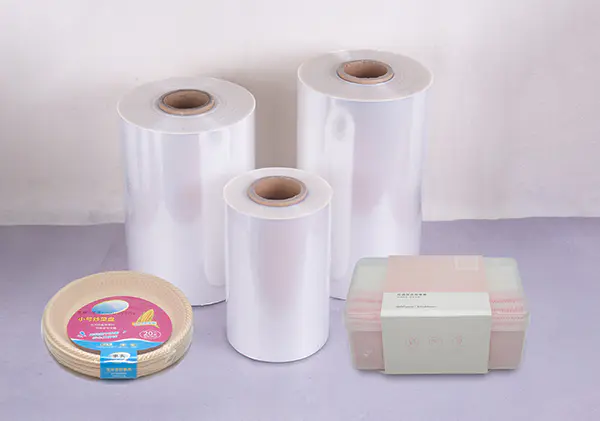
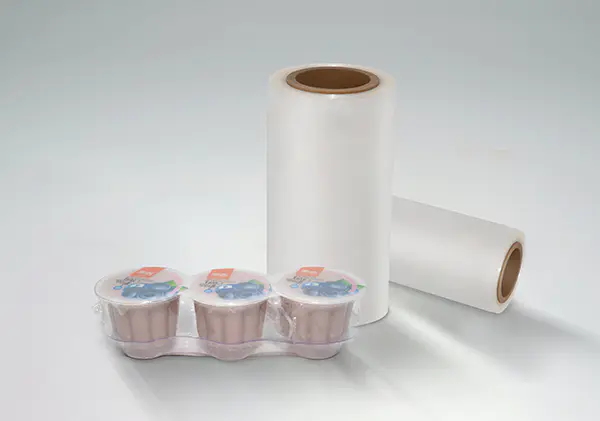
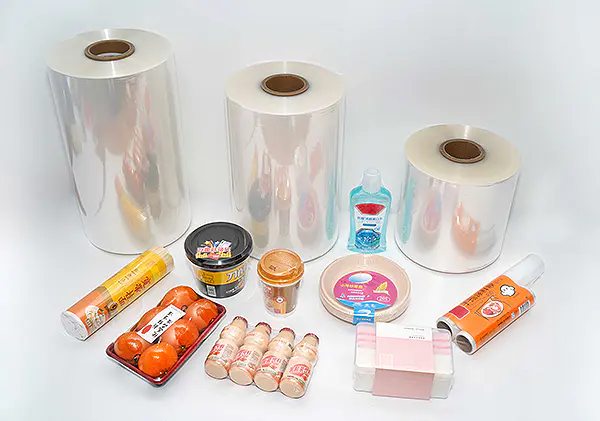
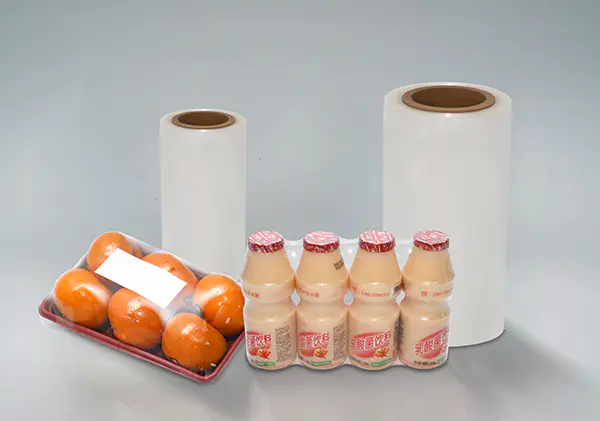
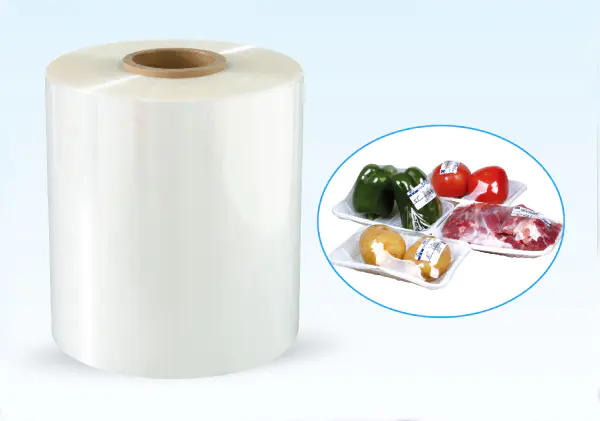
JT05 Antifog Crosslinked Shrink Film is an ideal o...
Copyright © Zhejiang Jiuteng Packaging Co., Ltd.
 简体中文
简体中文
 Home
Home
