
Every shrink package starts as a loose plastic sleeve and ends as a tight, glass-clear skin. Between those two moments, a roll of oriented plastic film is heated past its relaxation point, and the polymer chains pull back toward their original, unstretched state. That single mechanical behavior is the reason shrink packaging exists at all, and it is also the reason two films that look almost identical on a roll can perform very differently on a production line.
Packaging teams rarely compare films at the molecular level, and they should not need to. What matters in daily operations is far more practical: how hot the tunnel needs to run, how forgiving the film is around sharp corners, how it behaves at high line speeds, and whether it is suitable for direct food contact. This guide walks through the two film families that account for the overwhelming majority of shrink packaging decisions today, standard Polyolefin Shrink Film and its irradiated counterpart, so that the choice between them is based on production reality rather than habit.
Shrink film is not a single product category but a family of materials tuned for different jobs. A film built for a slow, manual heat-gun station has different requirements than one destined for a continuous tunnel at high belt speed. Treating the material as a variable to be specified, rather than a commodity reordered by habit, is usually what separates a line with low rework rates from one that fights the same wrinkle or tear complaints every week.
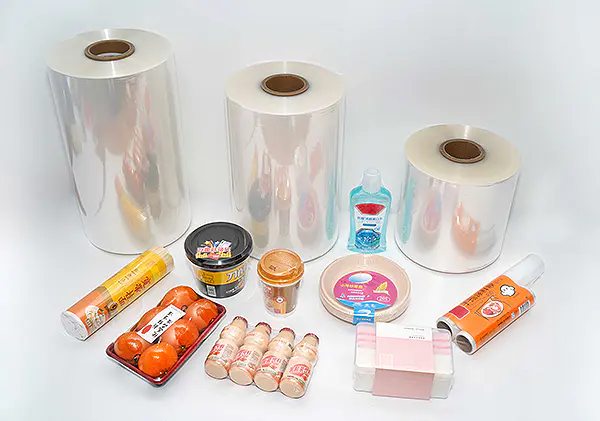
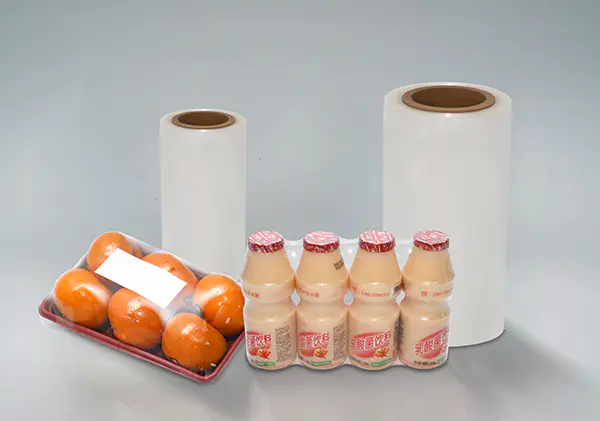
Polyolefin shrink film is built from polyethylene and polypropylene resins blended to balance clarity, softness, and shrink force. It largely replaced PVC film over the past two decades because it seals without releasing acidic byproducts, tolerates a wide storage temperature range without going brittle or tacky, and produces a package with noticeably better optical clarity.
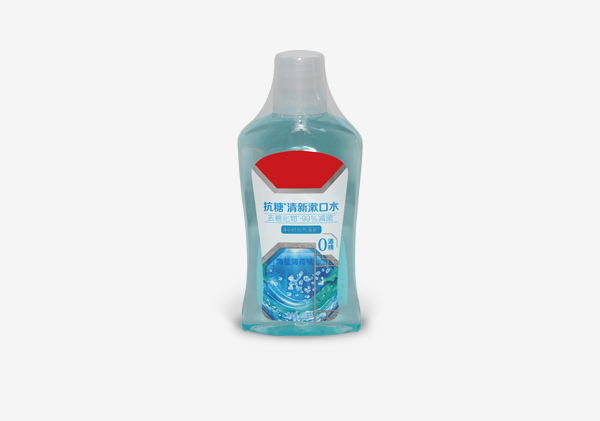
In its standard, non-irradiated form, this material is the default choice for lighter, uniformly shaped goods. Because the film has not been treated to strengthen its molecular structure, it seals cleanly at moderate tunnel temperatures and is generally the more economical option per roll.
Where standard film shows its limits is at the extremes: very heavy items, products with sharp corners or metal edges, and high-output lines running well above typical belt speeds. In those settings, seals can fail or the film can tear before the pack ever leaves the tunnel, which is the exact gap that crosslinking was developed to close.
Most standard-film lines run at a moderate belt speed with a tunnel temperature comfortably below the film's upper limit, leaving margin for the natural variation in product size and placement that any real production run produces. That margin is part of why standard film remains the default for so many operations: it tolerates a slightly inconsistent feed without a spike in rejected packages.
Crosslinked shrink film starts as the same polyolefin base resin, but before it is slit and wound, the film is exposed to a controlled electron beam. That irradiation step bonds adjacent polymer chains to one another, forming a tighter internal network. The film keeps its transparency and softness, but its tensile strength, puncture resistance, and heat tolerance all move upward. This treated version is what packagers mean when they refer to Crosslinked Shrink Film on a specification sheet.
The practical payoff shows up in three places on a production floor. First, the film resists abrasion from box corners and printed cardboard edges, so fewer packages need to be rerun. Second, it holds together at the faster belt speeds used in high-volume operations, where a standard film would be more prone to blowouts. Third, it leaves noticeably less residue on sealing wires, which extends the interval between maintenance stops.
| Attribute | Typical Shift vs Standard Film |
|---|---|
| Seal and shrink temperature | Moderately higher |
| Puncture and tear resistance | Noticeably higher |
| Suitable line speed | Higher sustained speeds |
| Sealing wire residue | Lower |
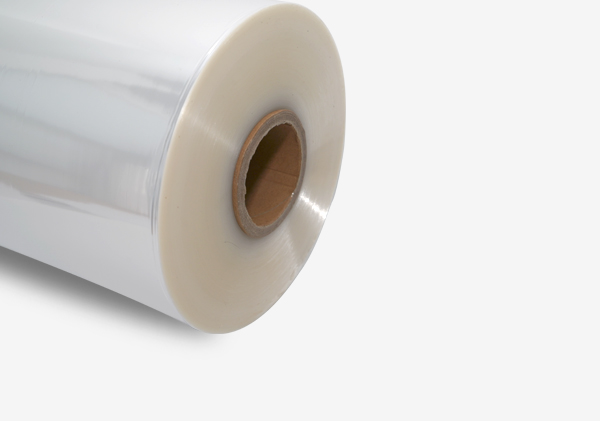
The tradeoff is straightforward: the irradiation process adds a manufacturing step, so crosslinked rolls typically cost more than standard rolls of the same gauge, and the higher shrink temperature means heat-sensitive products need a wider safety margin during tunnel setup.
Operations that switch to crosslinked film usually do so after tracking a specific cost driver rather than as a general upgrade. A common trigger is a rising rate of mid-run seal failures on a fast line, or a recurring pattern of torn film around a particular product's corners. Once that pattern shows up consistently in a shift log, the added cost of crosslinked film is easier to justify because it is being weighed against a measurable rate of rework, not a hypothetical improvement.
Neither film is categorically better, and framing the decision as an upgrade path misses the point. A print shop shrink-wrapping stacks of business cards has no use for the extra strength of crosslinked film, while a distribution center bundling tools at high speed will burn through standard film in rerun costs. The radar comparison below plots both film types across the six factors that most often decide the outcome.
The pattern that shows up most clearly is the tradeoff between cost efficiency and mechanical performance. Standard POF Shrink Film leads on cost and matches or beats crosslinked film on clarity, while crosslinked film pulls ahead on seal strength, sustainable line speed, and puncture resistance. Heat tolerance splits the two: standard film shrinks at a lower temperature, which is an advantage for delicate goods, while crosslinked film simply tolerates a wider operating window overall.
It is worth resisting the temptation to treat this chart as a scorecard where one film simply wins. A packaging line rarely optimizes for every factor at once, and the film that scores highest across the board on paper is often the wrong choice for a specific product because it is priced for a level of durability that product will never need. The more useful exercise is identifying which one or two factors actually constrain the current line, whether that is seal strength on a fast belt or cost per unit on a high-volume light product, and letting that narrow list drive the decision rather than the full profile.
Gauge, the film's thickness, and shrink temperature move together. Thinner films shrink at lower temperatures and suit lighter goods; thicker films need more heat and carry more weight. The chart below shows a typical seal-temperature range as gauge increases for both film families, based on common production settings rather than any single machine's calibration.
Two things stand out in that curve. Crosslinked film runs consistently hotter than standard film at every matching gauge, which is the direct result of its stronger internal bonding. And within either family, moving up in gauge to protect a heavier product also means committing to a hotter tunnel, so gauge should never be selected purely on load capacity without checking what that gauge does to the heat budget.
Dwell time inside the tunnel interacts with both of these variables and is often the setting operators adjust first when a package is not shrinking fully. Rather than raising the temperature past the film's rated range, which risks scorch marks or brittle seals, extending dwell time by a second or two, or slowing the conveyor slightly, frequently solves an incomplete shrink without introducing a new defect. The table below summarizes general gauge guidance as a starting reference point, not a substitute for a short trial run on the actual product being packaged.
| Gauge Range | General Load Guidance | Common Applications |
|---|---|---|
| 45 to 60 ga | Light, uniform items | Cards, small stationery, light baked goods |
| 75 ga | Under roughly 15 lb | Boxed goods, toys, printed products |
| 100 ga | Roughly 15 to 30 lb | Shipping cartons, tools, multi-packs |
| 150 ga and above | Heavier, high-output loads | Bundled cases, industrial parts |
Cost per roll rises with both gauge and treatment. The column chart below shows relative material cost at a matched mid-range gauge across four film types, indexed against standard polyolefin.
The premium crosslinked film carries is real, but it is measured against a baseline that assumes both films run without rework. Where standard film generates frequent reruns, the effective gap narrows once scrap and downtime are counted alongside roll price.
The split between standard and crosslinked film tends to follow product weight and line speed more than industry labels, but certain sectors lean consistently one way. The chart below ranks common use cases by how often crosslinked film is specified over standard film in that category.
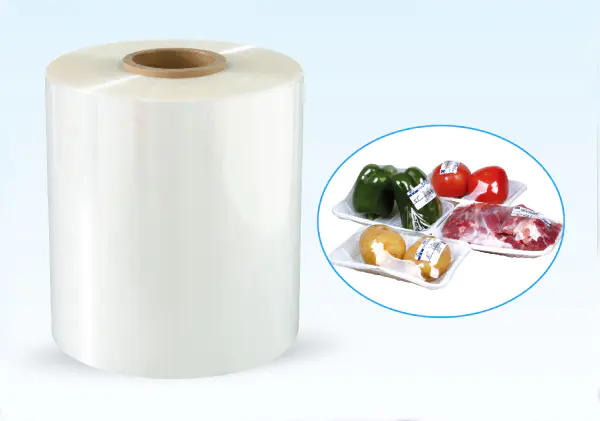
High-speed bundling and retail food trays lean heavily on crosslinked film because both settings combine fast belt speeds with corners, boxes, or trays that can nick a softer film. Printed paper goods, toys, and light stationery sit at the other end, where standard polyolefin film already handles the load comfortably and the lower cost per roll adds up across high unit counts.
Most selection decisions collapse into three questions asked in sequence: how heavy or sharp-edged is the product, how fast does the line need to run, and how heat-sensitive is the item being wrapped. The flow below lays that logic out visually.
The branch on the left is where most standard film decisions land: moderate loads, smooth surfaces, and no unusual speed requirements. The branch on the right is where crosslinked film earns its higher cost, provided the sealing equipment can actually reach the temperature the film needs, which is worth confirming before a full roll change-over rather than after.
Most shrink packaging problems trace back to a mismatch between film, temperature, and dwell time rather than a defective roll. The pattern usually points straight to the fix.
Because crosslinked film runs at a higher shrink temperature, switching to it without recalibrating the tunnel is one of the more common causes of wrinkling on lines that recently changed film type. A short trial run with a temperature log avoids diagnosing what is really just an unadjusted setpoint.
Both film types store well across a normal warehouse temperature range and do not require the climate control that older PVC film demanded. A few habits keep either material performing consistently from the first roll to the last.
Both films are recyclable as soft plastic where local programs accept polyethylene, though packages should be checked for other materials, such as paperboard inserts, first. Facilities that run high volumes often set up a dedicated film collection bin near the packaging line rather than routing scrap through general waste, which keeps recovery rates meaningfully higher.
Trim waste behaves a little differently between the two as well. Crosslinked film, because of its added strength, can require a sharper or more frequently replaced cutting wire to avoid ragged edges on the scrap. Factoring that into a maintenance schedule prevents a slow decline in trim quality from being mistaken for a film defect.
In most cases yes, provided the sealer and tunnel can reach the higher temperature range that crosslinked film needs. Older or lower-wattage equipment sometimes cannot get hot enough, so it is worth checking the machine's rated maximum before switching film types.
It typically carries a moderate premium per roll due to the added irradiation step. Many operations offset that cost through fewer reruns and less downtime for wire cleaning, so the total cost per finished package can be closer than the roll price suggests.
Both standard and crosslinked polyolefin films are widely produced in food-contact grades, but the specific roll should always be checked against its documentation rather than assumed, since not every gauge or formulation is certified the same way.
This is almost always a temperature setpoint left over from the previous film. Crosslinked film needs a hotter tunnel to fully shrink, so a setpoint tuned for standard film will consistently under-shrink and wrinkle.
If the product is light, smooth-edged, and the line runs at a moderate pace, standard film is usually sufficient. If the product is heavy, sharp-edged, or the line runs fast and continuously, crosslinked film is the safer starting point.
Both films offer strong optical clarity compared to older shrink materials, and side by side the difference is usually subtle rather than dramatic. Some crosslinked formulations trade a very small amount of gloss for their added strength, which is rarely noticeable outside of controlled lighting comparisons.
Not necessarily. Defaulting to the stronger, more expensive film across an entire product line adds cost without a matching benefit for lighter items. A more efficient approach is stocking both film types in the gauges the current product mix actually needs, then adjusting the mix as new products are added.
The strongest specifications usually come from a short conversation between whoever runs the packaging line day to day and whoever manages material cost, since one sees the defect rate up close and the other sees the invoice. Involving both perspectives before locking in a film type tends to avoid the two most common mistakes: overspending on strength the product never uses, or underspending and paying for it later in rework.
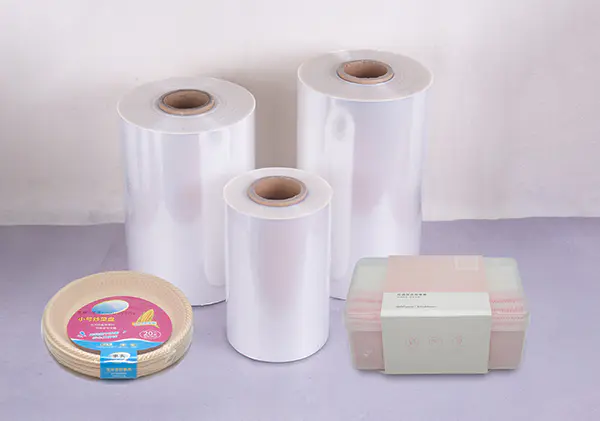
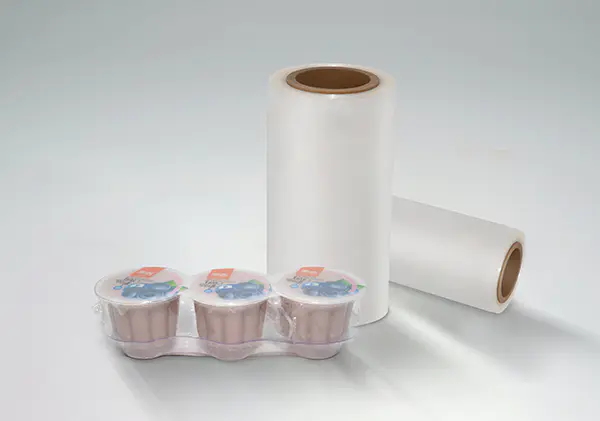
JT05 Antifog Crosslinked Shrink Film is an ideal o...
Copyright © Zhejiang Jiuteng Packaging Co., Ltd.
 简体中文
简体中文
 Home
Home
