
A packaging line runs at speed. The shrink tunnel heats up. The film wraps around the product. Sometimes the package looks perfect. Other times the film tears at the corner, or the shrink leaves wrinkles across the surface. The operator adjusts the temperature. The line slows down. Nobody knows whether the problem comes from the film, the machine, or the settings. The real issue often lives in the balance between shrink rate and film strength. Choosing the right Cross Linked Polyolefin Shrink Film means understanding how these two properties work against each other and how cross linking changes the relationship.
Before discussing trade-offs, a clear definition of the material itself helps establish the foundation.
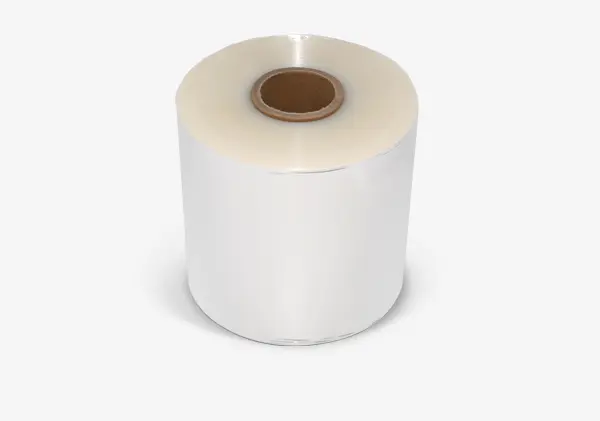
Cross Linked Polyolefin Shrink Film starts as a polyolefin base material. The manufacturing process then creates chemical bonds between the polymer chains. Those extra bonds change how the material behaves when heated. A standard shrink film simply softens and shrinks. A Cross Linked Film holds its molecular structure together more tightly during the shrinking process.
Standard POF (polyolefin) shrink film consists of long polymer chains lying next to each other. Heat makes those chains slide past one another. Cross linking adds bridges between the chains. Those bridges act like connections holding the chains together. The film still shrinks, but the chains do not separate as easily. This difference affects tear resistance, heat tolerance, and shrink uniformity.
The cross linking process changes the film at a molecular level. When heat activates the shrink response, the film contracts evenly because the polymer network pulls together as one connected structure rather than individual chains moving independently. This connected structure also resists tearing. A small puncture in a standard film can run across the whole width. A puncture in a Cross Linked Film stops at the nearest cross link.
POF film offers clarity, flexibility, and good sealing properties. It does not produce strong odors during shrinking. It works with a range of packaging machines. For automated lines running at high speed, POF provides consistent feeding and sealing. Cross linked POF adds mechanical strength to these existing advantages.
A shrink tunnel applies hot air to the wrapped product. The film absorbs heat and contracts around the product. The temperature, air flow, and tunnel length determine how much the film shrinks and how fast. Proper shrink requires the film to reach a temperature above its activation point but below its melting point. Cross Linked Films have a wider window between activation and melting, making them more forgiving in production.
| Property | Standard POF Film | Cross Linked POF Film |
|---|---|---|
| Shrink initiation temperature | Lower | Slightly higher |
| Heat tolerance window | Narrow | Wider |
| Tear propagation resistance | Lower | Higher |
| Uniformity of shrink | Variable | More consistent |
These two parameters define how the film behaves on the line and how the finished package performs in transit.
Shrink rate refers to the percentage reduction in film dimensions when exposed to heat. A film with a shrink rate of seventy percent in the machine direction will become thirty percent of its original length after shrinking. A fast shrink rate produces tighter packages with less loose film. A slow shrink rate leaves more slack, which can cause loose wrapping or product movement inside the package.
Film strength is not a single number. Tensile strength measures how much pulling force the film can withstand before breaking. Puncture resistance measures how well the film resists a sharp object pushing through. Tear resistance measures how easily a cut or hole spreads across the film. All three matter in different situations. A heavy product needs tensile strength. A package with sharp corners needs puncture resistance. A rough handling environment needs tear resistance.
A package with uneven shrink looks bad. Wrinkles on the sides, loose film at the corners, or distortion of printed graphics all come from shrink rate that does not match the product shape. High shrink rate on a square box pulls the film tightly around the edges. Low shrink rate leaves wrinkles on flat surfaces. The correct shrink rate produces a smooth, transparent wrap that shows the product clearly.
On a high-speed packaging line, the film experiences mechanical stress. Sealing jaws close on the film. Pull belts advance the wrapped product. A weak film tears during these operations. The line stops. Someone threads new film. Production loses minutes. Stronger film keeps running. The relationship between film strength and machine uptime directly affects packaging cost.
Heat activation temperature determines when the film starts to shrink. A film that activates too early may shrink on the sealing jaws before reaching the tunnel. A film that activates too late may not fully shrink by the end of the tunnel. Cross linking shifts the activation temperature slightly higher but widens the working range. That wider range gives operators more room to adjust tunnel settings without causing film failure.
The engineering mechanism behind Cross Linked Film explains why it performs differently from standard options.
The cross linking process introduces chemical bonds between adjacent polymer chains. Those bonds act like rungs on a ladder. When heat tries to pull the chains apart, the rungs hold them together. This structure resists the kind of chain sliding that causes thinning and tear propagation in standard films. The result is a material that shrinks without losing mechanical integrity.
Thermal stability means the film maintains its properties across a range of temperatures. A standard film might shrink well at one hundred degrees Celsius but become weak at one hundred ten degrees. A Cross Linked Film performs consistently from one hundred degrees to one hundred thirty degrees. That consistency matters on real production lines where tunnel temperatures fluctuate.
Uneven shrink happens when some parts of the film heat faster than others. Corners and edges heat first. The film shrinks around those points before the flat areas catch up. The result looks like a wrinkled mess. Cross Linked Film shrinks more uniformly because the connected polymer network distributes the contraction forces across the whole film. The edges still heat first, but the whole film responds together.
Some packaging lines stretch the film slightly before sealing to improve tension control. Standard film loses strength when stretched near its limit. Cross Linked Film maintains more of its original strength even when stretched. This allows line operators to use tighter tension settings without causing film breaks.
Sealing performance depends on how well the film welds to itself under heat and pressure. Cross Linked Film seals at similar temperatures to standard POF. The difference appears in seal strength. A cross linked seal maintains its integrity under higher pull forces. Packages stay closed during transport even when stacked or vibrated.
This section addresses the central decision problem that packaging engineers face every day.
High shrink rate requires the film to contract a large amount in a short time. That rapid contraction pulls material from all directions toward the center. The film becomes thinner at the corners and edges where stress concentrates. Thin areas have lower strength. A film with a shrink rate of eighty percent may become dangerously thin at package corners. A film with sixty percent shrink rate leaves more material thickness in place.
Strength comes from the polymer network resisting movement. Shrinkage comes from that same network moving toward the center. A film designed for high strength uses more cross links or a tighter molecular structure. That structure resists movement. The film takes longer to shrink and may require higher tunnel temperatures. The result is a trade-off. Maximum strength sacrifices shrink speed. Maximum shrink speed sacrifices strength.
Thicker films provide more material for strength but require more heat to shrink. Thinner films shrink faster but offer less puncture resistance. Elasticity affects how the film stretches before tearing. A highly elastic film can deform around sharp corners without breaking. A less elastic film tears more easily but holds its shape better under load. Heat sensitivity determines how quickly the film responds to tunnel temperature changes. All four factors interact. Changing one changes all the others.
A tight package looks professional. The film hugs every contour of the product. Loose film looks cheap. But tight packaging puts the film under constant tension. Any sharp edge, any rough surface, any impact during transport can rupture the stretched film. Loose packaging leaves slack for movement but looks poor. The balance point depends on product shape and transport distance.
Cross linking moves the balance point. A Cross Linked Film achieves tight shrink with less thickness reduction at the corners. The connected polymer network distributes the contraction stress more evenly. The same shrink rate that would dangerously thin a standard film leaves a Cross Linked Film still intact. The trade-off curve shifts outward. Higher shrink rates become possible without the same loss of strength. Higher strength becomes possible without the same loss of shrink response.
No single film works perfectly for every application. The selection depends on what the packaging line needs most.
Products with irregular shapes need high shrink rate. The film must pull tight around curves, corners, and edges. A high shrink rate also matters for retail presentation. A smooth, tight wrap sells the product better than a loose one. Fast-moving lines benefit from a fast shrink rate because the film needs to react quickly in a short tunnel. For these applications, choosing a film with solid shrink performance takes priority over strength alone.
Heavy products put stress on the film during lifting and stacking. Sharp edges on industrial goods or certain food items can puncture weak films. Long-distance transport with vibration and impact demands tear resistance. If the packaged product will be handled roughly or stacked high, film strength becomes the primary selection factor. A slightly looser wrap that stays intact outperforms a tight wrap that ruptures in transit.
Round products place even stress around the entire package. Square or rectangular products concentrate stress at the corners. A film with good tear resistance handles corner stress better. Products with protrusions like bottle caps or handles need puncture resistance. Products with flat surfaces and no sharp edges can use higher shrink rate with less concern about breakage.
Faster lines generate more mechanical stress on the film. The film moves through sealing jaws, pull belts, and cutting mechanisms at higher speeds. That speed multiplies the force applied to the film during each operation. A line running at forty packages per minute needs less film strength than a line running at one hundred twenty packages per minute. High-speed lines demand stronger film, even if that means accepting a slightly lower shrink rate.
Consider what happens after the package leaves the line. Will workers stack the packages? Will they throw them into bins? Will the packages travel on vibrating trucks or rough conveyor systems? Each handling step increases the chance of tearing. A warehouse environment with sharp rack edges demands stronger film. A retail shelf with gentle handling can use a film balanced more toward shrink appearance.
Fully automated lines with robotic palletizers and stretch wrappers place consistent, predictable forces on the film. Semi-automated lines with manual handling place unpredictable forces. Manual lines benefit from stronger film because human handling varies. Automated lines can use films optimized for shrink performance since the forces remain controlled.
Different industries place different demands on shrink film performance.
Multipacks of yogurt cups, canned goods, and bakery trays need consistent shrink around varied shapes. Cross linked POF provides the clarity to see the product and the strength to hold multiple items together. Bakery products with soft surfaces require gentle shrink without crushing. The wider heat window of Cross Linked Film allows lower tunnel temperatures that protect sensitive food surfaces.
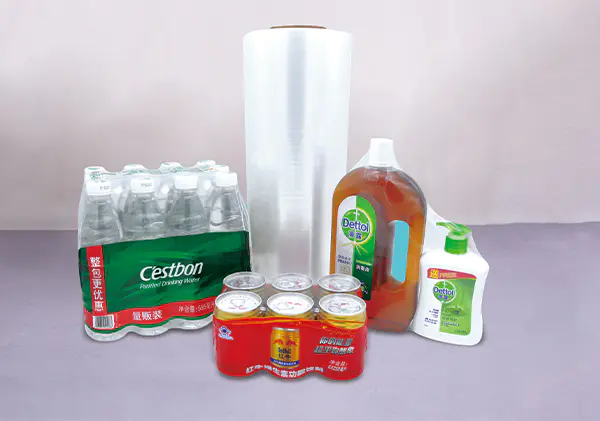
Bottles and cans bundled in shrink film face moisture from condensation and ice baths. Standard films may lose strength when wet. Cross linked POF maintains mechanical properties in wet conditions. The film also needs puncture resistance around bottle caps and can rims. Cross linked structure provides that resistance without requiring excessive thickness.
Printed materials and paper products need transparent film that does not yellow over time. Cross linked POF offers optical clarity and resistance to degradation from heat and light. The film shrinks evenly around paper edges without wrinkling, which matters for retail presentation of books, notepads, and stationery items.
Hardware items, tools, and automotive parts have sharp edges and irregular shapes. A standard film tears easily on a metal corner. Cross linked POF wraps around these shapes without puncturing. The film also provides dust protection during warehouse storage and transport.
Lines running at high speed demand film with consistent feeding, sealing, and shrinking properties. Cross linked POF performs predictably across shifts. The film does not stick to sealing bars. It feeds smoothly from the roll. It shrinks uniformly even when tunnel temperature varies slightly. These characteristics reduce downtime and improve line efficiency.
Retailers want packages that show the product clearly. Wrinkles, fogging, or distortion hide the product and reduce sales appeal. Cross linked POF provides a clear, glossy finish that enhances product presentation. The film also resists scratching during handling, so the package looks good all the way to the store shelf.
Avoiding these errors improves packaging outcomes and reduces costs.
Thicker film is not always stronger. A thick film with poor cross linking tears more easily than a thinner Cross Linked Film. Thickness also affects shrink performance. Thicker film requires more heat and longer tunnel time. Buying by thickness alone ignores the more important properties of shrink rate and tear resistance.
A film that works well on one machine may fail on another. Sealing bar temperature ranges, tunnel air flow patterns, and pull belt materials all affect film performance. Before selecting a film, know the machine specifications. A supplier who asks about the machine type provides better recommendations than one who only quotes thickness and price.
A beautiful shrink wrap that tears during transport creates customer complaints. The appearance matters at the point of sale, but the package must survive the journey to get there. Evaluate durability requirements first. Then optimize shrink appearance within those constraints.
Older heat tunnels may have uneven temperature distribution. Hot spots and cold spots cause uneven shrink. Cross Linked Film tolerates some variation better than standard film, but wide variation calls for tunnel maintenance. Do not assume a new film will fix a poorly performing tunnel.
High-speed lines stress the film mechanically. Non cross-linked film lacks the tear resistance to survive that stress. The line will experience frequent breaks. The cost of downtime exceeds the savings from cheaper film. Match film type to line speed.
A single sharp edge on a product can ruin a whole pallet of packages if the film lacks puncture resistance. Walk the transport path. Look for points where packages contact rough surfaces, rack edges, or each other. Choose film that handles those specific risks.
Fine-tuning the line improves results without changing the film.
Start at the lower end of the film manufacturer temperature recommendation. Run packages through. Check shrink quality. Increase temperature in small steps until the shrink looks right. Running at the low end of the effective temperature range extends film life and reduces energy use.
Sealing systems vary by machine type. Constant heat sealers need film that seals at a consistent temperature. Impulse sealers need film that responds quickly to short heat bursts. Cross linked POF works with both, but the suitable thickness and shrink rate may differ. Test the film on the actual sealer before full production.
Higher line speed requires higher tunnel temperature to give the film enough heat exposure in less time. That higher temperature increases shrink rate but also increases stress on the film. Find the speed where shrink quality remains acceptable without causing film breaks. A slightly slower line that runs consistently outperforms a faster line that stops every hour.
Choosing the wrong film creates waste. A film break wastes the torn section of film and the product inside. Poor shrink appearance hurts customer confidence. Correct selection from the start reduces all forms of waste. Track waste measurements before and after changing film types to see the improvement.
Film properties can vary between batches from the same supplier. Cross Linked Film offers more batch-to-batch consistency than standard film because the cross linking process adds control points. Request batch test data from suppliers. A supplier who provides consistent data across orders delivers reliable performance.
| Selection Factor | Priority When High Shrink Rate Matters | Priority When High Strength Matters |
|---|---|---|
| Shrink rate | High | Medium |
| Tear resistance | Medium | High |
| Puncture resistance | Low | High |
| Heat activation range | Medium | Medium |
| Thickness | Thin to medium | Medium to thick |
The following questions address real concerns that come up during film selection and line operation.
Why does shrink rate vary between different films?
Polymer composition, cross link density, and manufacturing orientation all affect how much a film shrinks when heated. Films with higher orientation in the machine direction shrink more in that direction.
What makes Cross Linked Polyolefin Shrink Film stronger?
The chemical bonds between polymer chains prevent chain sliding when stress applies. Tears stop at cross link points instead of running across the whole film width.
Can higher shrink rate cause film breakage?
Yes. High shrink rate creates high stress at corners and edges. If the film lacks the strength to handle that stress, it breaks. Cross Linked Film handles higher shrink rates before breaking.
How does film strength affect packaging machine performance?
Stronger film resists tearing during sealing, cutting, and transport through the machine. The line runs with fewer stops for film breaks. Seals remain intact at higher pull forces.
Why does cross linking improve heat resistance?
Cross linked polymer networks maintain structural integrity at temperatures that would cause standard polymer chains to slide apart. The film stays strong even when hot.
Is thicker film always stronger in shrink packaging?
Not always. A thin Cross Linked Film often outperforms a thick standard film in tear resistance. Thickness helps with puncture resistance but does not guarantee overall strength.
How does product shape affect shrink film choice?
Irregular shapes need higher shrink rate to conform around curves. Shapes with sharp edges need higher puncture resistance. Round shapes place even stress and tolerate a wider range of film properties.
What causes uneven shrinking in packaging lines?
Uneven tunnel temperature, inconsistent film thickness, or improper product positioning causes uneven shrink. Cross Linked Film reduces the effect of these variables but does not eliminate it.
Can one film balance both shrink rate and strength effectively?
Cross linked POF comes closer to balancing both properties than standard film. The right balance depends on the specific application requirements.
What should be checked before selecting cross linked shrink film?
Line speed, product shape, tunnel temperature profile, transport distance, and handling method all affect film choice. Check all these factors before making a selection.
A structured framework leads to better procurement decisions.
Write down the three key requirements for the package. Appearance may be the main priority for retail products. Durability may be the main priority for industrial goods. Transport survival may be the main priority for export shipments. Clear priorities drive the selection process.
Low ceiling height limits tunnel length. Electrical service limits tunnel temperature. Floor space limits machine size. Know the constraints before evaluating film options. A film that requires a longer tunnel will not work in a short tunnel.
Calculate the required line speed in packages per minute. Higher speeds demand film with faster shrink response and higher mechanical strength. Match the film to the speed, not the other way around.
A film that performs perfectly for one week then varies in the next batch creates production headaches. Consistent performance across batches matters more than peak performance in a single test. Choose suppliers with proven consistency.
The same film specification from different suppliers may perform differently. One supplier maintains tight manufacturing controls. Another produces variable results. Ask for quality control documentation. A supplier who cannot provide it lacks the controls needed for consistent film.
Think of film selection as matching, not choosing. Match the film to the product shape, line speed, tunnel capability, and transport conditions. A film that works well for one application may perform poorly in another. There is no universal answer. There is only the right answer for a specific set of conditions.
Shrink rate and film strength sit at opposite ends of a performance spectrum. Pulling one end changes the other. A packaging line that runs smoothly does so because someone found the balance point for that specific product, machine, and transport environment. Cross Linked Polyolefin Shrink Film shifts the entire spectrum. It allows higher shrink rates without the same loss of strength. It allows higher strength without the same loss of shrink response. The balance point moves to a more useful position. The packaging engineer who understands this relationship makes better decisions. They do not ask which film is the best. They ask which film balances shrink rate and film strength correctly for their application. They test. They measure. They adjust. They work with suppliers who understand the trade-off and provide consistent material. A packaging line that runs without frequent stops, produces attractive packages, and delivers intact products to customers reflects good film selection. Behind that selection stands a clear understanding that shrink rate and film strength must work together, not fight each other. For organizations seeking reliable Cross Linked Polyolefin Shrink Film that balances shrink performance with mechanical strength, Zhejiang Jiuteng Packaging Co., Ltd. provides material engineered for consistent production line performance across a range of packaging applications.
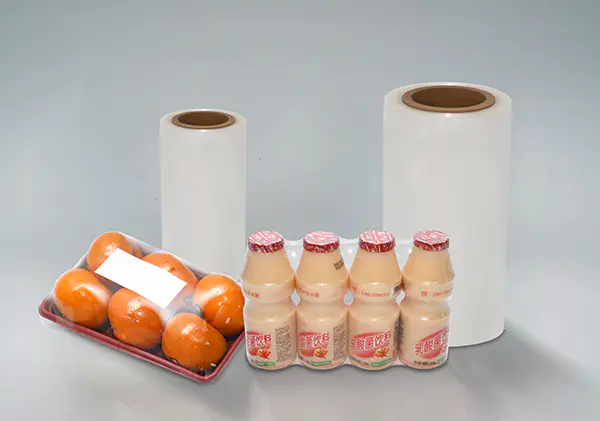
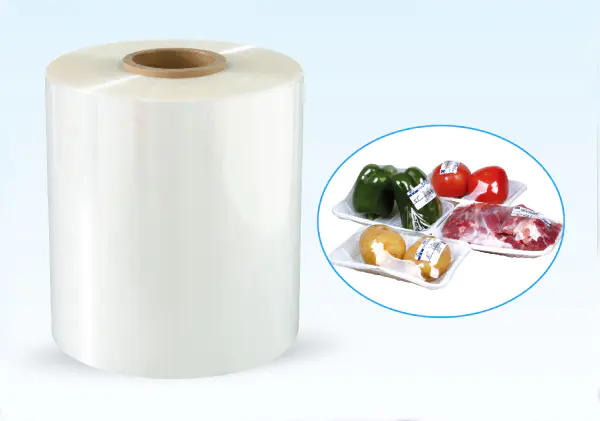
JT05 Antifog Crosslinked Shrink Film is an ideal o...
Copyright © Zhejiang Jiuteng Packaging Co., Ltd.
 简体中文
简体中文
 Home
Home
