
Damaged goods on arrival. Customer complaints about torn packaging. Shrink film that splits under the pressure of a single sharp corner. These are not abstract concerns — they represent real costs that accumulate across every shipment, every returned order, and every hour spent managing avoidable packaging failures. When standard films keep falling short, the conversation often turns to Cross Linked Polyolefin Shrink Film, a material engineered specifically to handle the mechanical stress that breaks conventional films apart.
Film failure rarely happens at random. It tends to follow predictable patterns rooted in how the material responds to stress. When a package is stacked, compressed, or dragged across a conveyor surface, the film absorbs force across its surface area. Standard polyolefin films can handle moderate, distributed loads reasonably well. Problems emerge at stress concentration points — sharp product edges, protruding corners, irregular shapes pressing outward from inside the package.
At those contact points, the force applied to the film is no longer spread across a wide area. It is focused. And when focused force exceeds the film's tear initiation threshold, the material splits — sometimes cleanly, sometimes in a way that propagates rapidly across the package.
Edge puncture deserves its own category because it behaves differently from general tearing. When a product inside a package has a sharp or angular edge — hardware components, boxed tools, products with protruding fasteners, or even the corners of rigid cardboard inserts — the film wraps tightly around that geometry during shrinking. The pressure of the shrink process itself can create the initial puncture.
Once a puncture forms, it does not stay contained. Small perforations under mechanical stress tend to propagate into larger tears during handling, transport, and warehouse movement. What looks like a minor defect at the line becomes a failed package by the time it reaches the end customer.
Seal failures are another distinct category. When a package shifts during transit — which happens constantly in truck transport and air freight — the weight of the product pulls against the sealed edges of the film. If the seal material lacks sufficient strength, or if the film itself tears near the seal line, the package opens. Standard POF films can struggle with this combination of shear force and directional pull, particularly when packages are stacked at height.
The term "cross linked" refers to a specific change in the polymer structure of the film during manufacturing. In a standard polyolefin film, the long polymer chains are arranged in a relatively linear fashion. They have some resistance to stress, but they can separate when force is applied along their length or across weak points between chains.
Cross linking introduces chemical bonds that connect adjacent polymer chains laterally — creating a network structure rather than a series of parallel lines. The result is a material where force applied at any single point is distributed across multiple interconnected chains simultaneously. No single chain bears the full load of an impact or puncture attempt.
This structural difference is the reason Cross Linked Shrink Film behaves so differently from its standard counterpart under mechanical stress. It is not simply a thicker or denser version of the same material. It is a fundamentally different molecular architecture.
A reasonable concern when adding cross linking to a film is whether the treatment compromises the film's ability to shrink uniformly and conform to package shapes. In well-manufactured Cross Linked POF Shrink Film, this concern is addressed through careful control of the cross linking process. The film retains the shrink characteristics needed for clean, tight packaging while gaining the structural resilience that comes from the cross linked network.
Uniform shrinkage matters because inconsistent shrink patterns create loose areas in the package — and loose areas are where film failure often originates. A film that shrinks consistently across its surface produces a tighter, more stable package from the outset.
A direct comparison helps clarify where the material improvement is meaningful for packaging operations.
| Performance Factor | Standard POF Shrink Film | Cross Linked POF Shrink Film |
|---|---|---|
| Tear resistance | Moderate | Noticeably higher |
| Puncture resistance | Moderate | Stronger at sharp contact points |
| Seal strength | Adequate for standard loads | Holds better under directional stress |
| Shrink consistency | Good | Comparable, with tighter control |
| Suitability for irregular shapes | Limited | Better conformity without film stress |
| Film thickness needed | Standard gauge | Can often use reduced gauge |
| Performance with sharp-edged products | Variable, risk of failure | Reliable across edge types |
The pattern that emerges is consistent: Cross Linked Film outperforms standard POF in situations involving concentrated stress, irregular product geometry, and dynamic load conditions during shipping. For straightforward flat products with no sharp edges and minimal handling demands, the difference may be less critical. But for anything with corners, edges, or rough surfaces — the improvement is practical and measurable in packaging line performance.
Few product categories challenge packaging film as consistently as hardware and industrial components. Screws, brackets, fasteners, tool handles, and machine parts all present combinations of sharp points, rigid edges, and heavy mass. When these products are shrink-wrapped — either individually or in grouped bundles — the film must resist puncture from the product itself during the shrink process and then withstand handling throughout distribution.
Cross Linked Film handles these demands through a combination of puncture resistance and tear propagation control. Even when a small puncture does form at a particularly sharp point, the cross linked network slows or stops the tear from extending further — keeping the package largely intact until it reaches its destination.
Electronic products — routers, small appliances, accessories — are often packaged inside rigid cardboard or plastic shells before being shrink-wrapped for retail display. The corners of these inner packages are consistently the points where film failure initiates. Cross Linked Film conforms to these corners during shrinking without generating the stress concentrations that cause standard film to split.
For retail environments where appearance matters as much as protection, a film that stays intact and maintains its clarity across the full package surface is a practical advantage beyond mere durability.
This category might seem far removed from industrial packaging concerns, but cosmetic products often combine awkward shapes — pump bottles, angled caps, embossed lids — with presentation requirements that demand flawless film appearance. A puncture or tear in shrink wrap on a cosmetics product communicates poor quality to the end customer regardless of the product inside. Cross Linked Film supports both the protective and aesthetic functions simultaneously.
Fresh produce, cuts of meat, bakery trays, and multi-unit food bundles all involve irregular surfaces and varying weight distributions. Transit conditions for food packaging include temperature changes, moisture exposure, and constant repositioning. The combined stress on packaging film is substantial, and failures in food packaging carry hygiene and shelf-life implications beyond simple visual damage. Cross Linked Shrink Film provides more consistent protection across these variable conditions.
One of the less obvious advantages of Cross Linked Film is that it opens the door to downgauging — using a thinner film than would otherwise be required while maintaining equivalent or better protective performance. Because the cross linked molecular structure delivers stronger resistance per unit of thickness, it is sometimes possible to achieve the protection level of a heavier standard film with a lighter cross linked version.
The implications for material consumption are meaningful. Less film per package means lower material cost per unit, reduced weight in shipped goods, and less plastic waste in the overall packaging process. For operations packaging high volumes of products daily, the accumulated saving across a production run can be substantial.
Downgauging is not a universal solution. Its viability depends on the specific product, the packaging line configuration, and the distribution conditions the package will encounter. Products with extremely sharp edges or very high mass may still require a heavier gauge even in Cross Linked Film. The decision to reduce gauge should be tested against actual packaging line performance and distribution conditions before being implemented at scale.
The key point is that Cross Linked Film expands the range of options available to packaging engineers. It does not eliminate the need for judgment — it simply provides a more capable material to work with.
Cross Linked Film runs on standard shrink-packaging equipment, but there are operational variables worth checking. The sealing temperature requirements may differ slightly from standard POF, and the shrink tunnel settings — temperature, belt speed, air circulation — may need adjustment to achieve uniform results with the new material.
A trial run before full production adoption is strongly advisable. Running test packages through the line, evaluating shrink quality, seal integrity, and film behavior around sharp product edges, provides practical information that no specification sheet can fully substitute.
Material consistency matters enormously in Cross Linked Film. The cross linking process must be applied uniformly across the film to deliver consistent performance. Films that are unevenly cross linked will have variable puncture and tear resistance, making packaging line performance unpredictable.
When evaluating suppliers, the relevant questions include:
These are practical questions, not theoretical ones. The answers directly affect whether the switch to Cross Linked Film delivers the improvement that motivated the evaluation.
Cross Linked POF Shrink Film typically carries a higher unit cost than standard POF film. This is a straightforward fact that packaging buyers need to account for in their evaluation. What the unit cost comparison alone does not capture is the downstream cost of packaging failure.
Returned goods, replacement shipments, customer service time, reputational impact with retail buyers or end customers — these costs are real but often diffuse, spread across departments in ways that make them easy to overlook when reviewing film pricing. A packaging manager who focuses only on the film line item may underestimate the total cost of staying with a material that produces a consistent rate of failures.
A more complete evaluation considers:
When these factors are included, the economics of Cross Linked Film frequently look different from a simple price-per-roll comparison.
When a packaging line handles a wide range of products — varying weights, shapes, and edge characteristics — choosing a film that performs reliably across that diversity is operationally valuable. A single Cross Linked Film specification can often replace multiple standard film grades that were previously needed to accommodate different product types.
Simplifying the film inventory reduces purchasing complexity, warehouse storage requirements, and the risk of running the wrong film on the wrong product.
Products destined for international distribution face longer transit times, more frequent handling touchpoints, and exposure to a wider range of environmental conditions than domestic shipments. The cumulative stress on packaging is higher. Cross Linked Film's stronger resistance to tear initiation and propagation is particularly relevant for export packaging contexts where the package must remain intact through multiple legs of a supply chain before reaching its destination.
Packaging film failure is rarely dramatic in isolation. A single torn package, a single punctured shrink wrap, a single seal that opens in transit — each incident looks minor. The pattern across thousands of packages per month is where the real impact becomes visible: in damage claims, in customer feedback, in rework labor, and in the quiet erosion of confidence that retailers and buyers develop toward a supplier whose packaging consistently arrives compromised. Cross Linked Polyolefin Shrink Film addresses this pattern at its structural root, not through a surface-level material upgrade but through a fundamentally more resilient molecular architecture that handles concentrated stress, sharp edges, and dynamic load conditions more reliably than standard alternatives. For packaging engineers and procurement teams evaluating materials upgrades, the category of Cross Linked Film warrants serious consideration whenever current failure rates are creating visible downstream costs. Zhejiang Jiuteng Packaging Co., Ltd. produces a range of Cross Linked POF Shrink Film and Cross Linked Film solutions designed for demanding packaging applications, with production capabilities supporting both standard specifications and custom requirements for buyers seeking consistent, scalable supply of high-performance packaging materials.
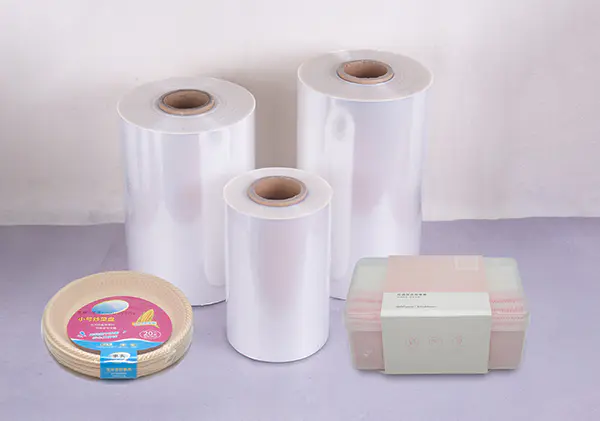
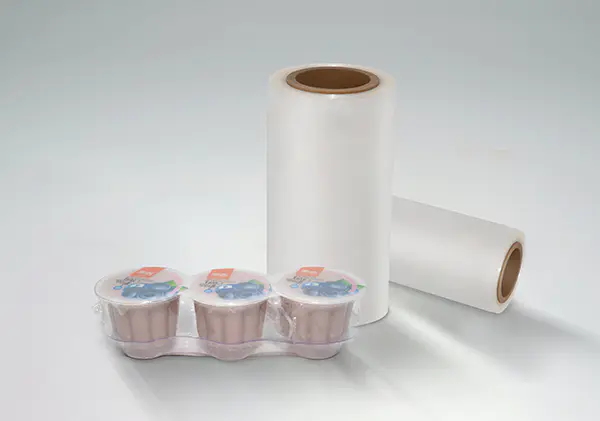
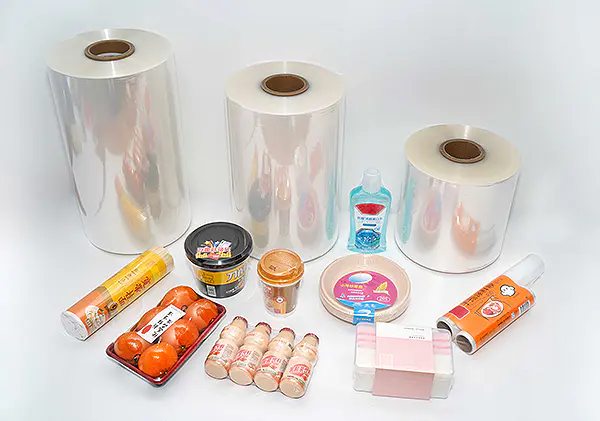
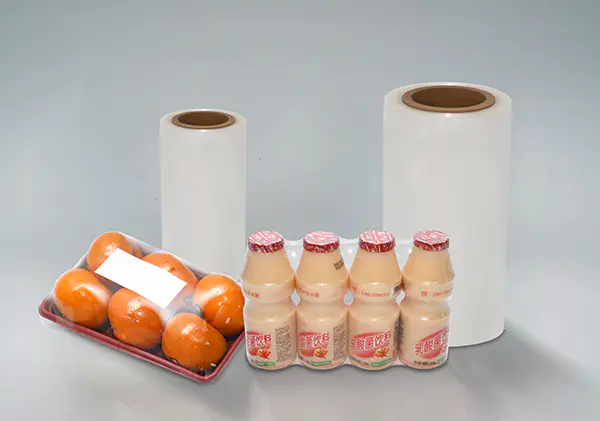
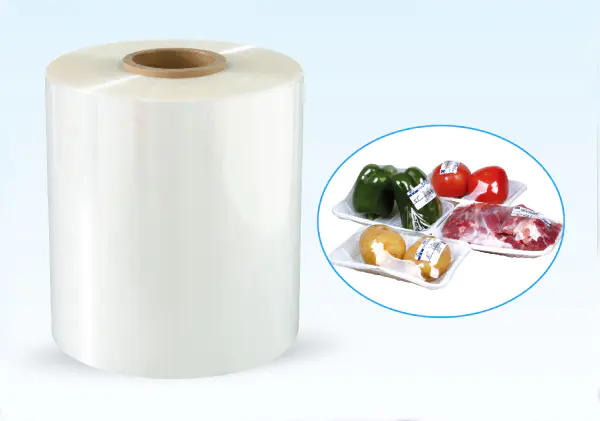
JT05 Antifog Crosslinked Shrink Film is an ideal o...
Copyright © Zhejiang Jiuteng Packaging Co., Ltd.
 简体中文
简体中文
 Home
Home
