
A packaging supervisor once kept one roll of shrink film for every line in the factory — until the day it tore on a steel bracket and melted a chocolate bar fifty minutes later. The film was fine. The match was not. When you choose shrink film for different products, the film type, gauge, and shrink temperature all have to follow the product, not the supplier's stock list.
The short version: evaluate four things about your product — weight, edge geometry, heat sensitivity, and display requirements — then match them to film strength, puncture resistance, shrink temperature, and clarity. Polyolefin handles general retail items; crosslinked film takes heavy or sharp products; low-temperature film protects heat-sensitive goods; hot slip film keeps high-speed lines running; printing film carries the branding. The rest is calibration.
Answer these five questions before comparing suppliers. Each answer maps directly to a film property and narrows your shortlist before you discuss price.
| Product factor | Question to ask | Film property needed | Likely film family |
|---|---|---|---|
| Weight | Is the pack heavy or awkward to handle? | Tensile strength and tear resistance | Crosslinked or high-performance film |
| Edges and corners | Does the product have sharp edges? | Puncture resistance | Crosslinked film |
| Heat tolerance | Can the product withstand 140°C or more? | Low shrink temperature | Low-temperature film |
| Line speed | Is the line automatic and fast? | Consistent hot slip and sealability | Hot slip film |
| Presentation | Does the package need to sell the product on the shelf? | Transparency, gloss, printability | Polyolefin or printing film |
A 500 g box of stationery and a 12 kg toolkit look similar on a shelf, but they load the film very differently. Weight and sharp edges are the two factors that most often cause field failures: the film looks correct, then punctures at a corner or splits at the seal under tension. Matching those two factors first prevents most of the complaints that end up on the quality manager's desk.
The practical way to select film is to work within product families. Most shrink film manufacturers organize their range the same way: a base polyolefin, a crosslinked grade for demanding loads, a low-temperature grade for sensitive contents, a hot slip grade for automatic lines, and printing film for decorated packaging.
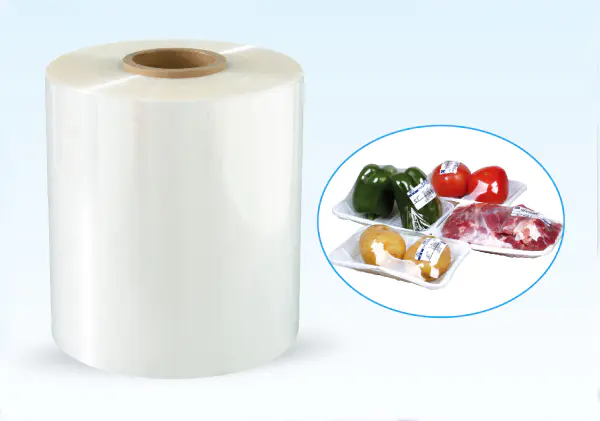
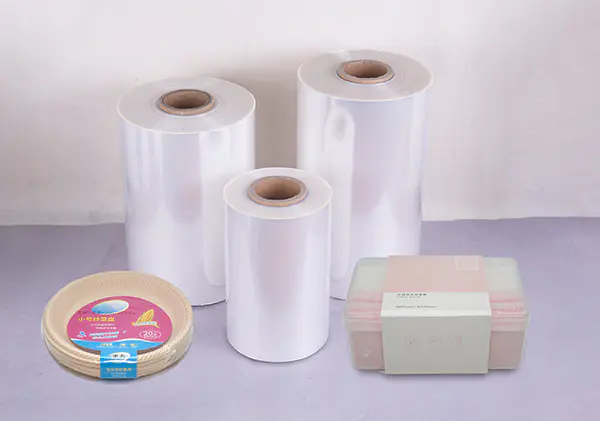 Standard Polyolefin Shrink Film for Retail PackagingThis base polyolefin film suits most dry goods and lightweight items, offering even shrink, clean seals, and a glossy retail appearance across gauges from 12 to 19 microns.View Product →
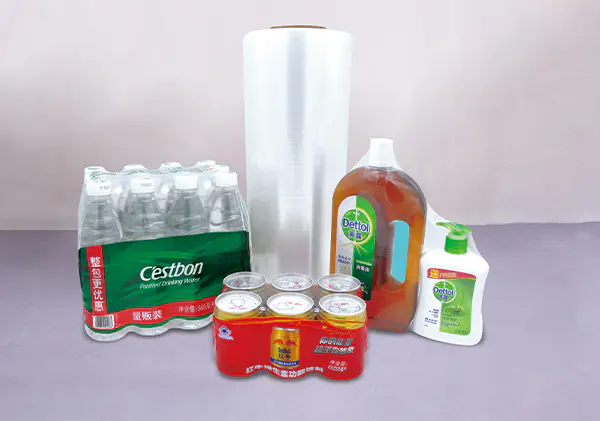
For boxes, bottles, cans, cosmetics, stationery, and most dry goods, standard polyolefin shrink film is the workhorse. It shrinks evenly in a moderate tunnel, seals cleanly, and delivers the transparent, glossy surface that retail buyers expect. Gauges from 12 to 19 microns cover most lightweight items; move toward the upper end when the product has real weight or when the pack travels long distances. You can compare the full range in our product range overview.
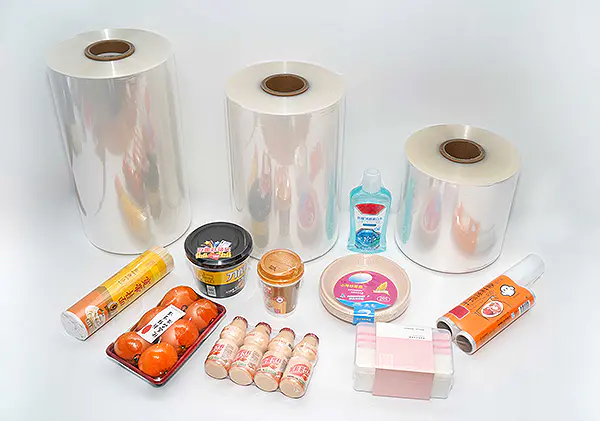 Crosslinked Shrink Film for Heavy or Sharp ProductsDesigned for demanding loads, this film resists punctures and tears better than standard polyolefin, tolerates higher sealing temperatures, and protects metal parts and heavyweight multipacks during transit.View Product →
When the product has metal parts, pointed corners, or genuine weight, crosslinked film earns its place. Crosslinking modifies the polymer structure so the film resists punctures, tears, and abrasion far better than standard polyolefin of the same gauge. It also tolerates higher sealing temperatures without burn-through. Tool kits, hardware, heavy multipacks, and automotive parts are typical candidates. The film costs more per kilogram, but if it prevents a punctured pack on the line, it is the cheaper film.
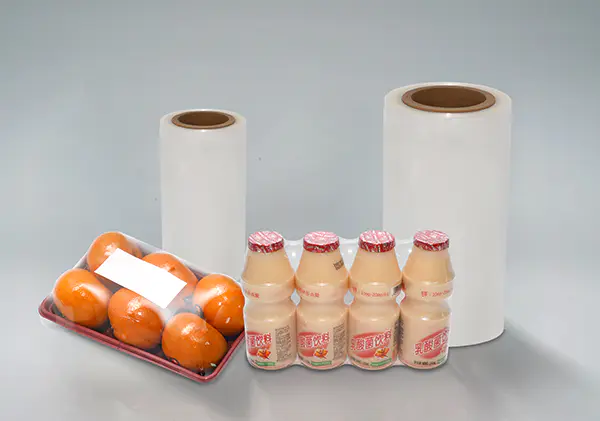 Low Temperature Shrink Film for Sensitive ItemsThis film shrinks at reduced heat to protect temperature-sensitive products like chocolate, candles, and cosmetics from melting or distortion, while maintaining tight fit and high transparency.View Product →
Chocolate, candles, wax, cosmetics, batteries, and certain electronics cannot sit in a 180°C tunnel for long. Low-temperature shrink film is formulated to shrink at significantly lower heat, so the product keeps its shape and properties. The trade-off is a slightly different hand-feel and a narrower operating window: the tunnel must stay consistent, or you will see under-shrink one day and distortion the next.
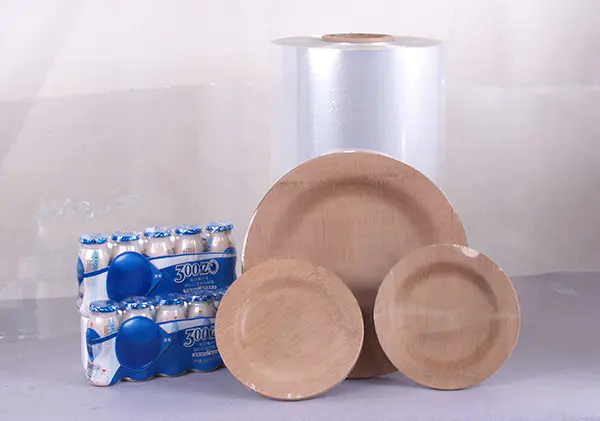
Automatic lines create a problem that manual packaging rarely exposes: the film is still hot when it touches the next pack, a machine rail, or the seal bar. If it sticks, the line stops. Hot slip films are designed with low hot-friction surface, so packs slide cleanly and bundles can be shrink-wrapped at high speed without adhesion. If your line runs more than roughly 30 packs per minute, hot slip properties matter more than almost any other specification.
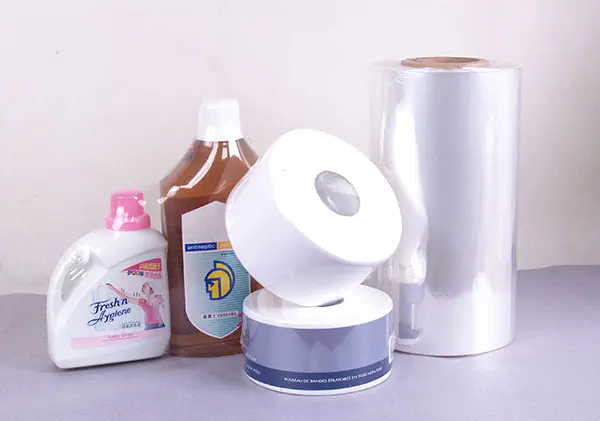
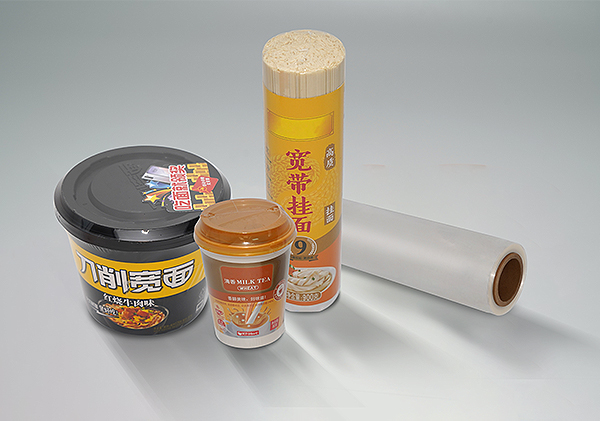
When the film itself carries the brand — logo, artwork, barcode, instructions — printing film is the relevant choice. It must accept ink adhesion, hold registration through the shrink process without distorting the print, and maintain clarity. If you are switching from labels to printed shrink film, test the shrink ratio carefully, because the printed area distorts together with the film.
Once the film family is chosen, three numbers finish the selection.
| Parameter | Typical range | Impact on your packaging |
|---|---|---|
| Thickness | 12–25 microns | Lower gauge cuts material cost; higher gauge raises strength and adds a heavier feel. |
| Shrink ratio | 40–80% in MD and TD | High ratio suits complex contours; moderate ratio is easier to control on straight shapes. |
| Shrink temperature | 120–180°C | Lower temperature protects the product; higher temperature demands more tunnel power. |
Gauge is the value buyers argue about most, yet thick is not automatically better. A 25-micron film can be stiffer and harder to shrink around a curved bottle than an 18-micron film with a high shrink ratio. Select the thinnest gauge that survives distribution without failure; then validate it on the actual line, with the actual product, at the actual tunnel speed. It is also worth checking how the film interacts with the pack surface: glossy cartons and matte cartons behave differently in the tunnel.
Cost is the third decision, and it comes with a warning.
Compare cost per pack, not cost per kilogram. A cheaper roll that runs thinner is not cheaper if the line needs a heavier gauge to perform the same job.
For a more detailed walkthrough of the same selection logic, including shrinkage and seal tests, see our polyolefin shrink film selection guide.
Start with the lightest gauge that matches the product's weight: 12–15 microns for light dry goods, 15–19 microns for most retail packs, and 20 microns or more for heavy or abrasive items. Then run a trial through the actual shrink tunnel and increase only if the film punctures, distorts, or fails the seal test.
Crosslinked film has a modified polymer structure that provides higher puncture resistance, better tear strength, and higher heat tolerance at the same gauge. Use it for heavy products, sharp edges, and applications where standard polyolefin punctures; use standard polyolefin for general retail where cost and optical clarity are the priority.
Yes, but the tunnel settings must be adjusted downward. Low-temperature film shrinks fully at lower heat, so if the tunnel stays at its previous settings, the film may distort or the product may still overheat. Recalibrate the tunnel profile when you switch films.
If your line runs automatically at medium to high speed, or if bundles stick to the seal bar, to the rails, or to each other immediately after shrinking, you need hot slip film. It reduces the hot tack of the outer surface while keeping the seal strong.
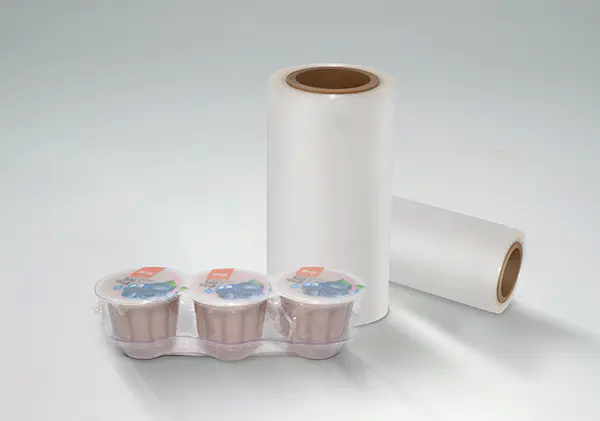
JT05 Antifog Crosslinked Shrink Film is an ideal o...
Copyright © Zhejiang Jiuteng Packaging Co., Ltd.
 简体中文

 Home

