
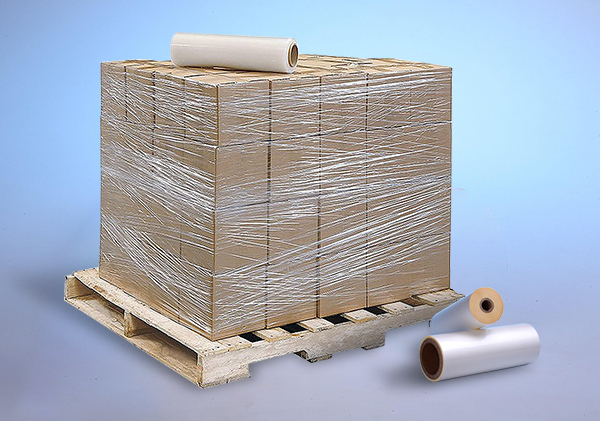
Every packaging engineer knows the moment when a standard shrink film stops being enough. The pallet of 1.5 L water bottles sways on the forklift. The carton of steel fittings develops a tear that grows into a hole. The multipack of canned goods splits open before it reaches the shelf. These failures are not random — they happen when a film’s mechanical limits meet a heavy, dense, or sharp-edged product.
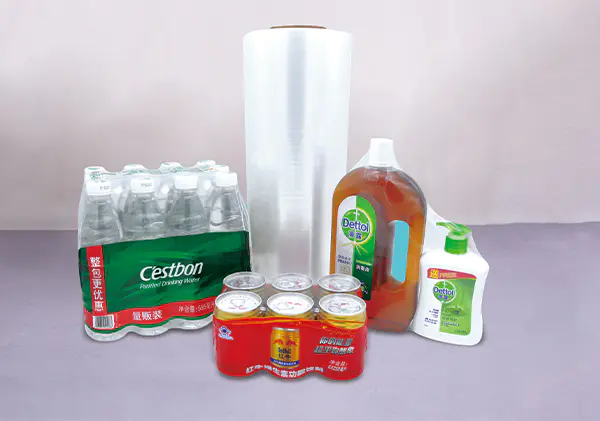
Crosslinked film for heavy duty packaging closes that gap. Unlike ordinary polyolefin (POF) shrink film, it goes through a cross-linking step that bonds polymer chains into a three-dimensional network. The result is a film with considerably higher puncture resistance, tear strength, and impact toughness, while keeping the transparency and gloss that retail packaging demands.
A reliable crosslinked film needs a consistent production process, because heavy duty packaging rewards uniformity and punishes weak spots. Zhejiang Jiuteng Packaging (JT) produces its crosslinked film (JT03) from imported raw materials under in-house batch checks, which is one reason buyers in Europe and the Americas use it for demanding packaging work.
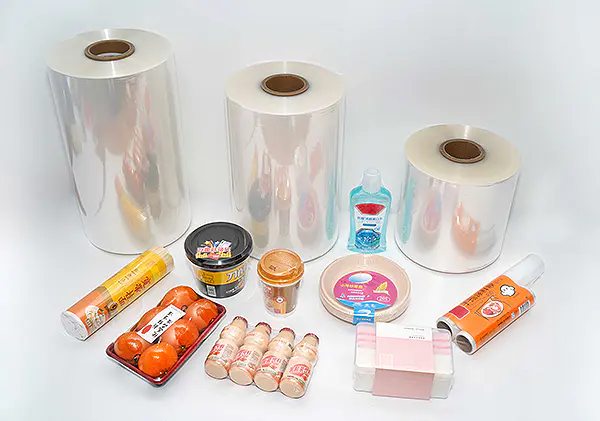 JT Crosslinked Shrink Film for Heavy-Duty Puncture ResistanceThis crosslinked film from Zhejiang Jiuteng uses chemically bonded chains to stop tear propagation, making it a dependable choice for demanding packaging where punctures and rough handling are a risk.View Product →
To understand what crosslinked film gives you, start with the polymer structure. In standard POF, long polyolefin chains lie mostly parallel after orientation. When a sharp object punctures the film, the tear follows the oriented structure quickly; one small hole becomes a long split. Cross-linking inserts chemical bonds between chains, so a puncture has to break a network instead of separating individual fibers. That is why crosslinked films resist both punctures and tear propagation.
Puncture resistantTear resistantHigh clarityBroad temperature tolerance
Shrink force also behaves differently. Because the cross-linked network stores more elastic energy during orientation and releases it in a controlled way during heating, the film can generate higher shrink force around a dense product. For heavy duty packaging — where products are rigid and tolerate firm pressure — that extra shrink force means a tighter, more dust-proof, more tamper-evident package. For fragile items, a lower shrink force grade or standard POF remains the safer choice.
| Property | Standard POF | Crosslinked Film |
|---|---|---|
| Puncture resistance | Moderate | High |
| Tear propagation | Fast once started | Resists spreading |
| Impact strength | Good | Superior |
| Transparency | Excellent | Excellent |
| Shrink force | Moderate | Higher and controllable |
| Heat resistance | Standard | Broader range |
| Low-temperature toughness | Good | Better |
| Typical gauge for heavy duty | 15–20 µm | 20–30 µm and above |
Standard POF remains the right choice for many light and medium-duty applications. But once product weight, sharp edges, or rough handling enter the picture, the difference becomes easy to see. Many JT customers run standard POF (JT01) on lighter items and switch to crosslinked film only when field failures justify the upgrade.
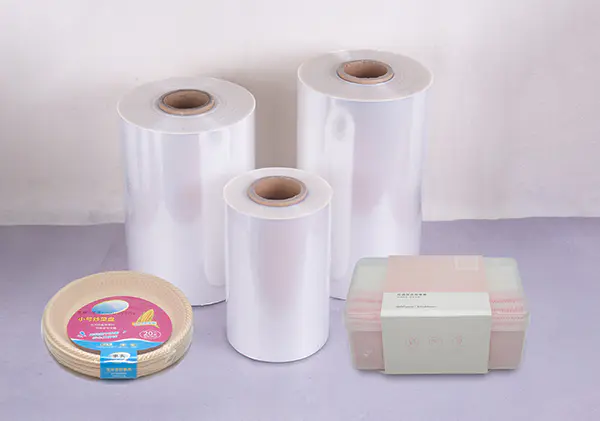 JT Standard Polyolefin Shrink Film for Light and Medium DutyThis biaxially stretched POF film offers clarity and reliable shrink for everyday packaging. It suits lighter items, while businesses can reserve crosslinked film for cases where field failures justify a stronger upgrade.View Product →
Crosslinked film is not the cheapest film on the market, so it should not be used everywhere. It earns its cost where failures are expensive. The clearest use cases share one pattern: heavy weight, sharp or uneven shapes, long transport, or stacking pressure.
Notice that this list is about keeping the package intact from the packing line to the end customer, not about making the package look premium. Field experience matches this pattern; our review of crosslinked film performance with heavy products shows how the material behaves during actual handling and transit.
When a 12-pack of 1.5 L bottles survives a two-meter drop and a week of stacking, the film is doing more than looking nice — it is protecting revenue.
For unusually demanding jobs, JT also produces high-performance shrink film. This grade pushes the same polymer engineering further and is worth evaluating when the cost of product damage is higher than the cost of the film.
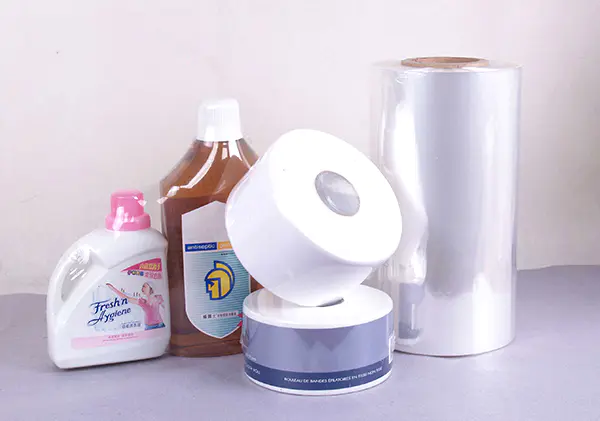 JT06 High-Performance Shrink Film with Low-Temperature ShrinkEngineered for difficult shrinking conditions, this film shrinks quickly at temperatures near PVC levels and offers strong seals, high shrinkage, and low shrink force, making it ideal when product damage costs exceed film costs.View Product →
Choosing a crosslinked film is about verifying that technical claims translate into reliable results on your line. Focus on these five factors.
In practice, many packaging lines run both standard POF and crosslinked film for different products. Switching between them usually requires adjusting shrink tunnel temperature, conveyor speed, and dwell time. A supplier that understands both film families can help you find the correct settings faster.
Performance data means little if the next batch does not match the first. Heavy duty packaging lines depend on consistent film width, gauge, shrinkage, and seal behavior. This is where the supplier’s process controls matter more than any brochure.
Look for a manufacturer that buys resin from reliable sources, runs quality checks through every production stage, and holds certifications such as ISO, BRC, SGS, and FDA. These documents are useful screens, but batch consistency is best confirmed with trial rolls and production records. BRC certification is particularly relevant for food and beverage packaging because it covers traceability and process control across the plant.
JT positions itself as a partner that helps customers solve packaging problems, not just a film seller. Its factory sits close to Shanghai port, which simplifies export logistics and shortens lead times for overseas customers. You can review the company background and full product range on the Zhejiang Jiuteng Packaging official page.
The practical advice is simple: test before you scale. Run a trial roll on your own packaging line, measure seal strength and shrink appearance, and only then commit to a full container order.
Not exactly. Crosslinked film starts from a polyolefin blend but then goes through a cross-linking step that bonds polymer chains into a network. This raises puncture resistance, tear strength, and heat tolerance compared with standard POF, which is why it is preferred for heavy duty packaging.
For heavy or sharp-edged products, 20 to 30 microns is a typical starting range. The right value depends on product weight, shape, handling conditions, and the shrink tunnel you use. Ask the supplier for a gauge recommendation based on your actual load.
Usually yes. Crosslinked film has a slightly different shrink response, so you may need to adjust temperature, conveyor speed, or airflow. A short trial on your own machine is the best way to confirm settings before committing to a full order.
Yes. Crosslinked film is widely used for food and beverage bundles, and it can be formulated to meet food-contact expectations. JT manufactures crosslinked film with food-grade raw materials, and its plant holds ISO, BRC, SGS, and FDA certifications.
The decision between standard POF and crosslinked film does not have to be complicated. Weigh the product, look at the sharpest edge, count the handling steps, and estimate the cost of one failed shipment. In most heavy duty cases, the math leads to crosslinked film — and to a supplier that can prove its quality batch after batch.
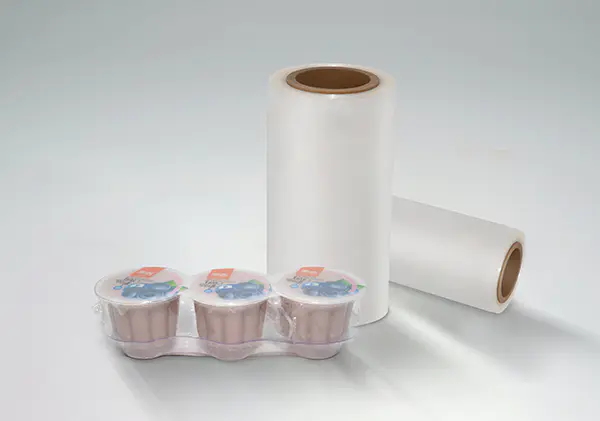
JT05 Antifog Crosslinked Shrink Film is an ideal o...
Copyright © Zhejiang Jiuteng Packaging Co., Ltd.
 简体中文
简体中文
 Home
Home
