
Transport is more than moving goods from one place to another. It is a process that tests packaging, product design, and material performance. Wrapping films play a crucial role in maintaining product safety, appearance, and integrity throughout the journey. Understanding how these materials perform can help businesses choose the right solution for their supply chain needs.
Films are flexible materials designed to cover, protect, and stabilize products during storage and transport. They come in different forms — some are stretchable, some shrinkable, and others provide enough rigidity to keep packages secure.

Main Purpose Their primary job is to prevent damage that can occur while goods are moving from one place to another. Films help protect products from movement, impact, and changing environmental conditions.
Challenges During Transport Products face several stresses during transportation and warehousing. These include constant vibration from vehicles, pressure from stacking in warehouses, and frequent handling by workers. Without effective protection, items can shift inside the package, deform, or suffer surface damage.
Why Films Matter Films act as a protective buffer. They absorb shocks, hold items firmly in place, and reduce the risk of damage. When used properly, they help maintain product quality and appearance, which directly supports better customer satisfaction and fewer complaints.
Good films play a quiet but essential role in keeping products safe and intact throughout the supply chain.
Physical impacts during transport can range from small bumps and vibrations to much stronger shocks caused by sudden stops, drops, or collisions. Films help minimize damage by spreading the force of any impact across a wider surface area instead of letting it concentrate on one spot. They create a flexible yet firm outer layer that holds the entire package together, preventing individual items or parts from shifting or colliding with each other independently.
Different films achieve this protection in their own distinct ways. Stretch films are designed to elongate and absorb energy when pressure is applied, acting like a cushion that gently gives way rather than breaking. Shrink films work differently by contracting tightly around the load, generating consistent tension that locks everything securely in place. Because of this, the specific type of film selected has a direct influence on how well the package can withstand sudden forces and impacts without allowing damage to occur inside.
During transportation and storage, products are regularly exposed to changing and often harsh environmental conditions. Fluctuations in humidity, sudden temperature swings, dust, and airborne particles can all threaten the quality and integrity of goods. Films function as an effective protective barrier that helps shield products from these external factors.
Certain types of films are formulated to be highly resistant to moisture, creating a reliable seal that prevents water, condensation, or liquids from reaching the product surface. They can also block out dirt, dust, and small debris that might otherwise cause scratches, abrasions, or contamination. For items that are particularly sensitive to environmental changes — such as electronics, food products, or delicate materials — the right wrapping film helps maintain more stable internal conditions throughout the journey, reducing the risk of spoilage, corrosion, or deterioration until the package safely reaches its final destination.
Manual handling introduces many unpredictable stresses. Packages are constantly being lifted, carried, pushed, stacked, and sometimes placed in awkward positions by warehouse staff or delivery personnel. Films contribute significantly to overall stability by securing the contents and keeping everything firmly in its intended position.
When applied with the right amount of tension, these films prevent individual items from sliding, shifting, or toppling over during movement. They enable multiple units to be combined into a single, compact, and stable pallet load that resists loosening or collapsing under normal handling conditions. This added stability not only lowers the likelihood of product damage but also makes the handling process safer and less physically demanding for workers. Beyond basic protection, strong stability helps preserve the neat, professional appearance of the packaged goods, which improves visual presentation at the point of sale and helps reduce costly losses or returns caused by transit-related issues.
In warehouses and trucks, space is valuable. Proper stacking of goods depends on how packaging responds to weight. Films add structural support that distributes load evenly.
| Stacking Factor | Role of Wrapping Film |
|---|---|
| Load Distribution | Spreads pressure across surfaces to reduce crushing |
| Package Alignment | Keeps items upright and aligned for efficient stacking |
| Shape Retention | Maintains dimensions under pressure to prevent deformation |
| Flexibility | Adapts to irregular shapes while holding load together |
This table illustrates that films are more than surface protection; they contribute to managing weight and stability in logistics.
Packages traveling through the supply chain are often exposed to a broad range of temperature conditions. They may sit in cold storage rooms, travel in refrigerated trucks, sit under hot sunlight during loading, or experience rapid swings between warm and cold environments. These temperature changes can noticeably affect how films behave and perform. Certain films are able to maintain their tension and hold their original shape quite steadily even when temperatures fluctuate, while others may soften, lose their elasticity, or stretch out excessively under the same conditions. The film's reaction to temperature plays a major part in determining how well it keeps protecting the products from start to finish.
Films that shrink evenly around the load create a snug, close-fitting layer with minimal gaps or loose areas. This tight fit helps keep out air, dust, and moisture more effectively. Stretch films generally do a better job of keeping their elasticity over a wider temperature range, which allows them to hold items firmly and snugly without gradually loosening during long hauls or extended storage. When companies carefully consider the temperature and climate conditions likely to be encountered along the entire transport route, they can select films that are better matched to those challenges. This careful selection results in more consistent protection for the goods from the time they leave the warehouse until they safely reach their destination.
Films do not all strike the same balance between flexibility and protective strength. Highly flexible films excel at conforming to irregular or uneven surfaces. They can wrap smoothly around oddly shaped or contoured products without creating sharp pressure points that could dent, scratch, or otherwise damage the items. These films tend to be gentler on delicate surfaces and are often easier to apply, whether by hand or with equipment. Firmer films, by comparison, usually provide stronger resistance to punctures, tears, and heavy impacts, but they can be more difficult to apply properly to irregular shapes and may introduce unwanted stress or distortion if not used with care.
Choosing the suitable film always involves carefully weighing the specific characteristics of the product along with the type of handling it will receive during transit. For fragile, lightweight, or unusually shaped goods, a more flexible film is frequently the better option because it helps minimize pressure-related damage. For heavier loads, mixed pallets, or items that require strong containment, films that maintain firm tension tend to perform more effectively. They keep the entire load securely in position, limit unwanted movement, and provide better overall protection throughout the supply chain.
It influence far more than the protection of individual products. They also have a meaningful effect on the overall smoothness and efficiency of the supply chain. Films that are easy and quick to apply can significantly reduce the time and labor needed for packing operations. Films that maintain good stability allow pallets to be loaded more densely and securely onto trucks or containers. This improved loading leads to better use of available space and reduces the risk of shifting or damage while goods are in transit.
When the right film is selected and used consistently, the number of damaged items during transport typically decreases. Fewer damaged goods mean fewer returns, less rework, and higher levels of customer satisfaction. In large-scale operations, even relatively small improvements in film selection and performance can accumulate into substantial benefits over time. These advantages appear in faster daily workflows, reduced material waste, lower overall costs, and greater reliability across the entire logistics process.
Choosing the right wrapping film starts with a solid understanding of both the product and the complete packaging process. A few key factors deserve careful attention before making a final decision.
1. Product Sensitivity The characteristics of the goods being packaged matter a lot. Fragile items generally need softer and more flexible films to avoid dents, marks, or surface damage. Heavy products require stronger films that can carry the weight without tearing or losing tension. Irregularly shaped items work with films that conform smoothly without forming tight pressure points. Taking time to evaluate how sensitive the product is helps steer the decision in the right direction.
2. Handling Conditions The way packages are handled on a daily basis has a big influence. Operations that involve frequent manual handling usually do better with films that are easy to apply and adjust by hand. Automated systems, in contrast, tend to run more smoothly with films that offer consistent thickness and dependable tension. The type and frequency of handling should guide choices about film strength and stretch properties.
3. Transport Environment The conditions the load will encounter during transport — particularly temperature shifts and humidity levels — should also shape the selection. Routes with large temperature changes or high moisture may call for films that resist softening, hold their elasticity well, and provide effective moisture protection. Looking ahead at the expected climate along the full route helps make sure the film stays effective from the start of the journey to the end.
4. Stacking Requirements How pallets will be stacked and stored is another important point to consider. In cases where pallets are stacked high or moved often, films that deliver strong load stability are very helpful. The right film can prevent shifting or collapsing, improve pallet integrity, reduce movement between layers, and make stacking safer and more reliable.
5. Application Method The method of applying the film also affects the choice. Manual wrapping benefits from films that feel forgiving and comfortable for workers to use. Semi-automatic or fully automated lines usually need films with smooth unwind, steady quality, and good performance at higher speeds. Matching the film to the actual application method helps the process run more efficiently and reduces potential problems.
By carefully balancing these factors — product sensitivity, handling conditions, transport environment, stacking requirements, and application method — it becomes much easier to pick a wrapping film that offers good protection while fitting naturally into the existing operational workflow.
Different films have unique strengths. Here's a general comparison:
| Film Type | Protective Feature | Suitable Use Case |
|---|---|---|
| Stretch Film | Flexibility, cushioning | Fragile or uneven products |
| Shrink Film | Tension, surface sealing | Compact pallets, stacked goods |
| Blended or Laminated Film | Balanced flexibility and strength | Mixed product types or variable environments |
| Moisture-Resistant Film | Barrier against liquids and dust | Products sensitive to humidity or contamination |
The table demonstrates that understanding film characteristics helps optimize protection for specific transport conditions.
Transport safety relies heavily on how reliably the wrapping film performs from one package to the next. Even a single weak spot in the wrapping — whether it's uneven tension, a thin area, or a spot that loses its grip — can put an entire shipment at risk. When film performance stays consistent across every pallet and every load, handling becomes far more predictable and secure. This consistency shows up in uniform tension throughout the wrap, steady thickness that doesn't vary from roll to roll, and stable resistance to temperature, humidity, and other environmental factors.
Over time, logistics teams gain valuable insights by repeatedly testing and watching how the film behaves during normal, everyday operations. These observations help managers identify which films hold up across different routes, weather conditions, and handling styles. The result is smarter selection decisions that reduce surprises and keep shipments safer from the moment they leave the warehouse until they reach their destination.
The main reason for using films in transport is to cut down on damage. That damage can show up in obvious ways — scratches, dents, or visible deformation — or it can be more subtle, affecting the internal structure of the product without anyone noticing right away. When applied correctly, good films reduce movement inside the load, absorb shocks from bumps and vibrations, and create a barrier that helps isolate the product from dust, moisture, and temperature swings.
Even small upgrades in film choice or application technique can make a noticeable difference over many transport cycles. Fewer damaged goods mean lower replacement costs, fewer returns, and happier customers. In the long run, these improvements add up to meaningful savings in operations while helping maintain product quality all the way down the supply chain.
Laboratory tests give a useful starting point, but nothing beats seeing how films actually perform in real transport conditions. The same film that looks in a controlled test can behave quite differently when it faces repeated handling, changing weather, stacked storage, and long hours on the road.
That's why monitoring actual shipments and keeping records of what happens is so important. Packaging teams that track outcomes — noting where films held strong and where they fell short — quickly learn which materials and application methods work in their specific operations. This ongoing feedback loop lets them refine their choices over time, making sure every product arrives in the condition it was meant to be in.
Product protection is about more than just preventing physical damage — it also affects how the package looks when it arrives. A smooth, tight wrap gives a clean, professional appearance that signals care and quality. Films that hold their tension without wrinkling or sagging help pallets and individual packages look neat and well-presented.
This consistent visual quality isn't just cosmetic. It strengthens brand perception and supports marketing efforts by making the product appear reliable and premium at the point of delivery. In this way, films quietly serve both the practical goal of protection and the broader goal of creating a positive impression.
While no film can guard against every possible type of damage, the industry continues to improve these materials to meet rising expectations. Future developments are focusing on better elasticity that holds up under stress, stronger resistance to environmental changes, and easier application for both manual and automated lines. Many companies are also exploring films that combine several protective features in one product, aiming for solutions that are more flexible, more sustainable, and more efficient overall.
Staying on top of these trends and continuing to test materials under real transport conditions will remain essential. By doing so, logistics and packaging teams can keep raising the standard of product safety while adapting to the changing demands of modern supply chains.
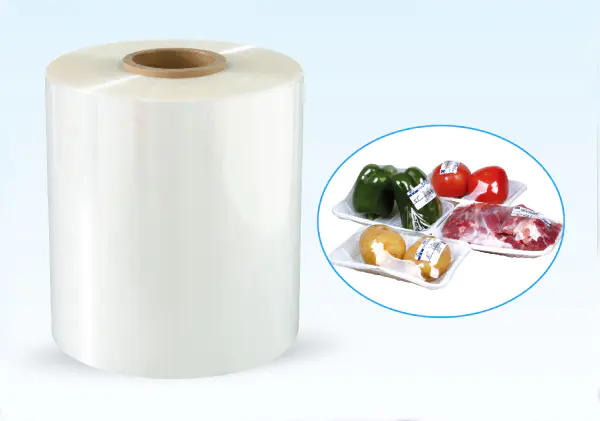
JT05 Antifog Crosslinked Shrink Film is an ideal o...
Copyright © Zhejiang Jiuteng Packaging Co., Ltd.
 简体中文
简体中文
 Home
Home
