
A torn shrink sleeve on a bottle that arrives at a retail warehouse usually means more than a scratched label. The product is rejected, the case is opened, and the packaging team has to explain what went wrong. In industrial packaging, film is the silent component that decides whether a pallet arrives intact, a shelf display stays clean, and a packing line runs without jams.
Industrial packaging film is not a single product. It is a family of films engineered from different polymers, each offering a specific balance of strength, clarity, shrink behaviour, and cost. Specifying the wrong film can add material expense, increase downtime, and raise the rate of damage in transit. Specifying the right film starts with understanding the main types, the properties that matter, and how a supplier controls quality.
Industrial packaging film is a plastic web used to wrap, bundle, and protect goods from the factory floor to the final point of sale. It includes heat-shrink films that tighten around a product when heated, stretch films that hold pallet loads under tension, and preformed bags used in automated and manual packing lines.
Every industrial packaging film performs several functions at once:
The trade-off is that no single film maximises all of these functions. A film with outstanding clarity may have lower puncture resistance. A film that shrinks at low temperature may not hold heavy items tightly enough. That is why film selection has to match product weight, line speed, distribution environment, and the visual standard your brand requires.
Most industrial applications rely on one of three film families. Each family has a different polymer structure, and that structure changes how the film behaves during sealing, shrinking, or wrapping.
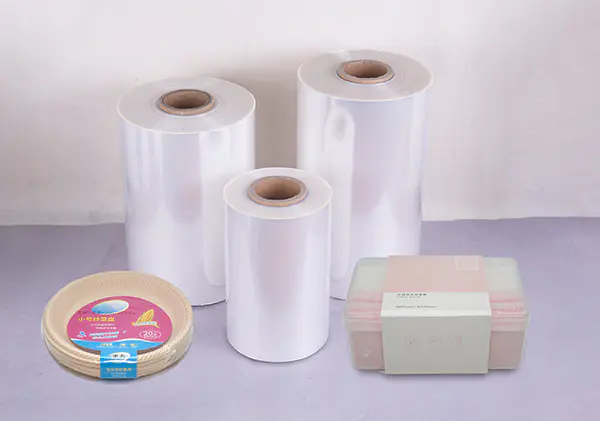 Biaxially Oriented Polyolefin (POF) Shrink Film for Consumer GoodsThis POF shrink film offers high transparency and uniform shrinkage, making it a reliable choice for cosmetics, food trays, and multipacks on automatic packaging lines.View Product →
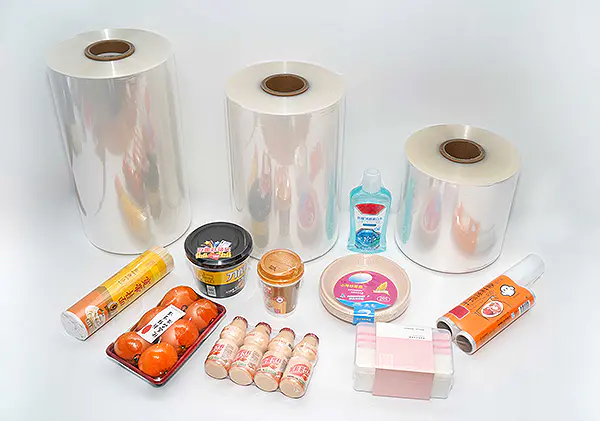
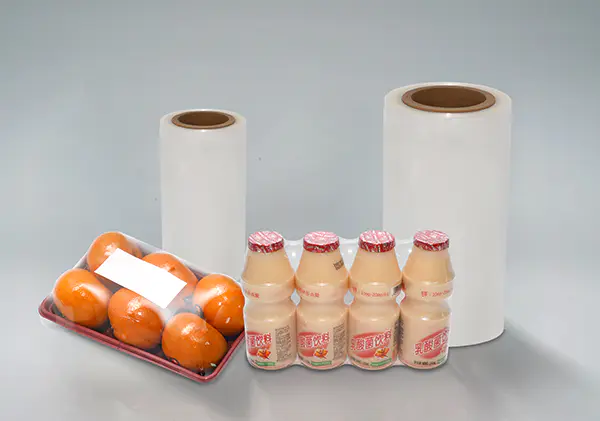
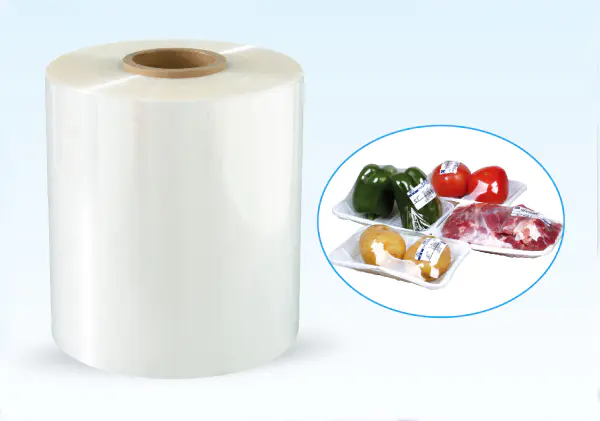
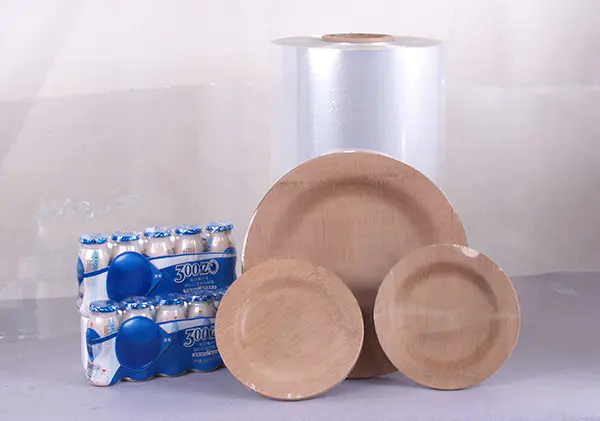
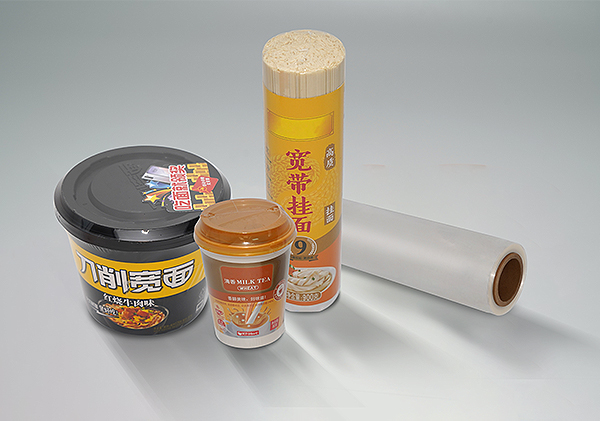
Polyolefin shrink film, commonly called POF, is a blend of polyethylene and polypropylene resins. It is the most widely used shrink film for consumer goods because it combines high transparency, a high shrinkage rate, and a wide sealing temperature window. POF is specified for cosmetics, food trays, stationery, CDs, and multipacks that run on automatic machinery. It shrinks evenly, resists tearing at the seal, and does not give off the sharp odour associated with older PVC films. For sharp or heavy items, crosslinked polyolefin film offers even higher puncture and tear resistance. For a deeper look at the material, read our overview of the properties and applications of POF shrink film.
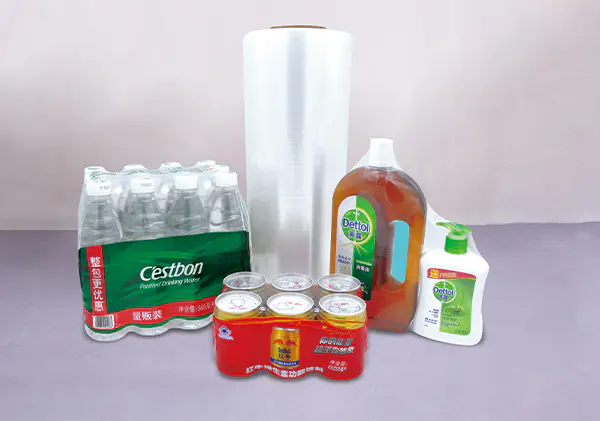 Polyethylene Shrink Film JT09 for Heavy and Irregular ProductsSoft, tough, and puncture-resistant, this PE shrink film provides dependable protection for large, heavy, or irregularly shaped items where clarity is less critical.View Product →
PE shrink film is made from polyethylene, which makes it softer, tougher, and more puncture resistant than POF. It is usually chosen for large, heavy, or irregularly shaped products where protection matters more than display clarity. Typical uses include shrink-wrapping of building materials, beverage multipacks, spare parts, and industrial components. PE film also remains flexible at low temperatures, so it suits products that are stored or transported in cold environments.
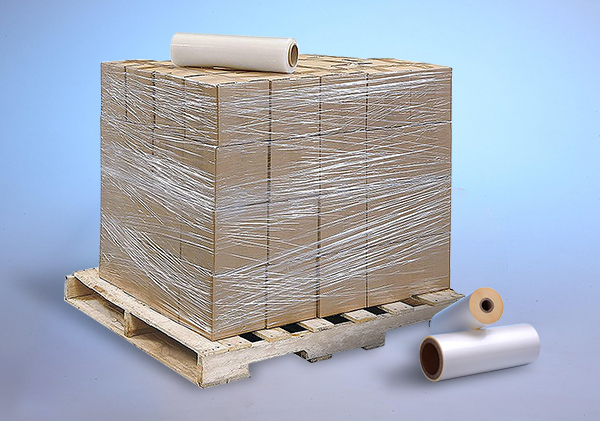 PE Stretch Film JT10 for Pallet Load StabilizationWith strong winding force and retraction, this stretch film secures palletized goods into a single unit, shielding them from dust, oil, and water during storage and transit.View Product →
PE stretch film is applied under tension rather than heat. It clings to itself and to the load, holding cartons and bags together on a pallet during transport and warehousing. Stretch film reduces load shifting, deters pilferage, and protects goods from moisture and dust while in storage. It is available in hand-applied rolls for low-volume use and machine-applied rolls for high-throughput distribution centres.
| Property | POF Shrink Film | PE Shrink Film | PE Stretch Film |
|---|---|---|---|
| Base material | Polyolefin blend | Polyethylene | Polyethylene |
| Application method | Heat | Heat | Tension |
| Transparency | High | Moderate | Moderate |
| Puncture resistance | Good | Excellent | Excellent |
| Typical application | Retail packs, multipacks | Heavy or large goods | Pallet unitization |
Experienced buyers compare film on four properties: gauge, shrink behaviour, seal strength, and optics. These four determine whether the film runs smoothly on the line and whether the packed product survives distribution.
Gauge is the film thickness expressed in microns or mils. Thicker film costs more per square metre but delivers higher stiffness, puncture resistance, and load-holding force. The right gauge depends on product weight and on sharp edges that could cut through a thin web. A common mistake is specifying the lowest gauge to save money, then paying far more in damaged goods and rejected packs.
Shrink ratio describes how much the film contracts in the machine and cross directions. A well-balanced film shrinks roughly 70 to 80 percent in both directions, which prevents distortion of printed graphics. The temperature window matters just as much. A narrow window makes the heat tunnel critical to adjust and can cause dog ears, wrinkles, or burn-through on complex product shapes. Low-temperature shrink films give operators more flexibility on fast lines and for heat-sensitive products.
Seals are formed in the sealing section, then pulled immediately into the heat tunnel. If the seal tears before it cools, the whole pack is lost. Strong seal integrity and a controlled hot slip coefficient keep the film moving through the forming collar without sticking, blocking, or distorting the pack. This becomes critical on automatic lines running more than 40 packs per minute.
If you are comparing options for a new line, our guide on how to choose shrink film packaging walks through the questions to ask before you order test rolls.
Film suppliers all claim consistent quality. The difference shows up in the receiving area: rolls that wound evenly, gauges that hold across the full width, and seals that behave the same from one batch to the next. For industrial buyers, quality control must be a documented process, not a promise.
Poor gauge uniformity forces buyers to specify a heavier average gauge just to guarantee the minimum strength needed for the pack. That hidden over-specification adds material cost to every single pack, every day.
When evaluating a film manufacturer, look for the following:
Zhejiang Jiuteng Packaging, for example, produces film in a 20,000-square-metre facility near Shanghai Port, uses imported raw materials, and inspects every batch during production. Certifications including ISO, BRC, SGS, and FDA are maintained as part of the routine quality system, which gives international buyers a verifiable baseline for audits.
Film is usually compared by price per kilogram. That figure is simple, but it ignores what the film actually costs per packed product. The number that matters is cost per pack, which depends on film density, the gauge required, the sealing temperature, and the scrap rate on your line.
Three items in particular drive the real cost:
A useful habit is to run a 30-minute trial on your own machine before committing to a supplier. Measure the number of good packs, the film weight used, the heat tunnel settings, and the number of jams. That trial gives you the true cost per pack far better than any datasheet.
POF shrink film offers higher transparency, a smoother surface, and better print clarity, so it is preferred for retail products where appearance matters. PE shrink film is tougher and more puncture resistant, making it suitable for heavy or irregularly shaped products where protection matters more than appearance.
Start from the weight and shape of the product, not from the price list. Add a safety margin for sharp edges, long distribution distances, and handling by automated equipment. Then confirm the chosen gauge in a machine trial before placing a volume order.
Yes. Printing films are available for shrink sleeves and retail packaging where brand graphics, barcodes, and regulatory text must be applied before shrinking. The film surface is treated during production to accept ink, and the shrink process should be tested so printed graphics do not distort.
Store rolls upright, away from direct sunlight and heat sources, at moderate humidity. Ideally, use film within 12 months of production and rotate stock so older rolls are used first.
Before you place your next order for industrial packaging film, ask the supplier three questions. First, what raw materials do you use, and can you document their origin? Second, which inspections are performed on each batch, and can you provide test reports? Third, what happens if a batch fails on my line after delivery?
The answers tell you whether you are buying a commodity roll of plastic or a packaging solution backed by process control. In industrial packaging, the film is not a small detail. It is the part of your product that the customer touches first, and the part that decides whether everything behind it arrives intact.
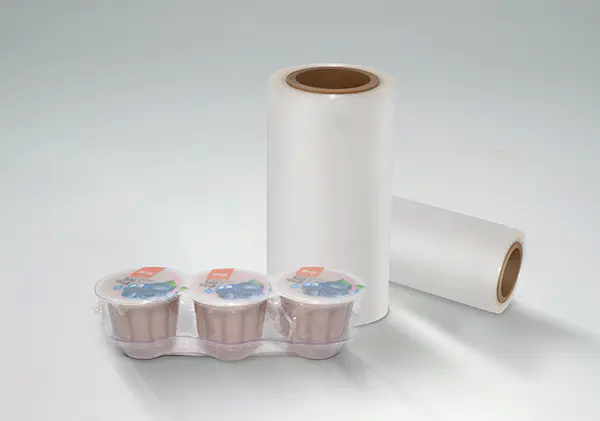
JT05 Antifog Crosslinked Shrink Film is an ideal o...
Copyright © Zhejiang Jiuteng Packaging Co., Ltd.
 简体中文

 Home

